Job costing and progress billing: knowing every month whether a job is making money
A contractor often learns whether a job made money months after finishing it. We build the system that brings together budget, measurements, valuations and actual cost per item, so a variance shows up in the month it happens rather than at close-out.
1A job is won at tender and lost on site
How the bid is prepared is covered on the construction sector page. This one deals with what comes after the award: the site manager with the budget in a measurement program, the foreman with paper site diaries, accounts posting invoices in the ledger and management waiting for someone to bring the three together.
Meanwhile the job moves on. A foundations section that has eaten more hours than planned, or a subcontractor valuing more than it has built, is discovered when it can no longer be corrected.
2From budget to monthly valuation
The starting point is the job budget broken down by section and item, each with its unit, quantity and rate, imported from the program where you already keep it. Everything else works on top of it:
- Measurements of work done, item by item, with the date and who took them.
- Cumulative valuation: total work done to date, minus what was valued before, gives this month’s valuation.
- Retentions, deductions and advances as each contract sets them, always applied the same way.
- New items and newly agreed rates, kept on a separate list until the project supervisor or client approves them.
- A version of every valuation sent, to answer the question of what was valued in March.
3Actual cost, charged to the item
The valuation tells you what was produced; you still need to know what it cost. Cost comes in through four routes: daily labour and plant records, delivery notes for materials received on site, subcontractor invoices and hire charges. Each is charged to its job and, where possible, to its section.
With production and cost in one place, the variance by section appears every month: where spending exceeds budget, where less has been valued than built, and where a delivery note has no invoice or the other way round. The site manager sees it before the meeting with management, not during it.
4Site diary and subcontractors
The daily site record is filled in on the foreman’s phone in a couple of minutes: who was on site, which plant, on which work fronts, incidents, photos and weather. If it takes longer, it will not get done, and actual cost will go back to being an estimate.
For each subcontractor we keep the contract, rates, what has been measured and valued, and the documents your company requires from them, with an alert before they expire. If the job keeps a subcontracting register (the Spanish libro de subcontratación), the system can hold the data entered in it, but the register and how it is kept remain the responsibility of the appropriate person in your company.
5What a person signs
Measurements are validated by the site manager and the valuation is signed by whoever must sign it. The system prepares, calculates and warns. On public works, the format and procedure of the valuation are set by the contract and the contracting authority; what your company must comply with you confirm with your adviser, and we turn it into templates and checks.
6Our connection to construction

Certero
Tender intelligence for public works
Certero, developed with Certia Group, reads public works tender documents and award records and recommends the discount for each bid. It covers the stage before the one on this page: it knows the language of budgets and contracting authorities, but does not manage site execution. Live at certero.es.
Live at certero.es. Accepted into NVIDIA Inception.
Certia Group
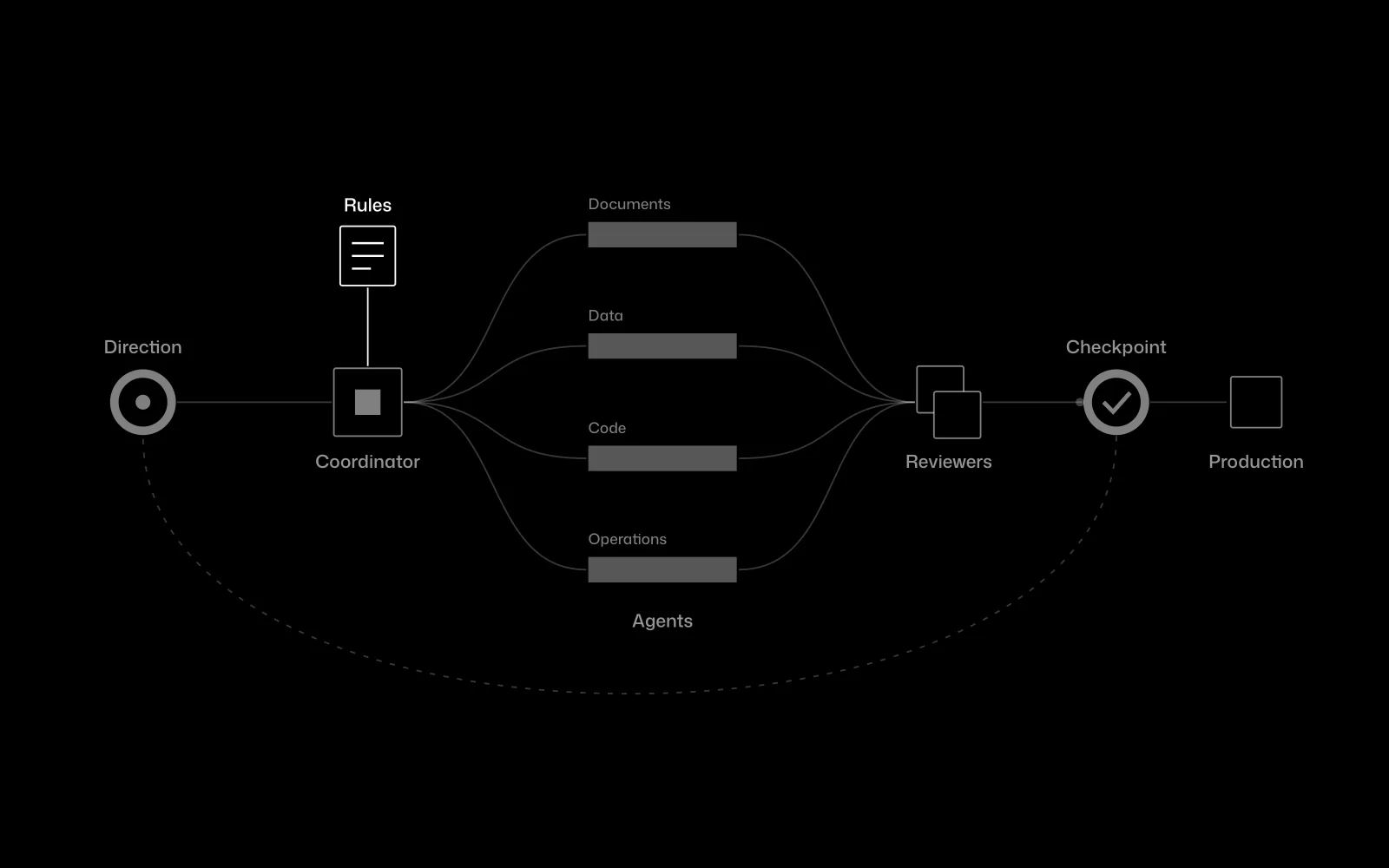
A team of AI agents inside an engineering firm
At Certia Group, an infrastructure engineering firm, we integrated a team of AI agents into daily work, with a person approving every step that matters. We do not yet have a published case of site execution and progress billing.
In use
7Frequently asked questions
Does it replace our measurement and budgeting program?
Not necessarily. Many Spanish budgeting programs export in the BC3 exchange format, and we usually import from there. The budget is still prepared where it is prepared today.
Does it work for private and public works?
Yes. The valuation format and each contract’s requirements change, and they are configured per job.
How is a machine or foreman working on several jobs split?
Through the site diary: each job is charged for the time spent on it. For overheads, the allocation rule set by your accounts department is applied.
Does it connect to the accounts?
If your accounting software allows data exchange, invoices charged to jobs can be read from there instead of being entered twice. We check with your specific version.
What do you need to get started?
The budget for a job in progress, its last two valuations and the site records and invoices for those months. That shows us where the cross-check breaks down today.
Pick a job in progress
With its budget and two valuations we will show you which section variances you could be seeing today and what data you are missing to see them.
Tell us your problem