Software for distributors: orders and delivery notes typed only once
In a distribution business the same figure is written several times: when the order comes in, when it is picked, when it ships and when it is invoiced. We build the software that captures it once and carries it through to the end.
1How it works today
Orders arrive by email, by phone, on WhatsApp and sometimes as a photo of a handwritten sheet. Someone types them into the management system, someone else picks the goods from a printed copy, and the signed delivery note comes back days later, or never.
At the end of the month, accounts cross-check delivery notes against invoices and find the gaps: units short-shipped, a price that was not the agreed one, a credit note nobody asked for. The later an error shows up, the more it costs to fix.
2Where the hours go
Rarely in one big task. They go in many small ones repeated every day:
- Retyping orders that already arrived written in an email or a PDF.
- Looking for the delivery note of a specific shipment when a customer complains.
- Reconciling quantities and prices line by line at month end.
- Answering customers who only want to know whether their order has left.
3What we build
We start by following one real order through your company from end to end. Then we build in phases, and each phase ends in something your team can use:
- A single inbox where orders from every channel land, with the data already read from the email or document and flagged for review.
- Reading of delivery notes and invoices in PDF: the system extracts each line and compares it with what was ordered and what was shipped.
- Alerts when something does not match, when it happens rather than at month end.
- A connection to your management system, so the data is never typed again.
4What stays with your team
The system proposes and a person decides. A doubtful order, a price difference or a credit note is never accepted on its own: it is flagged for someone to review, with the original document alongside. Every change records who made it and when.
Nor do we promise that automatic reading is always right. An illegible document or a new format stays in the review inbox instead of slipping into the accounts.
5What we have already built
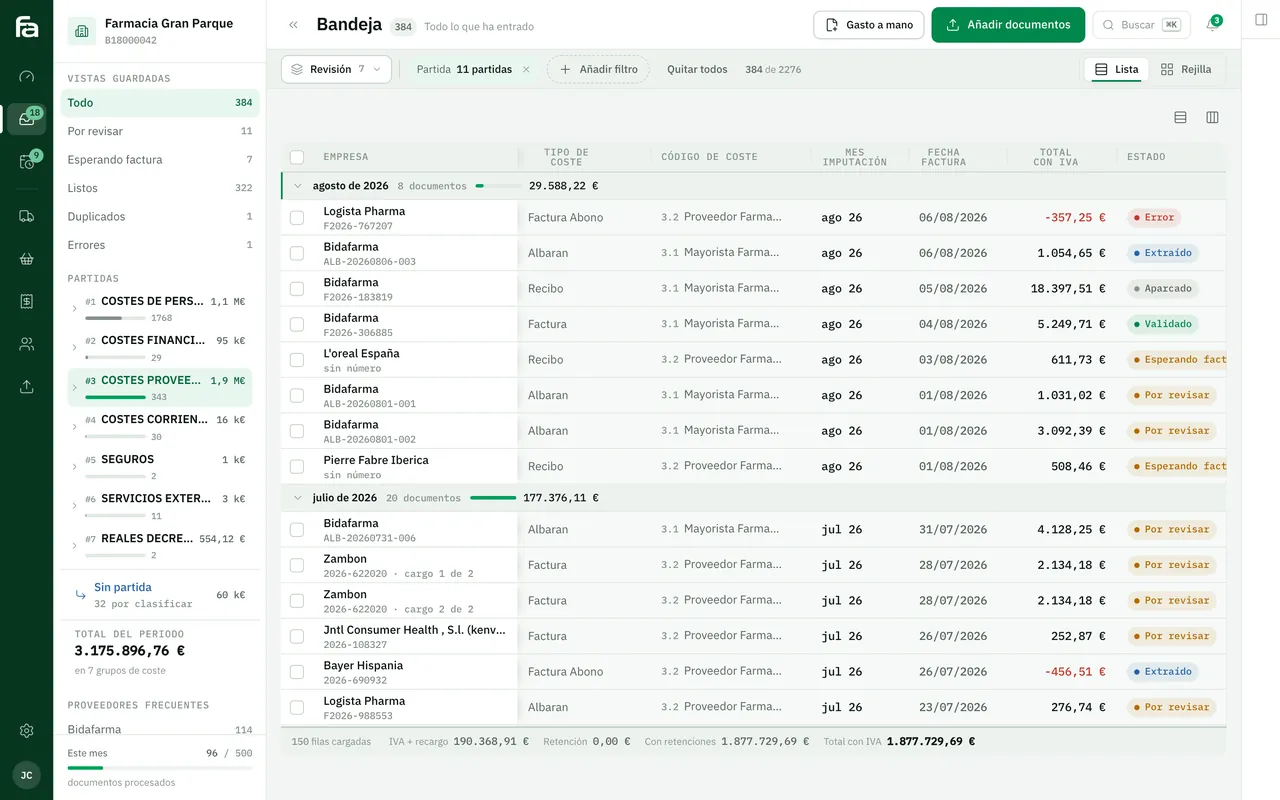
Farmacta
A pharmacy’s back office, built on its paperwork
Farmacta reads delivery notes and invoices from wholesalers and laboratories in PDF, extracts their lines and reconciles them with what was ordered. It is the same process seen from the side that receives the goods. We do not yet have a published case with a distributor; the technical building block is the same.
In use at its first pharmacy
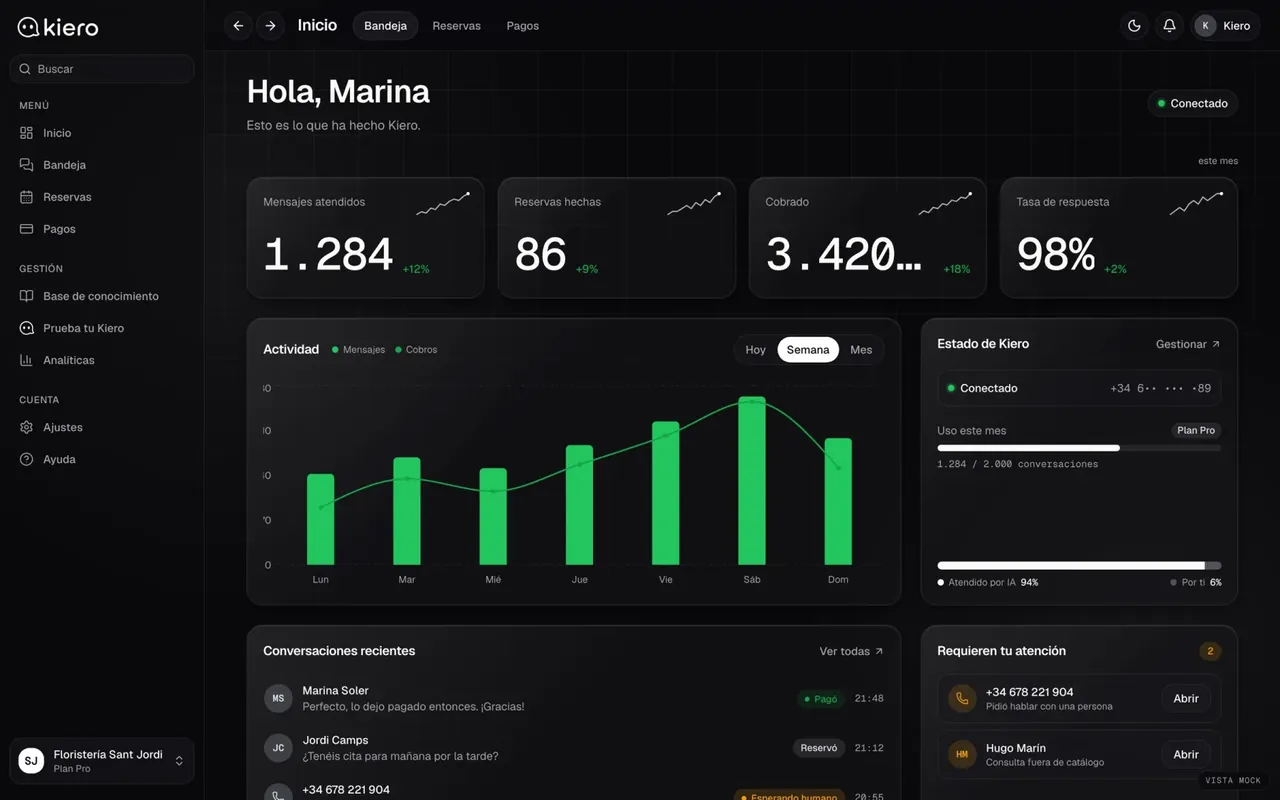
Kiero
An AI employee on the business’s WhatsApp
Kiero answers customers on WhatsApp using each business’s catalogue and opening hours. It is the basis for taking orders through that channel and keeping them in order instead of lost among messages.
Live at kiero.es
6Frequently asked questions
Do we have to change our management system?
No. We usually build around the one you already use and connect to it. If the diagnosis shows that your system allows no connection at all, we tell you before proposing anything.
What about paper delivery notes?
They can be photographed or scanned and go into the same inbox. Image quality matters: anything that cannot be read reliably is flagged for a person to check.
How much does it cost and how long does it take?
We do not publish prices or timelines, because they depend on how many channels, documents and systems need joining up. After the diagnosis we give you a fixed-scope proposal.
Can we start with just one part?
Yes, and we recommend it. Often the first phase is just reading delivery notes, or just the order inbox.
Tell us how your orders come in
With a real order and delivery note as examples, we can tell you which part of the process is worth automating first.
Tell us your problem