Stock control software: what you have, where it is and what is promised
The question “do we have it?” sounds simple until there are two warehouses, a van and three orders waiting for the same item. We build the system that answers with the figure as it stands right now and shows where it comes from.
1Three numbers that are not the same
Almost every stock problem comes from mixing up three figures. Physical stock is what is on the shelf. Committed stock is what has already been promised to orders that have not yet left. Available stock is the difference between the two, plus whatever is due in if you can count on it.
A spreadsheet usually holds only the first, and not always up to date. The sales rep sees ten units, promises six to a customer and does not know the warehouse reserved eight for another order that same morning. The error is not the person’s; it is that the figure they look at does not include what everyone else has done.
2What the system needs to record
Good stock control is not a table of quantities but a record of movements. The quantity of each item is the sum of everything that came in minus everything that went out, and every movement carries its source:
- Goods in against a supplier’s delivery note, with the quantity received, which does not always match the quantity ordered.
- Goods out against a sales delivery note, use in the workshop or on site, or a transfer to another warehouse or a vehicle.
- Reservations that set units aside for a specific order without moving them yet.
- Location within the warehouse (aisle, rack, bin) when there is more than one place to look.
- Adjustments for breakage, shrinkage or count differences, always with a reason and who made them.
3Minimum levels, reordering and valuation
Once the movement record is in place, the next step is for the system to warn you. Each item can have a minimum level per warehouse and a usual supplier; when available stock drops below that level, it appears on a reorder list with a suggested quantity. A person reviews and places the purchase: the system does not order from suppliers on its own.
Stock valuation, meaning what your inventory is worth, depends on the method your company uses, such as average cost or last purchase price. That choice is for your accountant or finance team; we apply it consistently and let you see which purchases each value comes from.
Full physical counts with a barcode scanner, when the whole shelf has to be counted, are a process of their own and we cover them on another page. Here we deal with the day to day: what comes in, what goes out and what is promised.
4Mistakes we see before we start
Before proposing anything we ask for a week of real movements. What usually turns up:
- The same item set up twice under different names.
- Different purchase and sales units (boxes versus single units) with no fixed conversion.
- Transfers between warehouses recorded on only one side.
- Material taken out for a site or a service call that is never recorded as goods out.
5The closest thing we have built
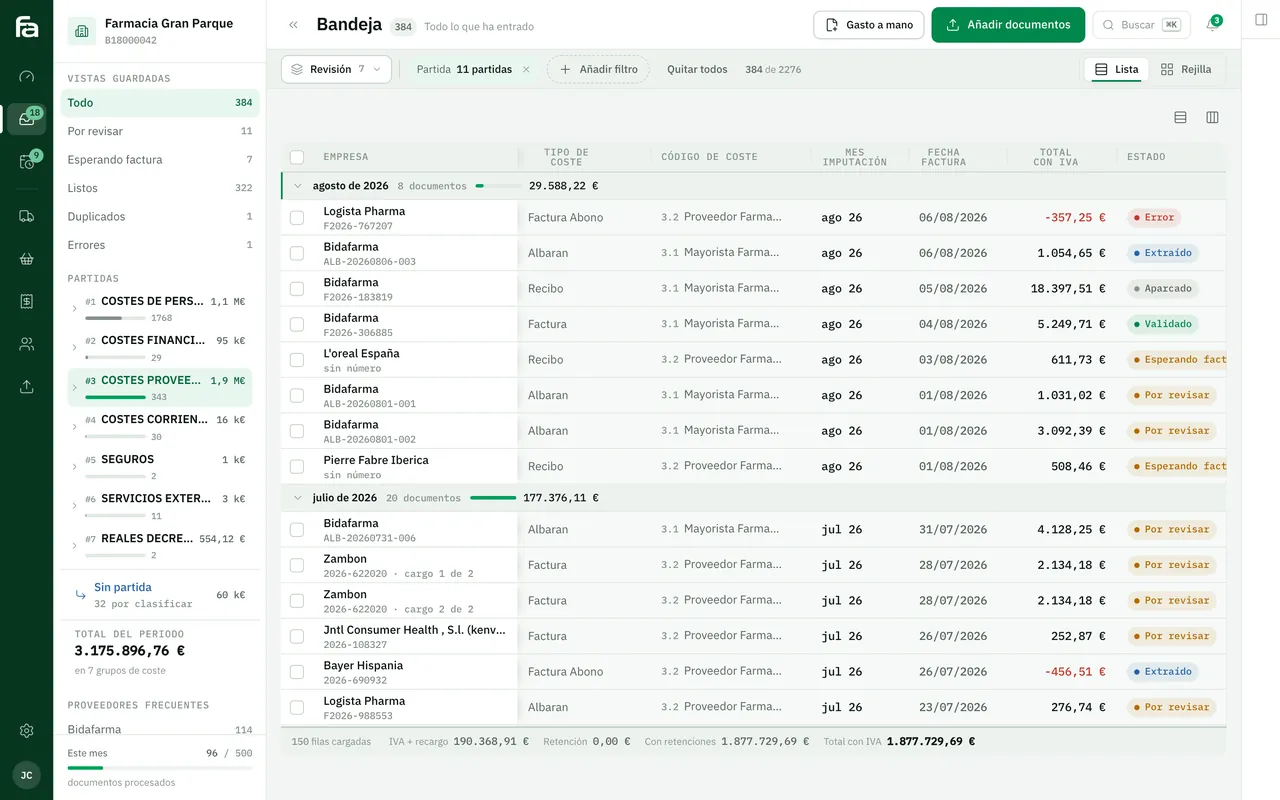
Farmacta
A pharmacy’s back office, built on its paperwork
We do not yet have a published case of warehouse control. The closest is goods in: Farmacta reads a pharmacy’s delivery notes and invoices from wholesalers and laboratories as PDFs, extracts each line and leaves it ready for review. That is the first step of any goods-in record, although Farmacta does not keep stock. It is in use at its first pharmacy.
In use at its first pharmacy
6Frequently asked questions
Is it useful if my management software already has a stock module?
It depends on what is missing. Sometimes it is enough to connect to that software and add what it does not do, such as reservations or transfers to vans. If the module covers what you need, we will tell you and build nothing.
Can I track stock held in vans or on sites?
Yes. To the system, a van or a site is just another location. What matters is that the transfer is recorded at the time, usually from a phone.
What about items with batch numbers or expiry dates?
They can be tracked by batch and date, and the system suggests using first what expires first. Full batch traceability has its own page.
How do we move our current stock into the new system?
With an opening count and a cut-off date. From that day every movement is recorded in the system and the old spreadsheet is kept for reference only.
Send us a week of movements
With a week of incoming and outgoing delivery notes we can tell you where your stock drifts today and what is worth sorting out first.
Tell us your problem