Technical service software: call-outs, repairs and warranty claims
A technical service company takes call-outs from everywhere, waits for parts, repairs in the workshop or at the customer’s home and has to claim warranty work back from the manufacturer. We build the system that follows each repair from start to finish.
1What we mean by technical service
We mean the company that repairs what others make: household appliances, air conditioning, boilers, catering equipment, IT hardware or professional devices. In Spain these are often called SAT, and many are the authorised service agent for one or several brands, working for private customers, shops and insurers at the same time.
It is not the same as a factory or industrial workshop running work orders for its own production, nor a maintenance firm doing scheduled inspections of installations. Both have their own page. Here the work starts when something breaks.
2The path of a repair
Every call-out goes through the same steps, and information can be lost at each one:
- The call-out comes in: by phone, through the website, on WhatsApp or from a brand’s or insurer’s portal.
- Diagnosis: remotely, in the workshop or on a first visit.
- Parts: check stock, order from the manufacturer or distributor, and wait.
- Repair in the workshop or on site, with the visit booked for the right technician.
- Warranty: if the manufacturer covers it, prepare the claim with the data and photos each brand requires.
- Close: a job sheet signed by the customer and an invoice, to the customer, the insurer or the brand.
3Where it gets stuck
Usually the call-out is logged in one place, parts are ordered from another and warranty claims are filed on each manufacturer’s portal, copying the same data by hand. The customer rings to ask how their repair is going and nobody knows without searching. Warranty claims sit unsent because a photo or a serial number is missing, and that money is never collected.
4What we build
We start from a real week of call-outs and a couple of warranty repairs. From there we propose short phases, each useful on its own:
- A single log of call-outs, wherever they come from, with the appliance, its serial number and the customer’s history.
- The status of every repair in plain sight: awaiting diagnosis, waiting for parts, in the workshop, closed. And a message to the customer when it changes.
- Job sheets on the technician’s phone, with photos, parts used and the customer’s signature.
- A warranty file prepared with what each brand asks for, so it only needs checking and sending.
- A connection to your management software, so invoicing needs no retyping.
5What we have already built that resembles it
Kiero
An AI employee on the business’s WhatsApp
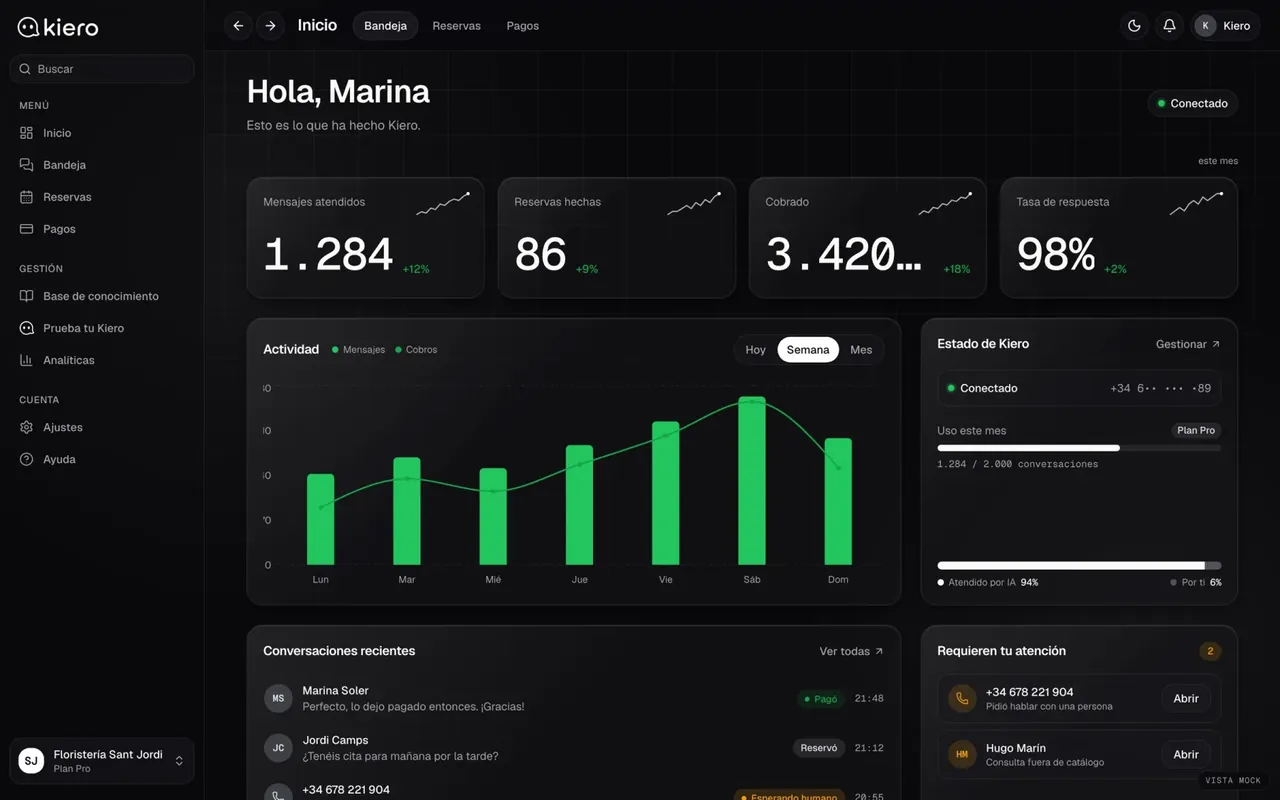
Kiero is an AI employee in the business’s WhatsApp: it answers with each business’s information, books appointments and hands over to a person what it cannot resolve. It is the basis for taking call-outs on WhatsApp without losing them on someone’s phone. It is live at kiero.es. We do not yet have a published case with a technical service company.
Live at kiero.es
Certia Group
A team of AI agents inside an engineering firm
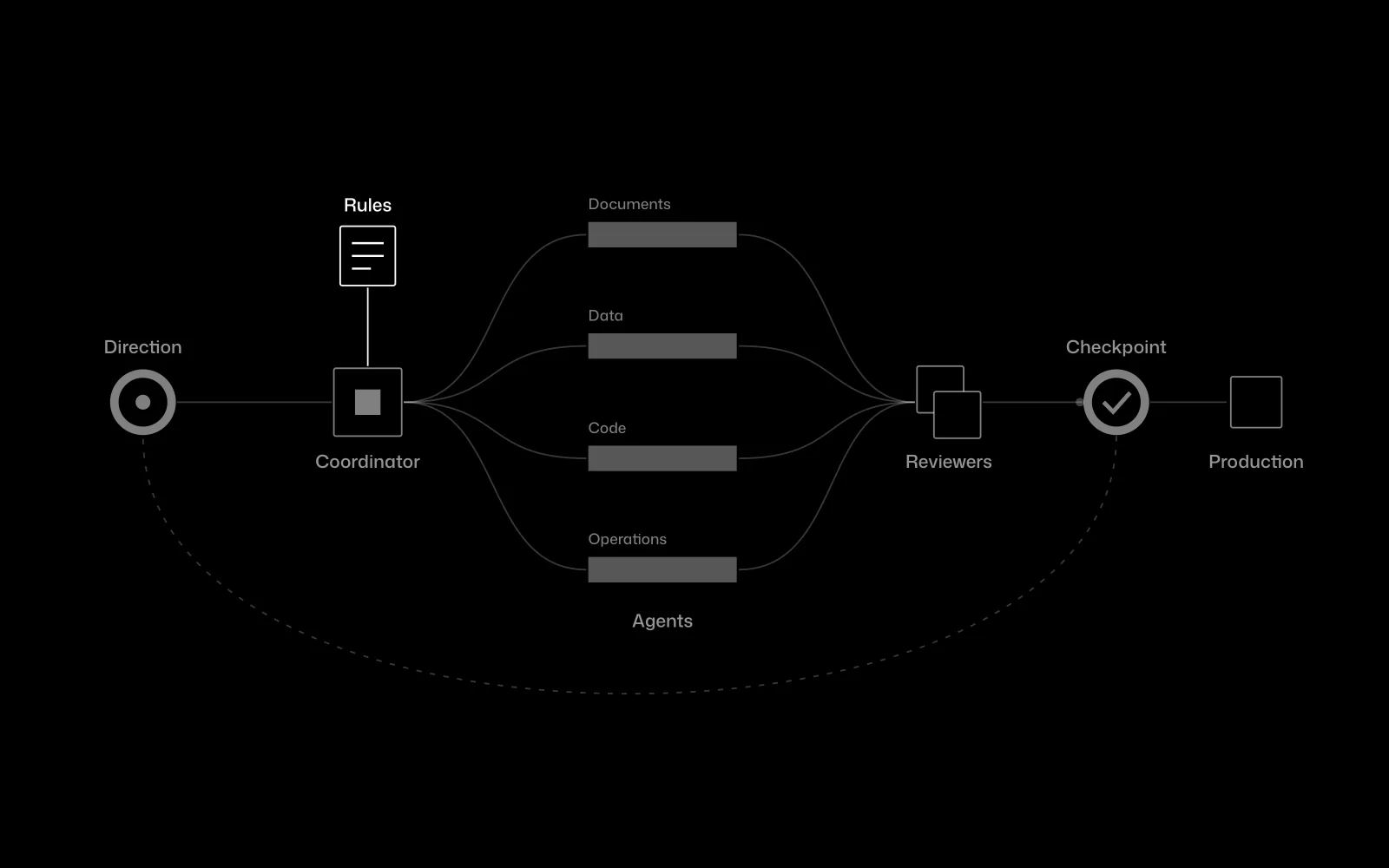
At Certia Group we integrated a team of AI agents that takes on work which used to pass from hand to hand, with a person approving every step that matters. Preparing repetitive files, such as a warranty claim, is that kind of work. It is in use.
In use
6Frequently asked questions
Can it connect to the manufacturers’ portals?
It depends on each brand. Some offer a way to connect and others only a web portal. We check this during the assessment; where there is no connection, the system leaves the file ready so uploading it takes a minute.
Does it replace our management software?
Not necessarily. Usually the custom system handles call-outs and repairs while invoicing stays in your current program, connected so nobody types anything twice.
Does it work for technicians who repair on site?
Yes. The technician’s side is designed for the phone: they see their diary, open the call-out, record parts and photos, and the customer signs on the screen.
What about call-outs from insurers?
They are treated as another source of call-outs, with their own data and their own way of invoicing. We look at it with your real cases during the assessment.
How much does it cost?
We do not publish prices or timescales. After the assessment we give you a fixed-scope proposal.
Show us a warranty repair
With a real call-out, from the phone call to the invoice, we can tell you where time and money are lost and which phase is worth doing first.
Tell us your problem