Software for bakeries: hospitality orders, from message to production sheet
A bakery supplying bars, restaurants and shops lives by a cut-off time: whatever is not ordered by night is not baked before dawn. We build the software that collects those orders, adds them up and turns them into what has to be baked and delivered.
1The night before
Hospitality customers order however they can: a WhatsApp voice note when the kitchen closes, a message with a photo of the blackboard, a call taken by whoever is in the shop. Someone has to gather it all, add up how many loaves, trays and cakes, and leave the sheet for the early shift.
Standing orders make it harder: the restaurant that orders the same every Tuesday unless it says otherwise, the bar that closes in August, the customer who changes the order at the last minute. None of that is written down in one place.
2Where things go wrong
The typical mistakes repeat in almost every bakery:
- An order that came in through a channel nobody checked and was never produced.
- Totals added up by hand that do not match what was ordered, leaving surplus or shortfall.
- Deliveries missing a tray because the delivery note and the load do not match.
- Standing orders still being sent to a customer who had said they were closing.
3What we build
A small, very specific system, designed for the hour at which it is used:
- Order collection by WhatsApp, by email or from a simple customer page, with a clear cut-off time and confirmation of what was received.
- Standing orders per customer and weekday, with exceptions and holiday closures.
- The day’s production sheet: total quantities per product, grouped the way your bakery works.
- Loading sheet and delivery note per route, so what leaves matches what was ordered.
- Delivery notes passed to your invoicing software without typing them again.
4What we do not automate
How much extra to produce, what to do with a late order or how to handle a customer who has complained are the bakery’s decisions. The system shows the numbers and flags anything odd, such as an order that doubles the usual one or a missing order on a day that never misses, but it does not decide for you.
Nor is it a food safety system. If you need to record batches, allergens and traceability, we look at that separately: it is a different process with its own requirements.
5What we have already built
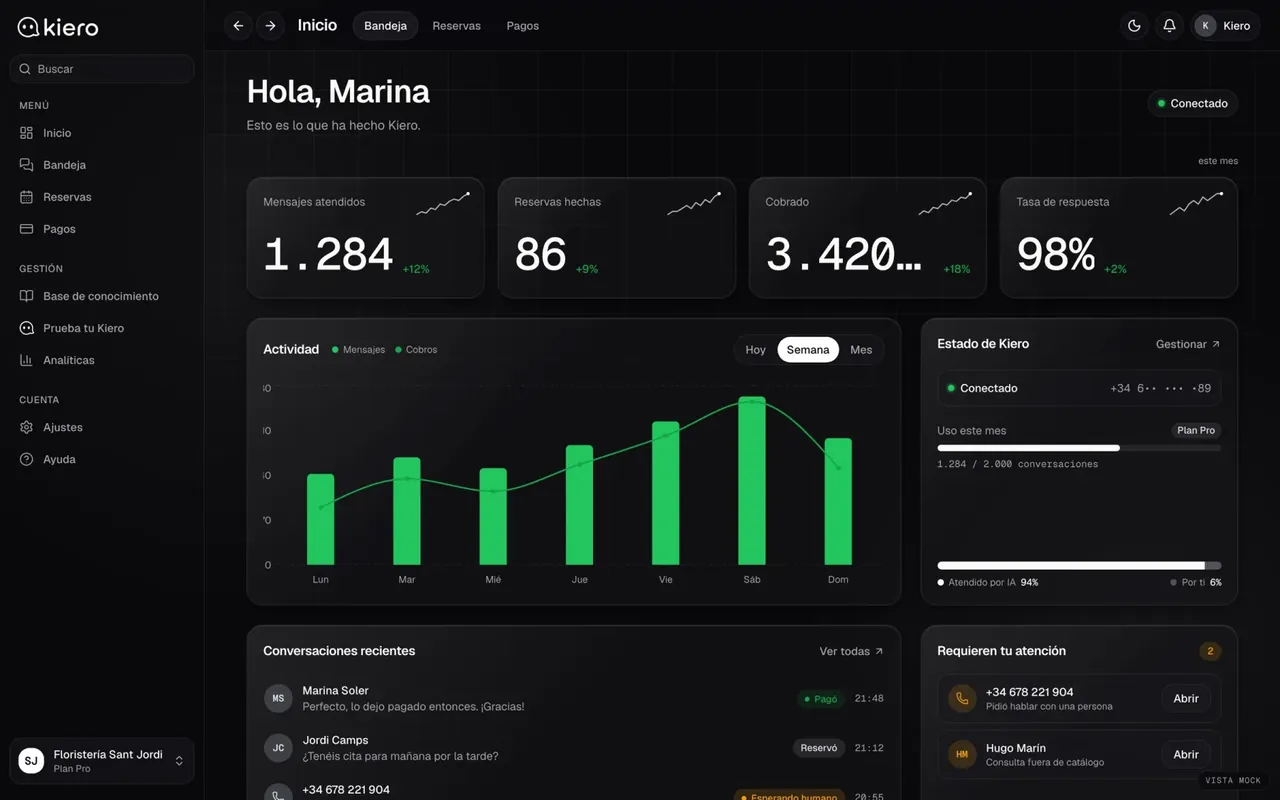
Kiero
An AI employee on the business’s WhatsApp
Kiero answers a business’s customers on WhatsApp with its catalogue and opening hours and keeps what they ask for in order. It is the basis for collecting the night’s orders without losing them among messages. We do not yet have a published case with a bakery.
Live at kiero.es
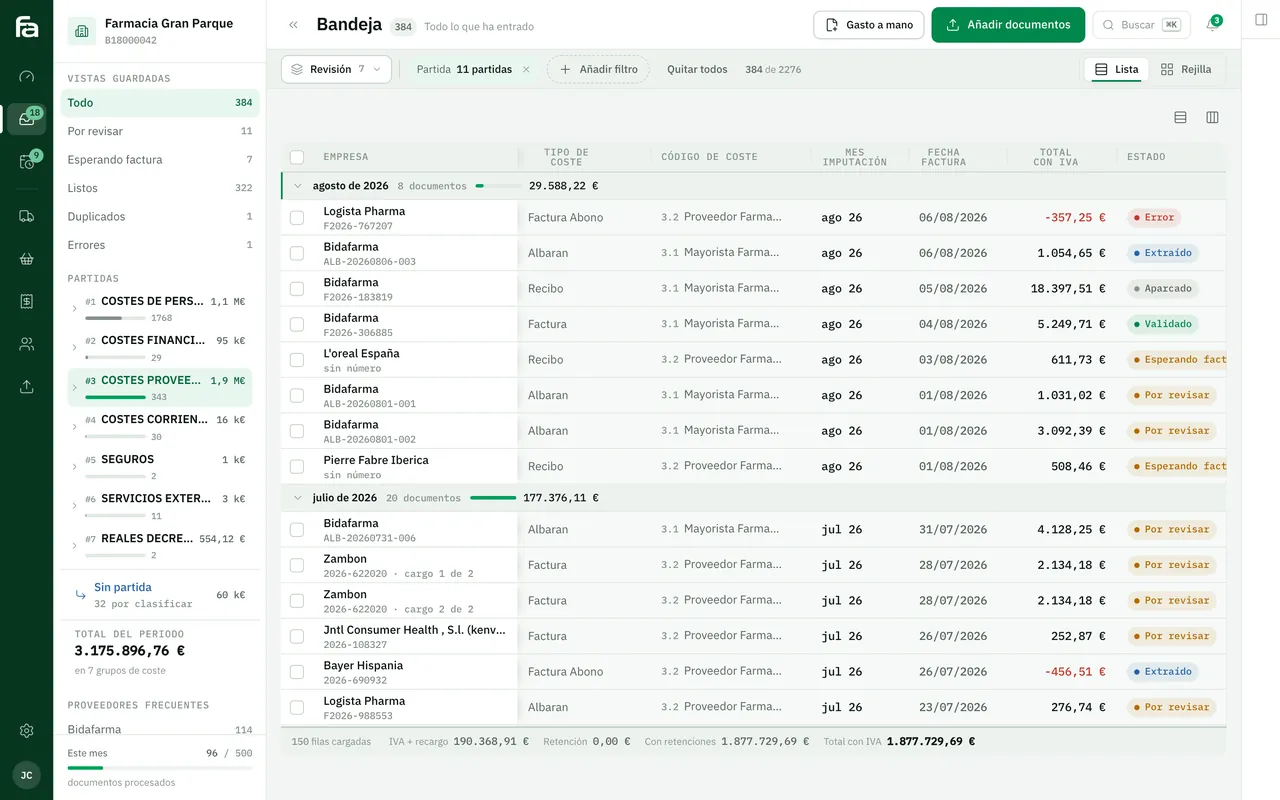
Farmacta
A pharmacy’s back office, built on its paperwork
Farmacta reads delivery notes and invoices and reconciles them with what was ordered. In a bakery the problem is the reverse, that of the supplier, but checking that ordered, delivered and invoiced match is the same. In use at its first pharmacy.
In use at its first pharmacy
6Frequently asked questions
Will my customers have to install anything?
No. They can keep ordering by WhatsApp or email, or use a simple web page if they prefer. The change happens inside the bakery, not at your customers.
Does it understand WhatsApp voice notes?
They can be transcribed and turned into a draft order, but anything not understood with confidence is flagged for a person to confirm before it goes to production.
Does it work for our own shops as well as hospitality customers?
Yes. Orders from your shops come in just like a customer’s and add up on the same production sheet.
How much does it cost and when would it be ready?
We do not publish prices or timelines. After seeing how you collect orders today we give you a fixed proposal. The first phase is usually just order collection and the production sheet.
Show us one night’s orders
With the messages from an ordinary night and the production sheet that came out of them, we can see where time is lost and what to sort out first.
Tell us your problem