How to prepare a custom software project: what to have ready before you start
Half of a good project is decided before a single line of code is written. This is what to gather before the first conversation with us or with any other supplier.
1Why prepare before starting
Software projects rarely fail because of the technology. They fail because nobody wrote down how the work is done today, because the scope grows without anyone deciding it, or because in the end it was never clear what “working” meant.
You do not need a technical document. Simple answers to a few questions and some real examples are enough. With that, the first conversation is for deciding, not just for taking notes.
2What to gather
Ideally, have it in a shared folder before the first call:
- The current process, step by step: what comes in, who receives it, what they do with it, where they record it and what comes out at the end. A written list is worth more than a pretty diagram.
- Real examples of the documents involved (orders, delivery notes, invoices, job sheets, spreadsheets), anonymised if they contain personal or sensitive data. Include the odd ones and the ones that cause trouble.
- Who uses what: the people or roles that touch the process and where from (office, warehouse, site, mobile).
- The programs you already use and whether you have access to them: management software, accounting, online shop, email, spreadsheets. And who maintains them for you.
- What hurts most today, with a rough measure if you have one: hours a week, errors a month, delays.
3Three decisions worth bringing already made
They do not have to be final, but each one needs an owner:
- What success means: one verifiable sentence, such as “orders from email go into the management software on their own and someone only reviews the doubtful ones”.
- What stays out of the first phase: what is deliberately left for later. It is the best defence against a project that never ends.
- Who decides and who validates: the person who approves the scope and the one who, with real data, will say whether each phase works. They are often not the same.
4How it fits the way we work
Everything above feeds the diagnosis. We go into your operation, look at the examples and come back with the problem measured and a fixed-scope proposal: what gets built, in which phases and what stays out.
Then we build in short phases that your team tests with your data. None starts without your approval of the previous one, and changes arrive switched off until they are verified with your real data. That is why the person who validates matters as much as the one who decides.
If, after seeing the material, we conclude that we are not the right people to solve it, or that an off-the-shelf program suits you better, we tell you there and then.
5Common mistakes
We see them often, and almost all are avoided with the preparation above:
- Describing the process as it should be, not as it is. The software has to solve the real one.
- Bringing only the easy cases: the odd documents are the ones that cost most hours.
- Trying to solve everything in the first phase.
- Leaving out the people who do the work every day; they know where the time goes.
6Projects that started from the process
Certia Group
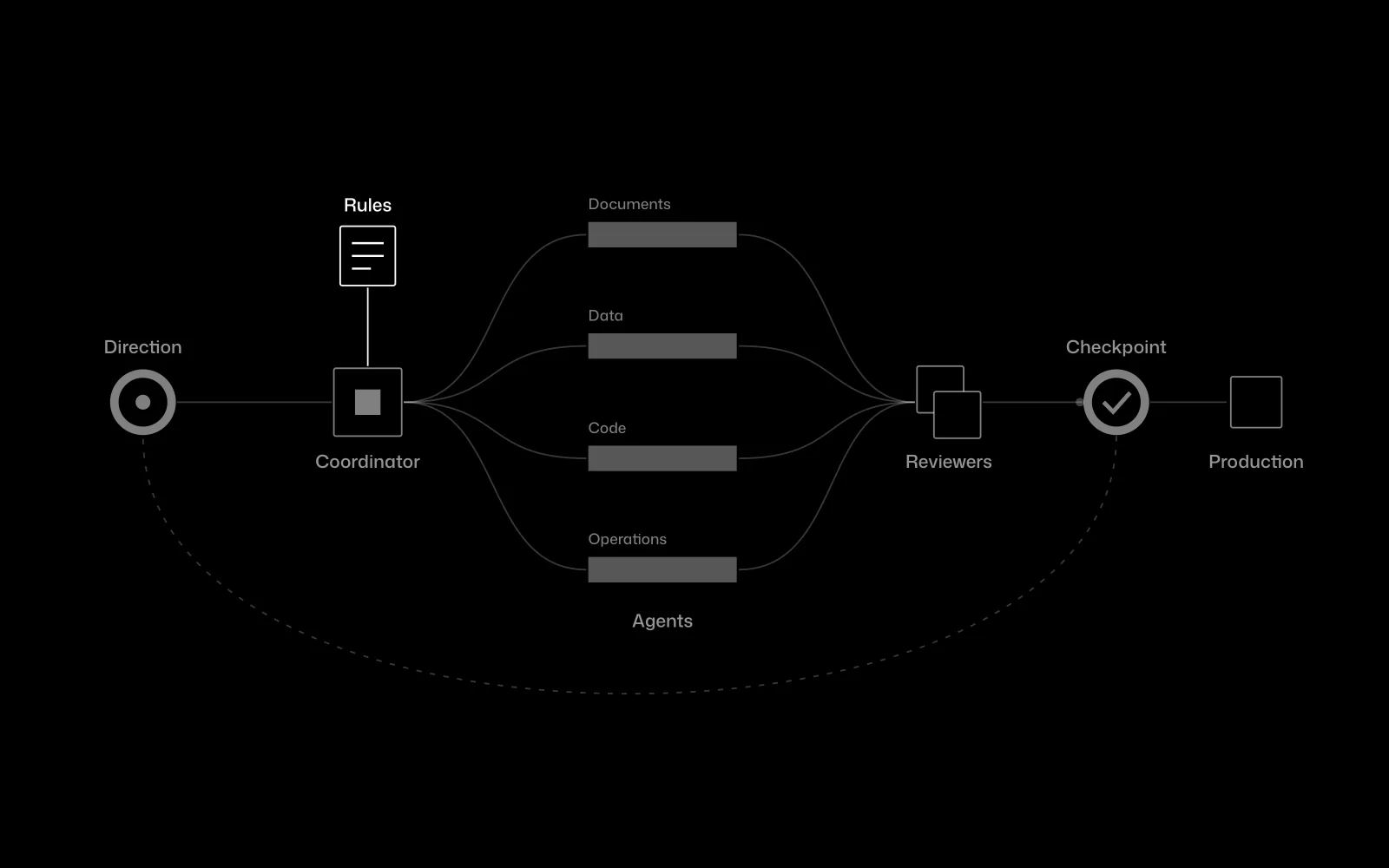
A team of AI agents inside an engineering firm
Before integrating a team of AI agents into this engineering firm’s daily work, there was an assessment of the work that passed from hand to hand and of the rules it had to follow. A person approves every step that matters. In use.
In use
Farmacta
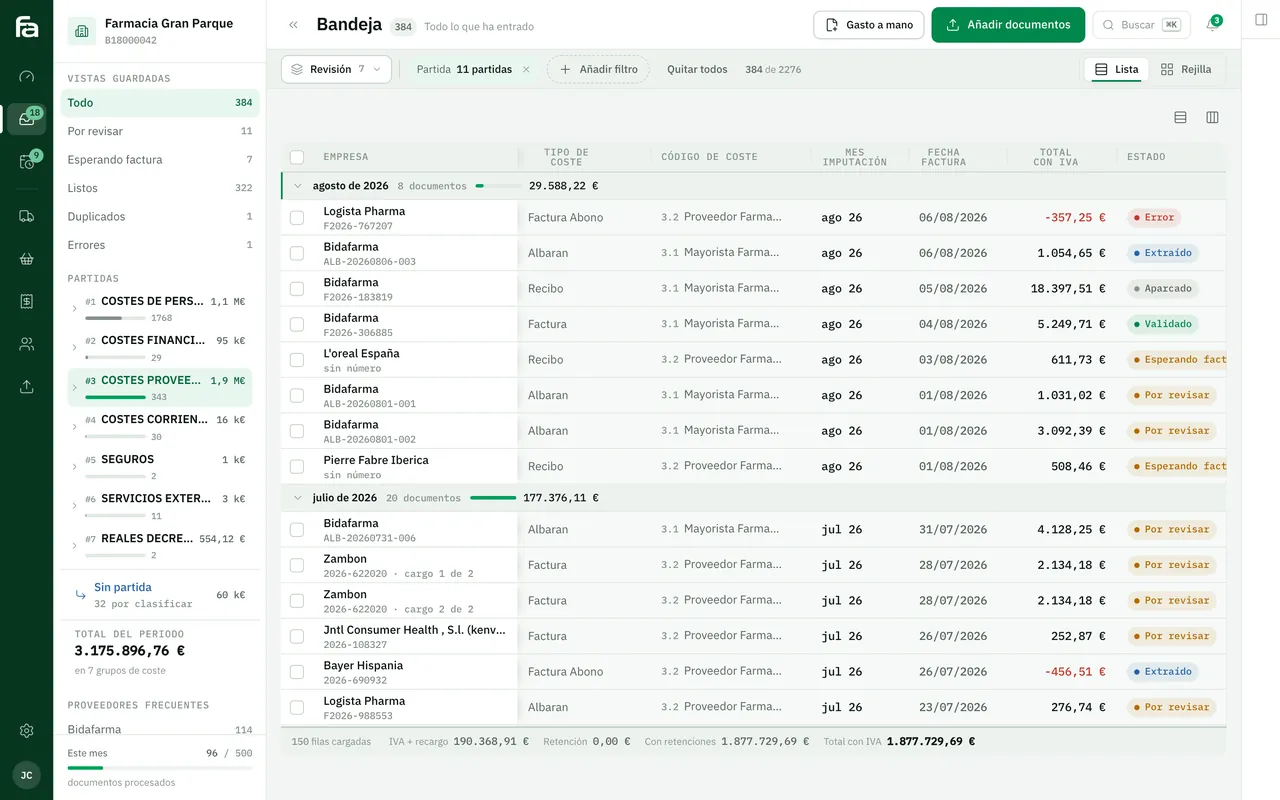
A pharmacy’s back office, built on its paperwork
Farmacta was built on real delivery notes and invoices from wholesalers and laboratories, odd formats included. In use at its first pharmacy.
In use at its first pharmacy
7Frequently asked questions
Do I need a requirements document?
No. The process written in plain language, the examples and the three decisions in this guide are enough. We prepare the scope document after the diagnosis, and you review it.
How do I share documents that contain personal data?
Preferably anonymised, or with invented data that keeps the format. If the diagnosis needs real data, we agree it in writing beforehand.
What if I do not yet know what success means?
That is normal. It helps to think about what your team would stop doing if the problem were solved. We pin it down together in the diagnosis.
How much does it cost and how long does it take?
We do not publish prices or timelines on this site. With the material in this guide, after the diagnosis we give you a fixed-scope proposal.
Do you already have the process written down?
Send it to us with a couple of examples and we will tell you what we would do first, or whether we are not the right people to do it.
Tell us your problem