What to ask for in a custom software development contract
A good contract goes unnoticed while everything goes well and saves the day when something goes wrong. This list gathers the points worth having in writing. It is not legal advice: the final wording should be reviewed by your lawyer.
1Ownership: what you paid for should be yours
It is the most important point and the one most often forgotten. Ask for the contract to state:
- Code ownership and assignment of rights: which rights over the software belong to you (use, modification, exploitation) and on what terms. Your lawyer will know which form of assignment fits.
- A repository in your name: the code in an account belonging to your company, or at least with your access from day one, not only at the end.
- Third-party components: a list of the external libraries and services used and their licences, and which part is code the provider reuses.
- Accounts and services: hosting, the domain and paid services in your company’s name, or with a planned handover.
2Scope, changes and acceptance
The contract should refer to a scope document stating what will be built, in phases, and what is left out. Ask for a change procedure too: how something new is requested, how it is priced and who approves it in writing before it is done.
Acceptance criteria close each phase: specific tests with your data (“an order from email reaches the management package with all its lines”) and a period for you to review them. Without them, “finished” depends on each side’s opinion.
3After delivery
What happens once the program is in use should be just as clear:
- Warranty: for how long errors in what was delivered are fixed at no cost, and what counts as an error.
- Corrective maintenance: how faults are reported, how quickly they are dealt with according to severity, and during what hours.
- Evolutive maintenance: how improvements are requested and quoted, separately from corrective work.
- Documentation: how to install it, how to deploy it, where the backups are and what each part does, delivered and kept up to date.
4Data, confidentiality and exit
If the provider will see or process personal data about your customers or staff, the GDPR requires a data processing agreement stating which data, for what purpose, with what security measures, where it is hosted and what happens to it at the end. Add a confidentiality clause covering your business information.
And ask for an exit plan: if the relationship ends, the provider hands over the code, documentation, credentials and a full export of the data in an open format, and helps with the handover for a reasonable period. That is what lets you change provider without starting from scratch.
5What we apply in our own products
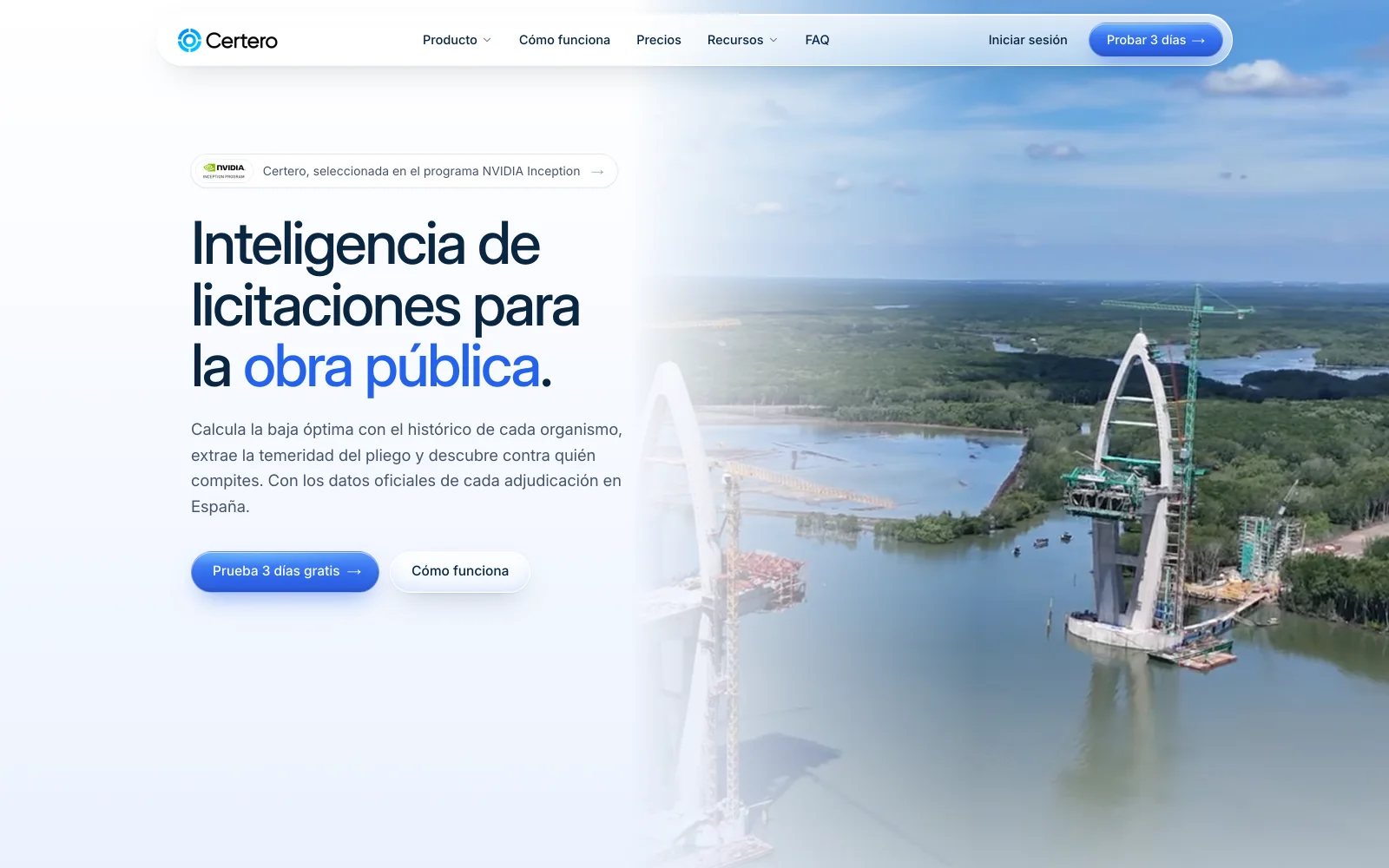
Certero
Tender intelligence for public works
Certero is live at certero.es and we keep working on it after launch: fixes and improvements, which is the difference between corrective and evolutive maintenance a contract should spell out. It is our own product, built with Certia Group, not client work under a contract.
Live at certero.es. Accepted into NVIDIA Inception.
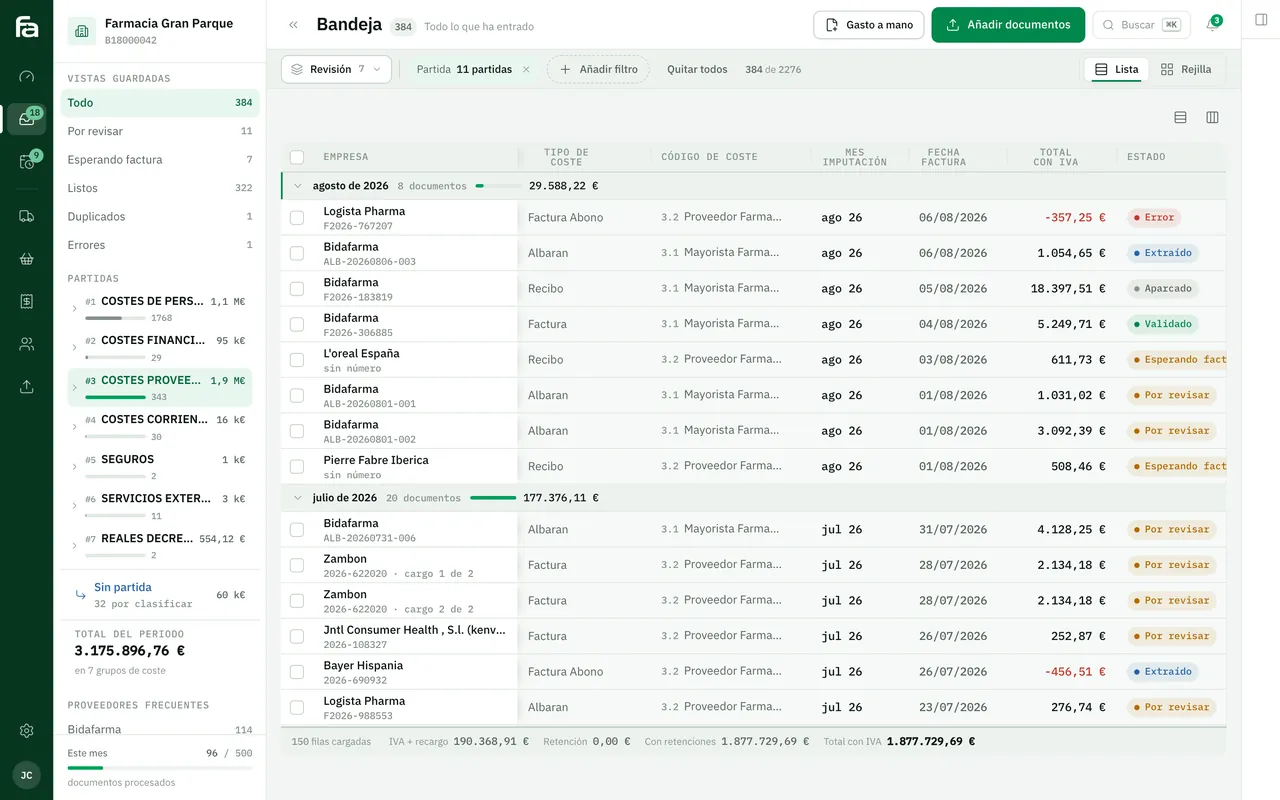
Farmacta
A pharmacy’s back office, built on its paperwork
Farmacta works with a pharmacy’s delivery notes and invoices, financial information that calls for confidentiality. In use at its first pharmacy. We have no published model contract.
In use at its first pharmacy
6Frequently asked questions
Does this guide replace a lawyer?
No. It is a checklist so nothing is forgotten. The wording, the assignment of rights and the data protection clause should be reviewed by your legal adviser.
Is it normal for the provider to keep parts of the code?
Yes, when they reuse their own components across projects. What matters is that the contract says which ones, and that you have the right to use and modify them within your program without depending on the provider.
What is an exit plan?
The part of the contract that says what you receive if the relationship ends: code, documentation, access and data, and for how long the provider helps with the handover.
Do I need a data processing agreement if the data is only test data?
If only made-up or anonymised data is used, the risk is lower; as soon as the provider has access to real personal data, it is wise to have one signed. Check with your adviser.
What if I want to change something mid-phase?
That is what the change procedure is for: it is described, priced and approved in writing, and you decide whether it goes into the current phase or the next.
Been sent a contract and not sure what to look for?
We will go through the technical points on this list with you: code, repository, scope and exit. The legal side, with your lawyer.
Tell us your problem