How not to depend on a single person or a single provider
The macro only one employee understands and the provider who holds every password are the same risk wearing different clothes: the day they are gone, your company cannot touch something it relies on.
1How to recognise dependency
It is rarely decided; it builds up. Some situations worth spotting before they matter:
- An Excel workbook with macros, or an Access database, that only one person knows how to change and nobody else dares to open.
- The website or email domain registered in the provider’s name, or in a former employee’s.
- The passwords for hosting, the online shop or the management system sitting in the inbox of someone who has left.
- A system whose code nobody at your company has ever seen or knows where to find.
- Small changes that take weeks because only one person can make them.
2What must be in your company’s name
The rule is simple: everything someone else would need to carry on should belong to your company, with the provider as a guest with permissions, not the other way round.
- The code repository, in an account owned by your organisation.
- The hosting, database and external service accounts, billed to you.
- The domain and its DNS records.
- Access keys for third-party programs (management system, bank, online shop), issued to your company.
3Minimum documentation and orderly access
You do not need a hundred-page manual. A living document is enough if it says which pieces the system has, where each one is, how to start it from scratch, what each automated task does and who is alerted when something fails. If a new technical person can read it in an afternoon and get the system running, it is enough.
Passwords belong in a company password manager, with folders shared by role, not in a spreadsheet or an email. When someone leaves, their access is removed and the passwords they knew are changed, the same day.
4Backups and a second pair of eyes
Backups have to run on their own, be stored outside the main system and be tested: a backup that has never been restored is an assumption. Ask when the last test was.
And no important change should depend solely on the person making it. Having someone else review the code before it goes live, or making sure someone else can do each critical task in the spreadsheet, reduces the chance of a fault slipping through and of knowledge living in one head only.
5A contract with an exit plan
What is agreed at the start is what can be demanded at the end. The contract should state who owns the code, what you are handed if the relationship ends (code, data in an open format, documentation, keys), with what notice period and what help to hand over to another team. Our guide to the development contract covers this in detail.
6How we leave things on our own projects

Certia Group website
New corporate website for an infrastructure engineering firm
Certia Group’s new website is static: there is no database or server to maintain and it can be hosted almost anywhere, so the company is not tied to us to keep it online. Today it is a review version and the company’s domain still points to the previous site.
Review version. The company’s domain still points to the previous site.
Certia Group
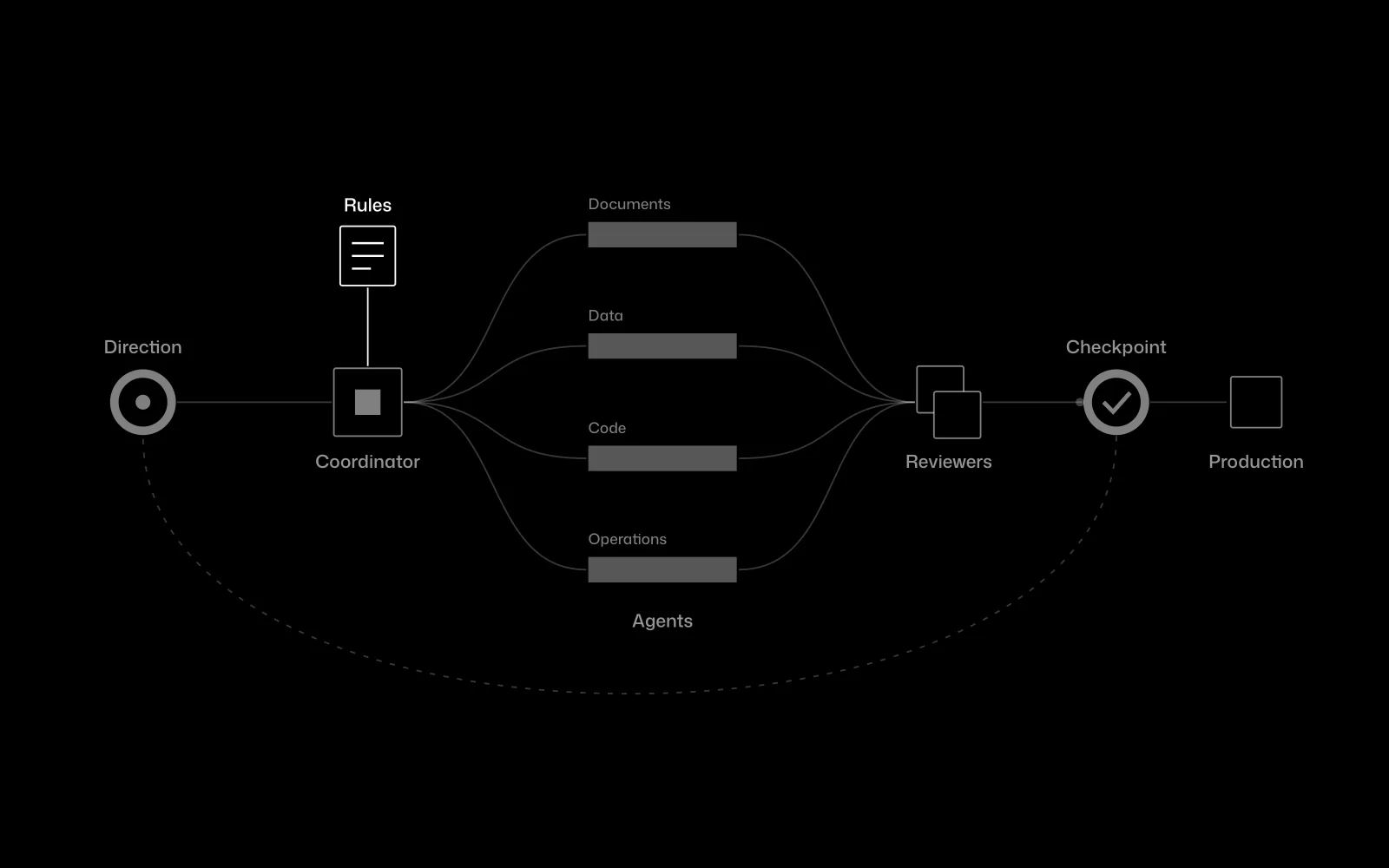
A team of AI agents inside an engineering firm
In the team of AI agents we brought into this engineering firm, every step that matters is approved by a person and nothing goes live without their sign-off: the second pair of eyes is part of the system. In use.
In use
7Frequently asked questions
How can I tell whether I depend on my current provider?
Ask yourself what you would do tomorrow if the provider disappeared: do you have access to the code, the hosting and the domain? Do you know where the backups are? Any “I don’t know” is where the dependency lies.
Is it reasonable for the provider to administer the accounts?
Yes, as a guest administrator on accounts that belong to your company. What you want to avoid is the accounts being theirs.
What do I do about the macro only one person understands?
First, have that person write down what it does and when it is used, and have someone else run it with them watching. Then decide whether to document it and keep it or replace it.
Do you work this way?
Yes. We propose that the code, the accounts and the domain are in your company’s name from day one, and we put it in writing.
Do you know where your passwords are?
We will go through with you whose name each piece of your system is in, and what it would take for it not to depend on any one person.
Tell us your problem