Cleaning company software: rosters, cover and job sheets
A cleaning or facility services company spreads many people across many sites, with different hours and absences that arrive without warning. We build the software that keeps that allocation up to date and turns each shift into a record that can be invoiced.
1How it is organised today
The roster usually lives in a spreadsheet only its author understands. Every morning WhatsApp messages arrive: a sick day, a shift swap, a client asking for extra cover. The supervisor reshuffles people by phone and updates the sheet when she can.
At the end of the month, the office needs to know how many hours were worked at each site, by whom, and whether there was extra work. It rebuilds that from paper signatures, messages and memory, and checks it against each client’s contract.
2What slips through
What is not written down is not invoiced, and what is written down late gets disputed:
- Overtime and one-off jobs the client asked for verbally.
- Cover shifts nobody logged that later do not match payroll.
- Site incidents (missing supplies, a breakdown) that stay in a message.
- Sites receiving fewer hours than contracted without anyone noticing until the client complains.
3What we build
We start from a real month: the planned roster, what actually happened and what was invoiced. The gaps between the three show where to begin.
- A shared roster by site and by person, with cover suggested according to availability and approved by the supervisor.
- Clock-in and job sheet from the worker’s phone at the start and end of each site visit, with the client’s signature or confirmation where needed.
- A channel for site incidents with a photo, routed to whoever has to fix it.
- A monthly summary per client of contracted, worked and extra hours, ready to invoice and to check against payroll.
4What the supervisor decides
The system suggests cover, but does not move anyone without the supervisor’s approval. She knows things no data holds: who gets on with which client, who cannot go to a particular site. Nor does it decide employment matters: what your collective agreement or employment adviser says about working hours and records is what the system keeps, not what it interprets.
We start with a small group of sites and run it alongside the current roster until it works better than the roster does.
5What we have already built that resembles it
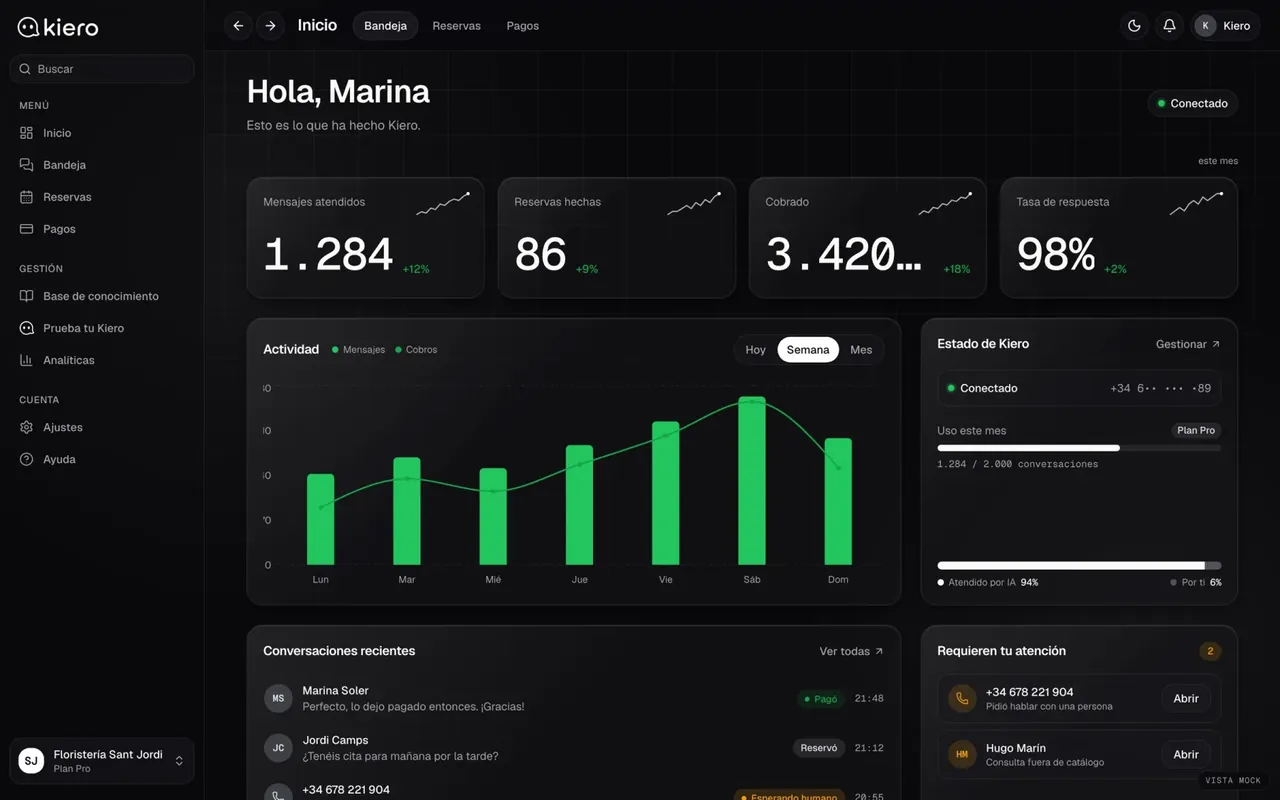
Kiero
An AI employee on the business’s WhatsApp
Kiero handles WhatsApp, books appointments and passes to a person whatever needs a person. Absences, shift swaps and site incidents already arrive through that channel and can be organised the same way. We do not yet have a published case in cleaning or facility services.
Live at kiero.es
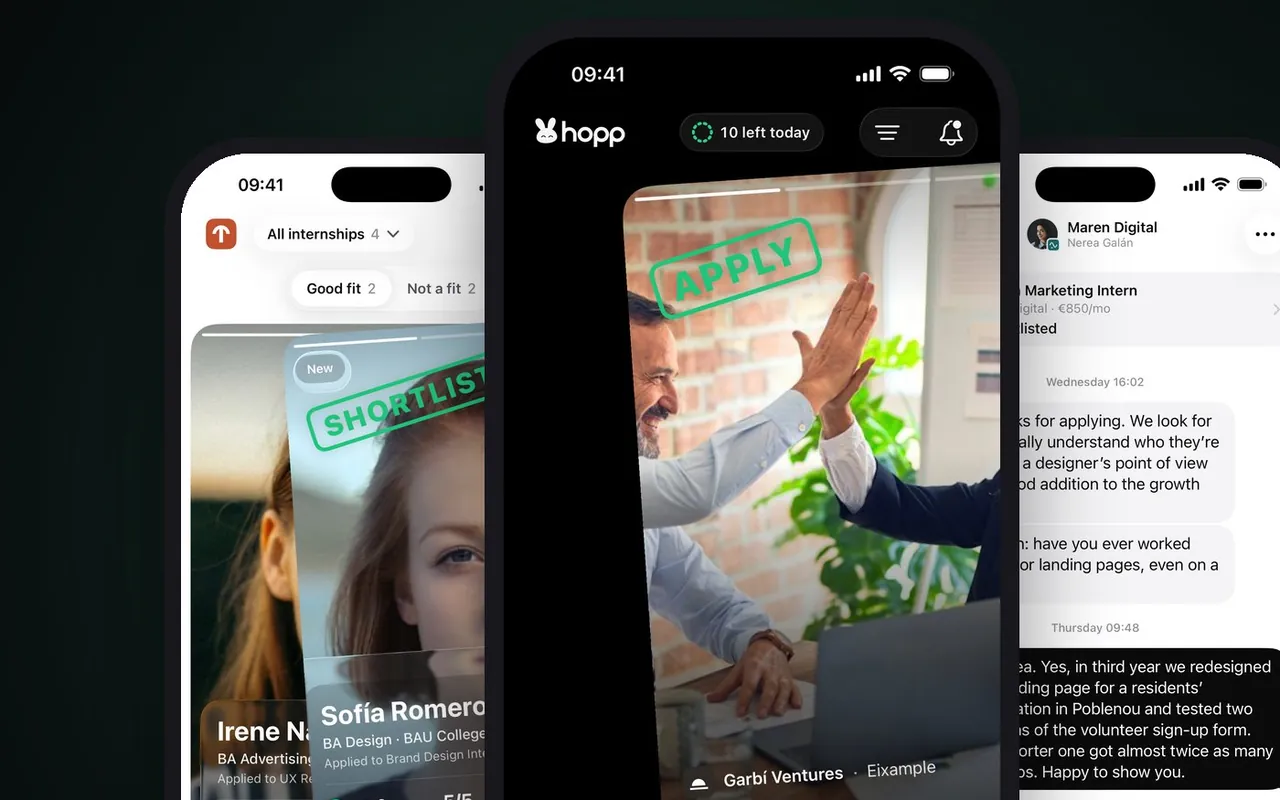
Hopp
Internships for students, one swipe away
Hopp is a native iPhone app built so a task takes a single gesture. That is the standard we apply to the worker’s job sheet: if clocking in or reporting an incident takes more than a few seconds, it will not be used.
Submitted to the App Store in October 2026
6Frequently asked questions
Can it also serve as the working-time record?
It can store each person’s start and finish times. Which data must be recorded, and for how long, is something you define with your employment adviser, and the system is configured accordingly.
What if some workers have no phone or do not want to use it?
They can clock in on a device at the site, or the supervisor can record it for them. We solve it site by site.
Does it connect to our payroll or invoicing software?
If that software allows data exchange, yes. We check during the diagnosis and, if not, we deliver the summary in the format your payroll provider already uses.
How much does it cost?
We do not publish prices. It depends on how many sites and how many pieces need building, and we give you a fixed figure after the diagnosis.
Show us this month’s roster
Comparing the plan with what really happened tells us which part to solve first.
Tell us your problem