Software for contractors: bid and run site work with data
A contractor bidding for public works stakes every award on a handful of documents and one figure. We build systems that read those documents, organise the history and leave the decision better informed.
1The problem
Preparing a bid means reading long tender specifications, finding the award criteria, the formulas and the required solvency, and deciding on a discount. That decision is usually made with little information and a lot of intuition: each contracting authority’s history is spread across award records that nobody has time to review.
Site work is similar. Daily reports, progress certificates, measurements and emails with the site management live in different folders, and reconstructing what happened in one unit of work takes hours.
2What we build for tendering
This is the ground we know best, because we have our own product in production for it:
- Collection of published tenders, filtered by what your company can and wants to do.
- Reading of specifications and award records: criteria, formulas, bids submitted and the companies that bid.
- Analysis of the competition and of how each contracting authority behaves.
- An estimate of the discount that wins each tender, with its explanation.
3What we build for the site and the technical office
Here the work always starts with a diagnosis, because every company organises its sites its own way. The usual result is a system that gathers each project’s documents, extracts the data that matters and drafts the repetitive work, such as reports, summaries and replies, for a person to review and sign.
When a project has to be shown before it exists, we also model the building in 3D from the tender drawings and produce the walkthrough video that accompanies the bid.
4How we start
With a conversation about a recent tender your company prepared, whether you won it or not. We look at where the data came from, who read which document, how many hours went into each step and when the discount was set.
That produces a diagnosis with the problems ranked by cost and a fixed-scope proposal. The first phase is usually small, such as automatic reading of specifications or a summary of one authority’s history, and ends in something your technical office can test on real tenders before going further.
5What we do not do
We do not decide the bid for you or promise awards. A model estimates from history and can be wrong; that is why every recommendation comes with the data behind it, and your team sets the final figure.
6Projects in this sector
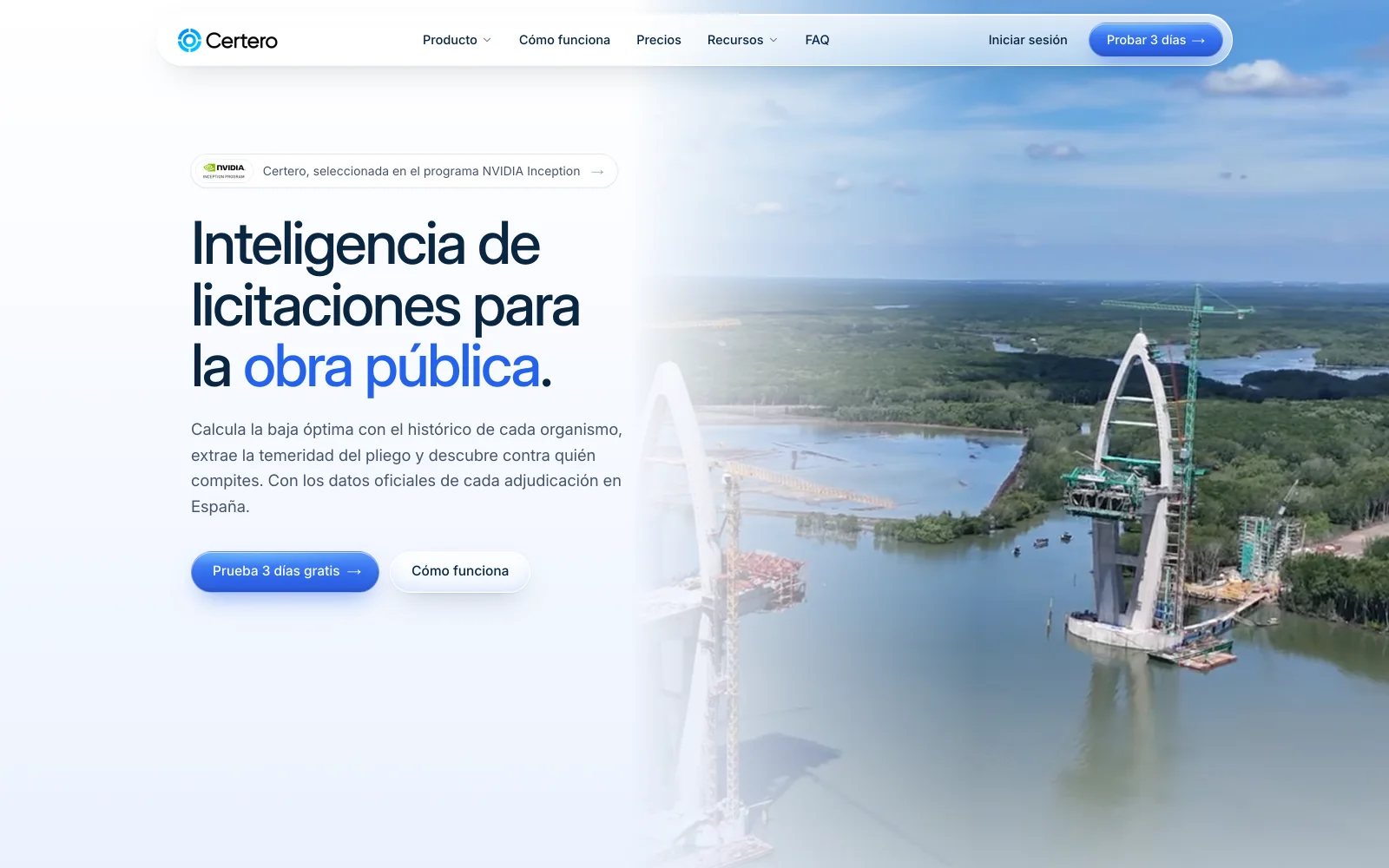
Certero
Tender intelligence for public works
Tender intelligence for public works, developed with Certia Group. It crosses each contracting authority’s history with the tender documents and recommends the discount for each tender. In production at certero.es, with more than 240,000 tenders indexed.
Live at certero.es. Accepted into NVIDIA Inception.
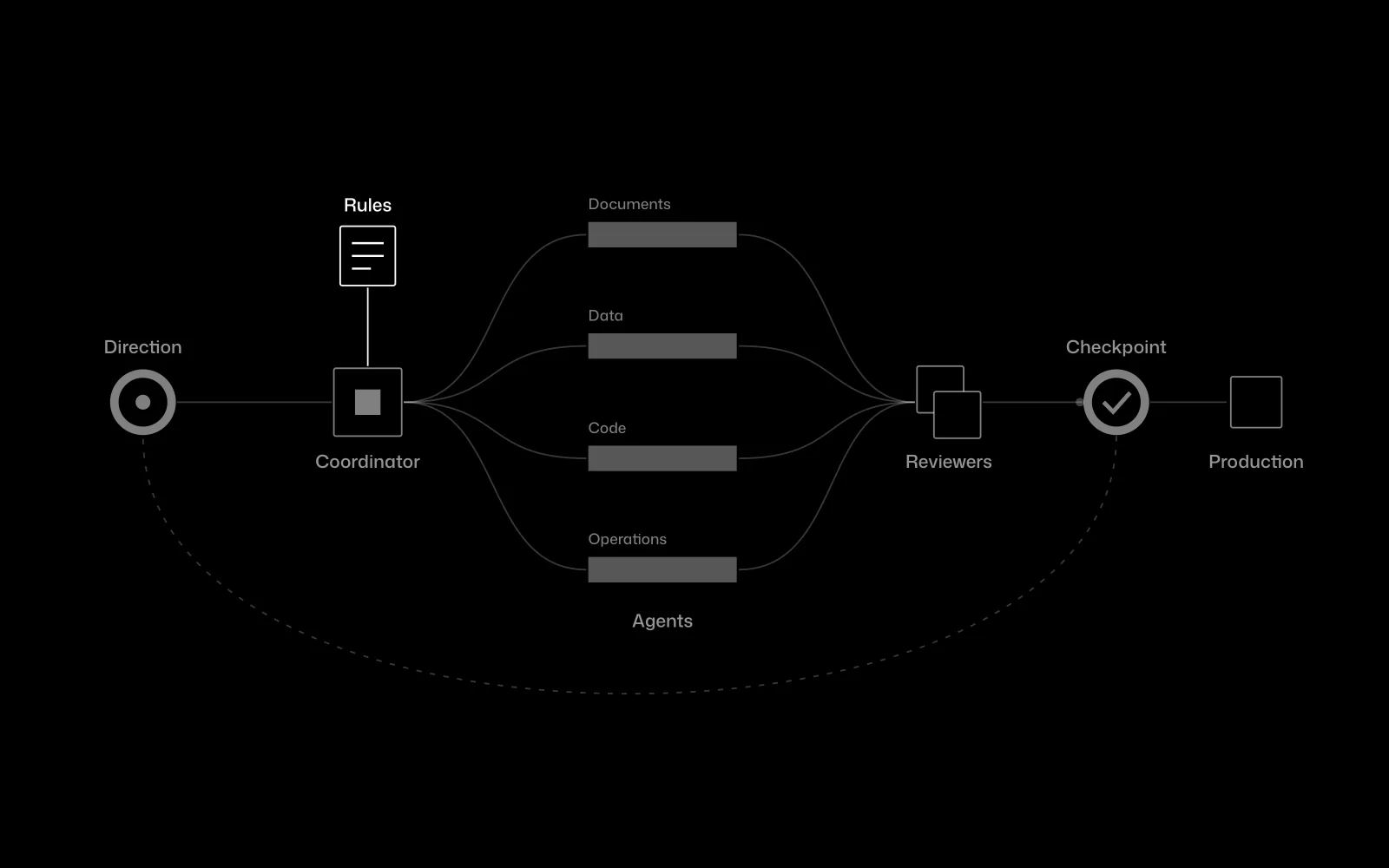
Certia Group
A team of AI agents inside an engineering firm
At Certia Group, an infrastructure engineering consultancy, we integrated a team of AI agents that takes on work that used to pass from hand to hand, with a person approving every step that matters.
In use
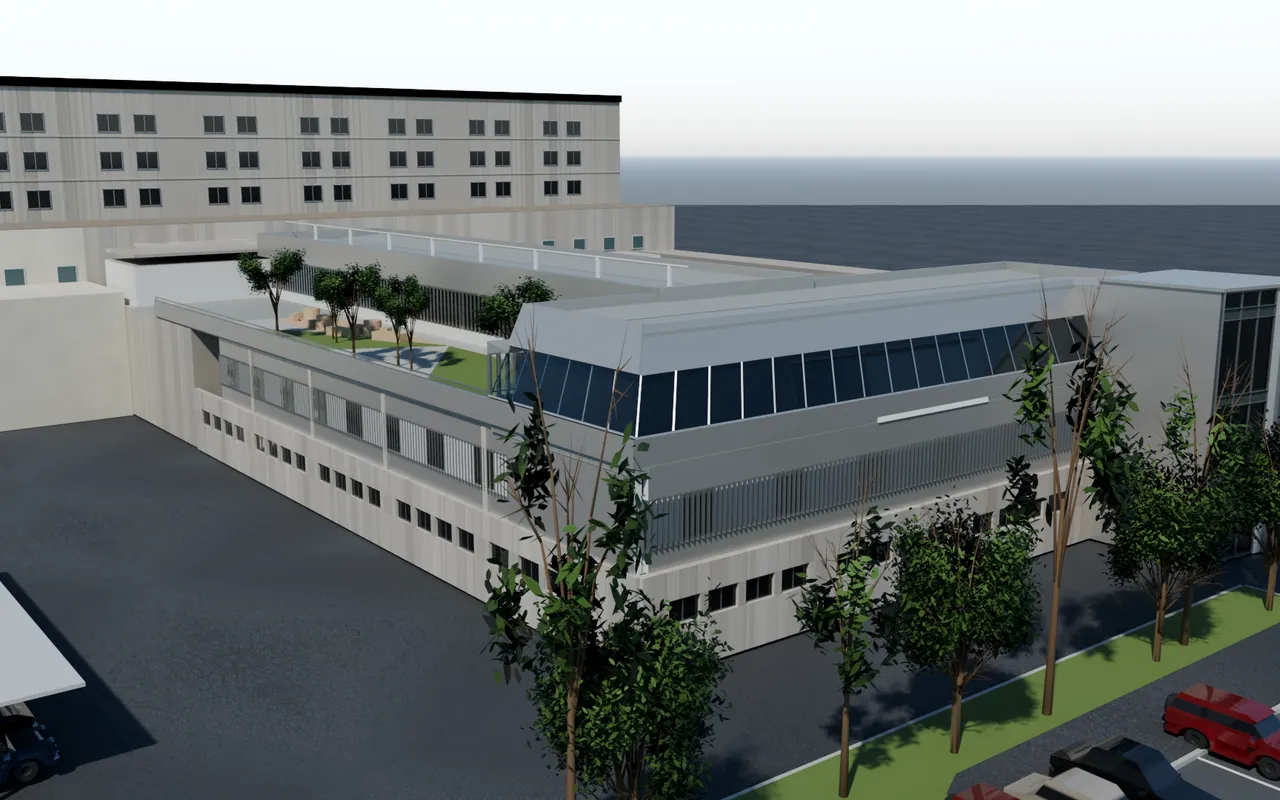
New ICU, Puerto Real
3D model and a 75-second walkthrough for a hospital tender
For the tender for the new ICU in Puerto Real we built the whole building in 3D from the tender drawings, with a 75-second walkthrough to accompany the contractor’s bid.
Eighth version of the walkthrough
7Frequently asked questions
Is it only for public works?
Certero is designed for public tendering. The technical office and site systems work just as well for private work, because they run on your own documents.
What documents do you need to start?
Those from one or two recent tenders: the specifications, your bid and, if you have it, the award record. That is enough for the diagnosis.
Will others see our bid data?
No. What we build for your company works with your data, and only the people you choose can see it.
How much does it cost and how long does it take?
We do not publish prices or timelines. They depend on the scope, and the scope comes out of the diagnosis. Then we give you a fixed proposal.
Tell us how you prepare your bids today
Using a recent tender as an example, we can tell you which part of the work your team could hand over.
Tell us your problem