Custom ERP for SMEs: when it pays off and when it does not
A custom ERP sounds like the final answer, and sometimes it is. But often what your company needs is a well-chosen standard ERP plus a few custom pieces connected to it. Here is how to tell one case from the other.
1What we mean by a custom ERP
An ERP is the system where a company’s purchasing, sales, stock, invoicing and accounting live. A custom one is built around the way you actually work, instead of bending the company to fit the screens of an off-the-shelf product.
In practice there are three routes, and it is worth putting all of them on the table from the start:
- A standard ERP (Sage, a3, Holded, Odoo, Business Central and others) configured for your company.
- A standard ERP that keeps accounting and invoicing, plus custom pieces connected to it for what it does not cover well.
- Your own management system, built from scratch for your operation.
2When building one pays off
Building a full ERP is a large piece of work and should be justified by concrete signs, not by a feeling that the current program falls short. The ones that matter most:
- The way you work is exactly what sets you apart, and no product captures it without workarounds.
- You have already tried one or two standard ERPs and the team went back to spreadsheets for what matters.
- You need rules, pricing or workflows that would take so much customisation in a standard product that it would stop being standard.
- You will offer the system to your customers or your network, so the software becomes part of the business.
3When it does not
If your problem is accounting, taxes or routine invoicing, a standard ERP does it better and is updated for you when the rules change. Building that from scratch means paying to reinvent something that already works.
For most Spanish SMEs we see, the sensible answer is the second route: keep the management program your accountant already knows and build only what is missing, such as orders, job sheets, production or a customer portal, connected to it so nobody types anything twice. We will say so even if the resulting job is smaller.
4How we approach it
We start with a diagnosis of how information flows today: who creates each piece of data, where it gets copied and where it gets lost. That produces a written recommendation on which of the three routes suits you, with what goes into each phase and what stays out.
If something is built, it is built in short phases tested with your own data, starting with the process that costs you most hours. Migration from the old system is planned as a phase of its own, not as an afterthought.
5What we have built that comes close
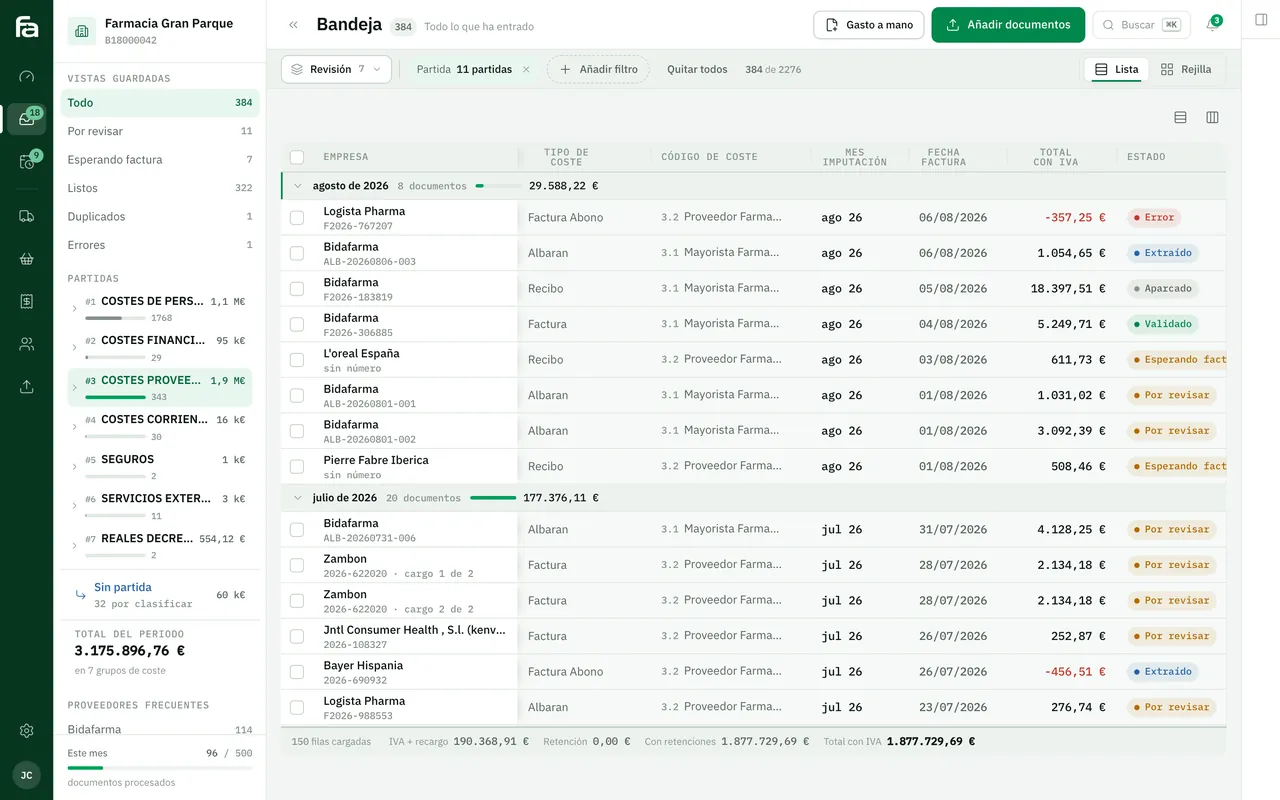
Farmacta
A pharmacy’s back office, built on its paperwork
Not an ERP, but it handles part of running a pharmacy: it reads delivery notes and invoices in PDF and turns them into due dates, cash flow and analytics. In use at its first pharmacy.
In use at its first pharmacy
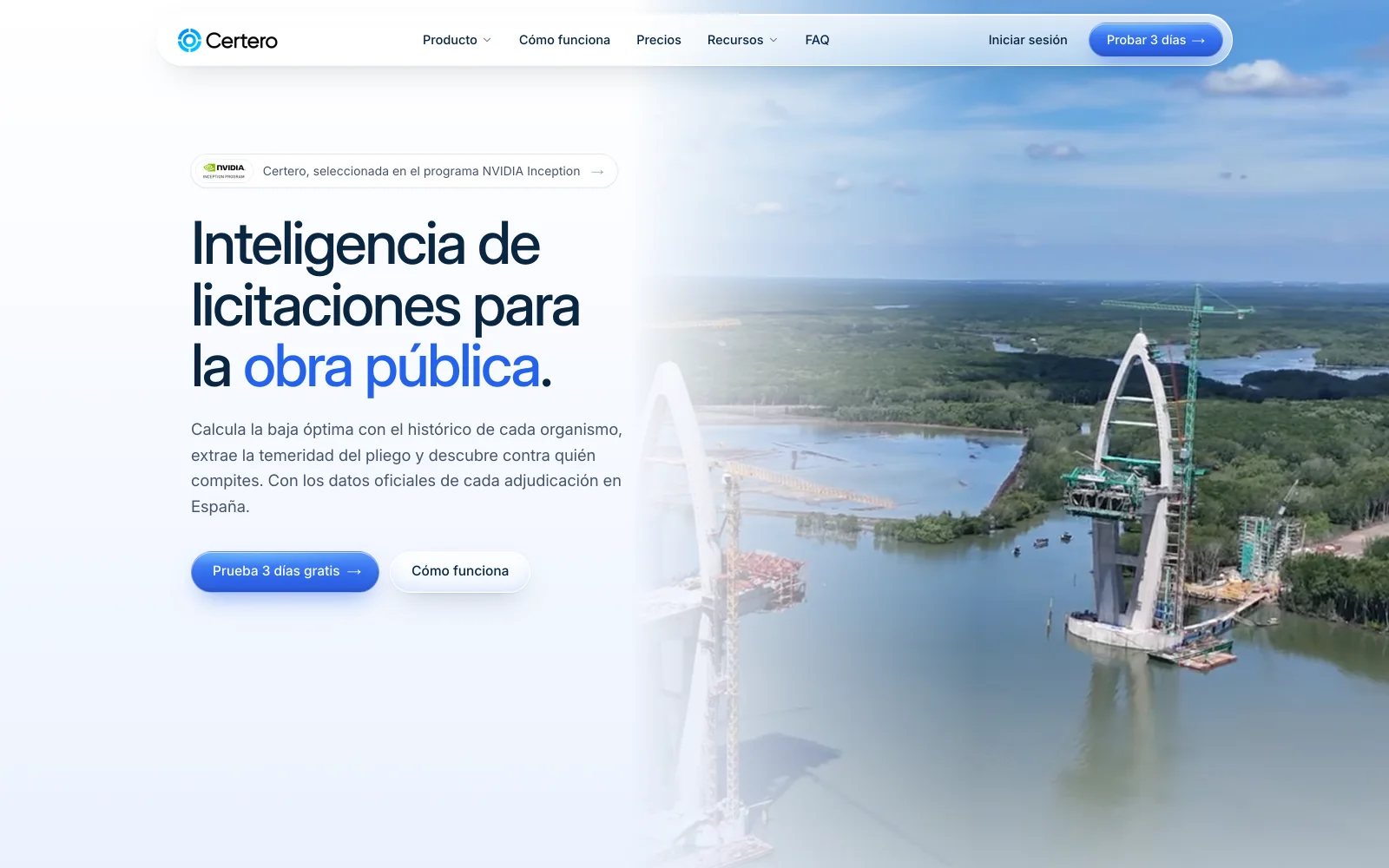
Certero
Tender intelligence for public works
A platform for construction companies with accounts, permissions and each company’s own data, focused on public tenders. Live at certero.es.
Live at certero.es. Accepted into NVIDIA Inception.
6Frequently asked questions
Have you already built a full custom ERP?
We have no published case of a full custom ERP. We have built products with management features, such as Farmacta and Certero, and we describe them with their real status.
Can I keep my accounting software?
That is usually what we recommend. The custom pieces connect to it so your accountant keeps working as before.
How much does a custom ERP cost?
It depends on the scope, which is why we do not publish prices. After the diagnosis we give you a fixed-scope proposal broken into phases.
What if I want to change provider later?
Ownership and usage terms are set out in the proposal for each job, and the system comes with its documentation so another team can take over.
Tell us what your ERP does not solve
Describe where your management gets stuck today. If a standard program is enough, we will tell you.
Tell us your problem