What an MVP is and when a small business should build one
MVP stands for minimum viable product. For a small business commissioning an internal system, the useful definition is simpler: the first phase that someone on your team genuinely uses, with real data, from day one.
1The definition that works for a small business
The term comes from the start-up world, where an MVP tests whether customers will pay for something. For an internal system the question is different: it is not whether anyone wants it, but checking early that it solves the problem and that the team adopts it.
So an MVP is not a mock-up or a demo. It is a small part of the final system, finished and in use. If a few weeks later nobody opens it, it is not an MVP: it is a prototype that turned out expensive.
2How to choose what goes in
Three criteria, in this order:
- One process, end to end. Better “orders arriving by email end up in the management system”, complete, than five half-built modules.
- The one that costs most hours or errors today, so the benefit is felt and the team has a reason to use it.
- A specific group of users: two or three people who will use it daily and can say what is wrong.
3What to leave out on purpose
What is left out gets written down, so it does not creep back in through the back door. In a first phase you can usually do without elaborate management reports, fine-grained permissions for every case, a mobile app if the work is done in the office, integrations that can wait for a manual export and the cases that come up twice a year.
What is never left out: security, backups and data quality. A small MVP cannot be a careless one, because from day one it works with real information.
4How to tell whether it works
Before starting, choose one or two simple measures and note where they stand today: hours a week spent on the task, errors found a month, time from an order arriving to it being recorded. After a few weeks of use, measure them again.
There are also signs that are not numbers: the team stops maintaining the parallel spreadsheet, people ask for new things instead of complaining about existing ones, or someone from another department asks whether they can use it. If the opposite happens, stop and understand why before building the second phase.
5When not to build an MVP
Starting small is not always the prudent choice:
- When a legal obligation requires the whole process to work from the start, for example an invoicing record that must meet a specific format and set of guarantees. Half will not do.
- When you are replacing a system that already works and the two cannot run side by side: if the old one has to be switched off, the new one must cover everything essential.
- When the process is so small that the first phase would already be the whole system.
6First phases that are genuinely used
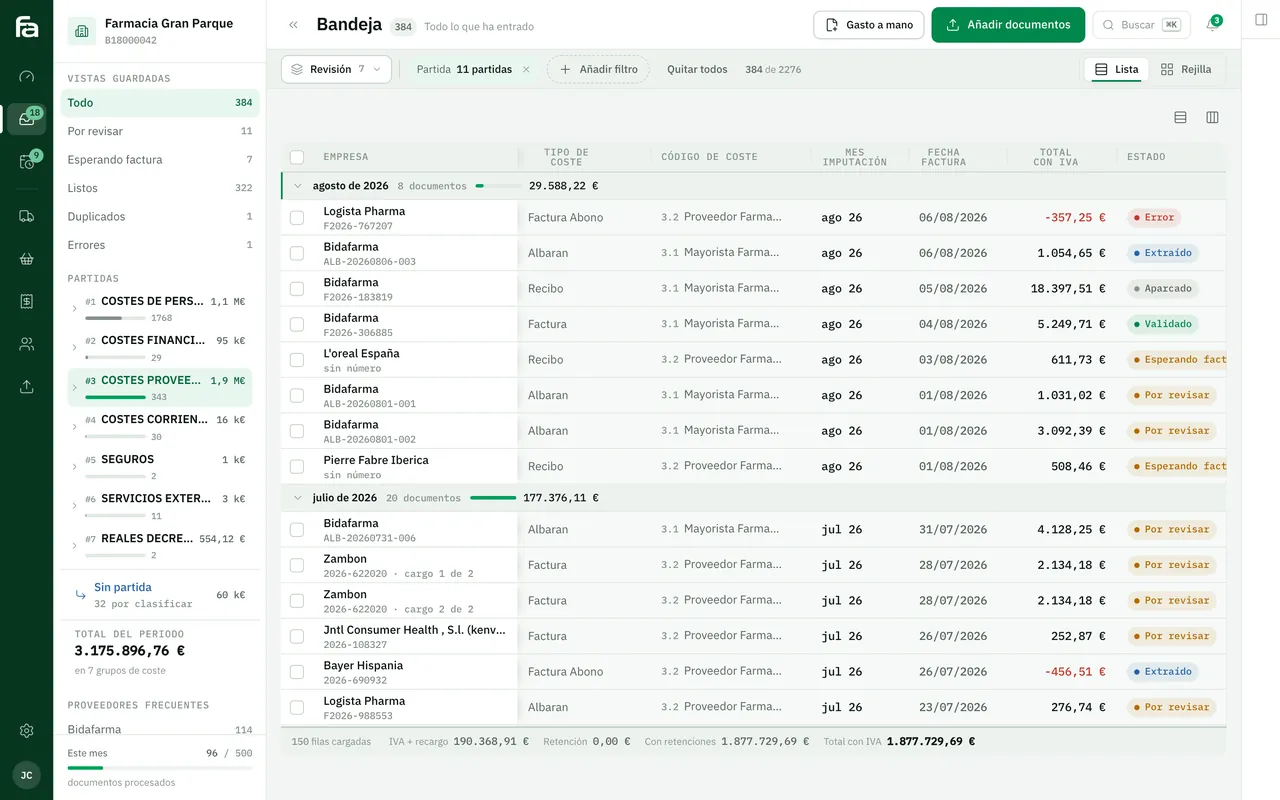
Farmacta
A pharmacy’s back office, built on its paperwork
It started with a single pharmacy and its real paperwork: delivery notes and invoices from wholesalers and laboratories. Due dates, cash flow and analytics come out of that. In use at its first pharmacy.
In use at its first pharmacy
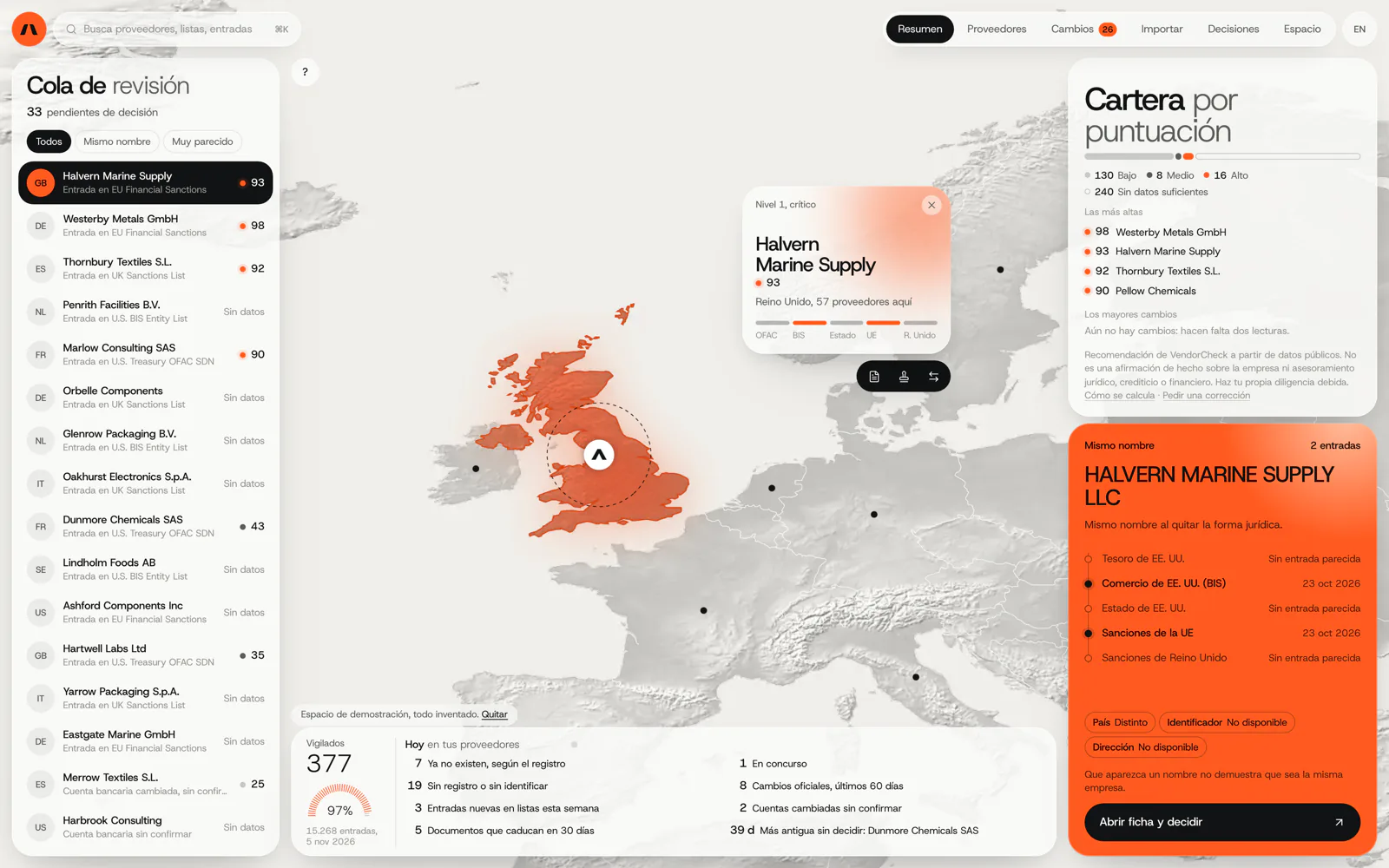
VendorCheck
Supplier screening against official sanctions lists
The piece that delivers the value, matching against the official sanctions lists, was built first and already works. Accounts, billing and alerts are coded and not yet connected. It is in development and no customer uses it yet, so it is an example of sequencing, not of results.
In development. Matching against the official lists works; accounts, billing and alerts are coded and not yet connected. The screens are shown with an invented demo workspace.
7Frequently asked questions
Is an MVP cheaper than the full project?
It is smaller, so it costs less than everything at once. The real saving is not building parts nobody then uses. We do not publish prices on this site; after the diagnosis we propose the scope of each phase.
What if the MVP goes wrong?
That is why it is kept small: you find out early and at little cost. What you learn helps correct the course of the second phase, or decide not to carry on.
Is the MVP thrown away when the full system is built?
It should not be. A well-built MVP is the first piece of the final system, with its own database and code, and the following phases are built on top.
What is the difference between an MVP and a prototype?
A prototype shows an idea and may use invented data. An MVP works with real data and someone uses it in their daily job.
What would your first phase be?
Tell us which process costs you most hours and we will propose a first phase that someone on your team can genuinely use.
Tell us your problem