How long custom software takes to build and what it depends on
There is no figure that fits every project, and be wary of anyone who gives you one before seeing your case. What can be explained is the phases the work divides into and what makes each one take more or less time.
1The phases, one by one
A well-run project moves in this order, and each phase ends with something you can review:
- Assessment: understanding the real process, looking at the documents and measuring the problem. It is the shortest phase and the one that prevents most delays later.
- Fixed scope: writing down what will be built, what is left out and in which phases. It ends with your approval.
- First usable phase: the part that hurts most, working with your real data and tested by your team. Not a mock-up.
- Following phases: each adds part of the process and only starts once the previous one has been approved.
- Go-live: migrating the data, training people and running alongside the old system for a while.
- Maintenance: fixing what breaks and adapting the program as the business changes. It does not end.
2What makes a project longer
In our experience, delays almost never come from the programming itself. They come from here:
- Messy data: duplicate customers, product codes that changed, columns that mean different things depending on the year. Cleaning them takes time and cannot be skipped.
- Nobody decides: if every question has to wait for a meeting, the project moves at the pace of those meetings.
- Integrations: connecting to an ERP, a bank or an external platform depends on what the other side allows and how quickly it responds.
- Scope changes: every new idea mid-phase means rework or replanning. Good ideas get noted for the next phase.
- Unusual documents: the format that turns up once a quarter and nobody mentioned during the assessment.
- Third-party approvals: app stores, banks or a client’s own IT department set their own pace.
3What makes it shorter
The opposite of the above: one person with authority to decide and time to answer, real examples from day one (the difficult ones too), a small, well-chosen first phase and a written list of what is left out.
It also helps to start with what does not depend on anyone else. If the ERP integration will take a while, the first phase can work with a manual export in the meantime.
4How to read a timeline in a proposal
A serious timeline comes after the assessment, is broken into phases and states what it depends on: what you have to deliver and when, which integrations are involved and what happens if they change. Be wary of a single date for the whole project given on the first call, and always ask when you will have something your team can use, not only when everything will be finished.
That is why we do not give timelines on this website: after the assessment we propose a fixed scope in phases and tell you what each one depends on.
5Projects where you can see the phases
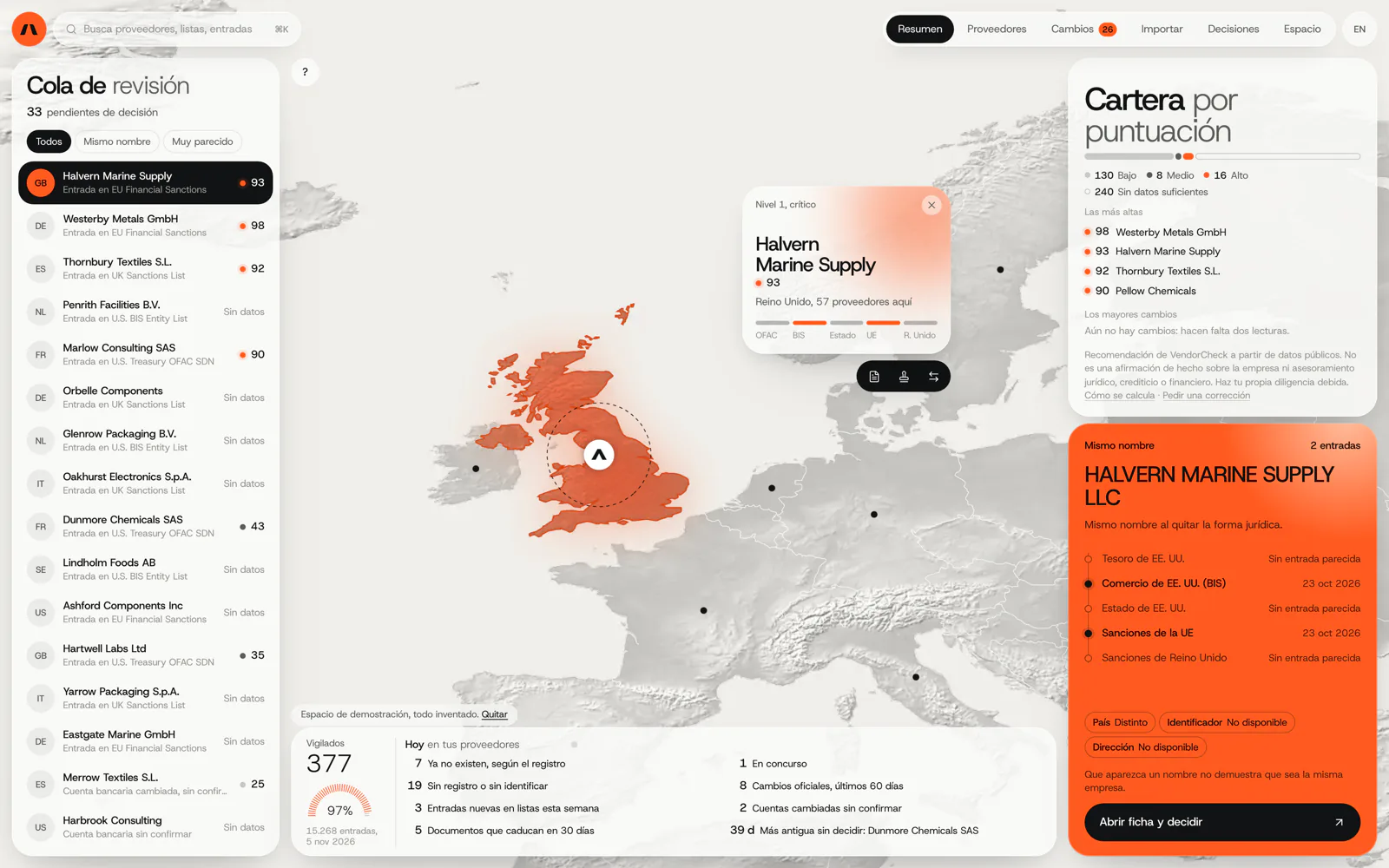
VendorCheck
Supplier screening against official sanctions lists
VendorCheck is in development and shows the phases clearly: matching against the official lists works; accounts, billing and alerts are built but not yet connected.
In development. Matching against the official lists works; accounts, billing and alerts are coded and not yet connected. The screens are shown with an invented demo workspace.
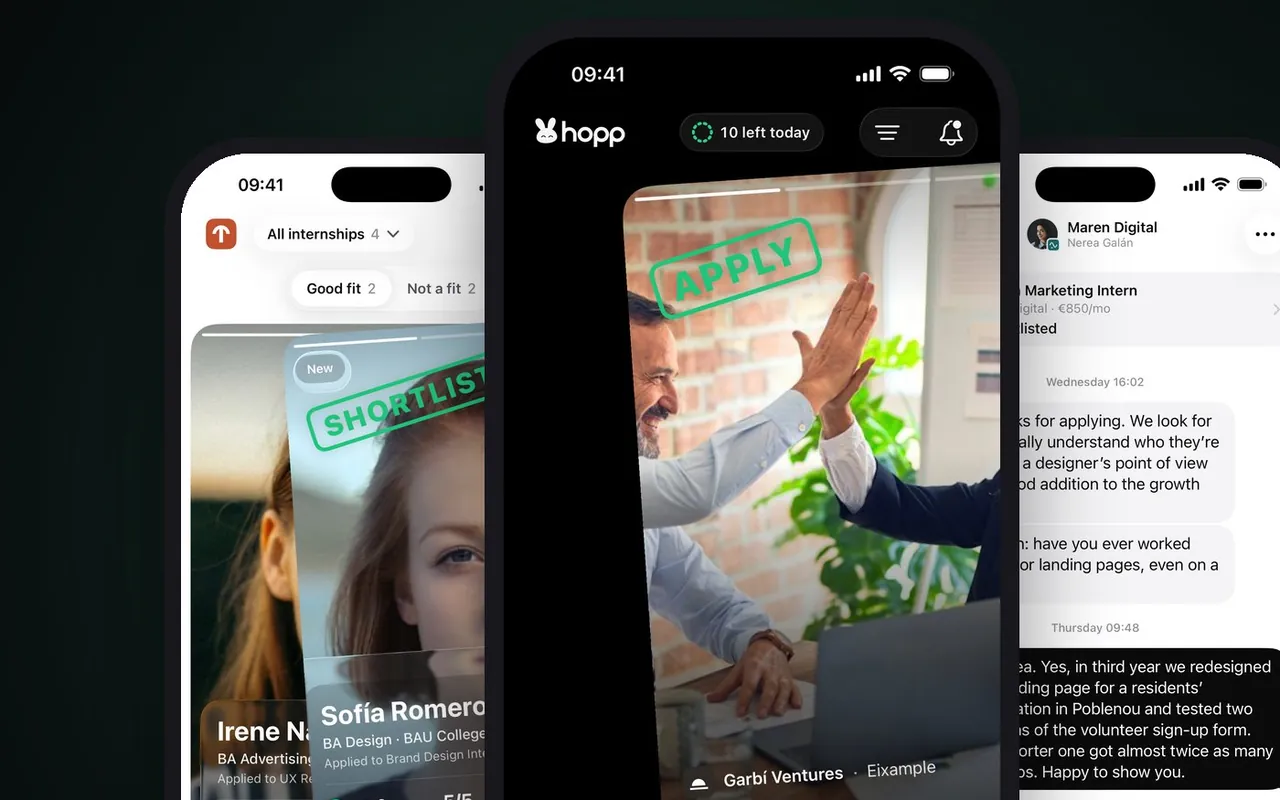
Hopp
Internships for students, one swipe away
Hopp, a native iPhone app, was submitted to the App Store in October 2026. From then on, publication depends on Apple’s review, a timeline the developer does not control.
Submitted to the App Store in October 2026
6Frequently asked questions
Why won’t you give a rough estimate?
Because without seeing the process and the data it would be a made-up figure, and a made-up figure shapes everything else. After the assessment we do give a proposal in phases.
Can I start using something before it is all finished?
Yes. That is the point of the first usable phase: your team works with it while the next one is being built.
Which part depends on us?
More than it seems: answering questions, providing examples and data, and testing each phase with real cases. A person with time for that is what shortens a project most.
And after go-live?
Maintenance begins: fixes and improvements. It is best agreed in the contract from the start.
Want to know what would drive your timeline?
Tell us about the process and which programs it would need to talk to, and we will point out which phases would be the delicate ones.
Tell us your problem