No-code and low-code, explained for a small business
They are ways of building applications and automations without writing code, or writing very little. Used well they solve a lot; it pays to know their limits before resting an important part of the business on them.
1Two similar terms
With no-code you build by dragging pieces, filling in forms and connecting blocks. Airtable offers databases that look like a spreadsheet; Glide or Softr build an app on top of that data; Zapier or Make chain actions such as “when an email arrives with a PDF attached, save it in the customer’s folder and alert accounts”.
Low-code follows the same visual idea but leaves room to write formulas or snippets of code, and is often used by the IT team. Microsoft Power Apps, Google AppSheet and OutSystems are well-known examples. The line between the two is blurred and each vendor uses the words its own way. We do not discuss prices here: they change often and depend on the plan.
2The citizen developer
This is the name for someone in the company who, without being a programmer, builds their own tools: the accounts manager who sets up due-date tracking in Airtable, or the warehouse lead who automates the low-stock alert. The advantage is huge: the tool is built by whoever knows the process.
The risk is the same as with a complex spreadsheet. The tool depends on one person, nobody else knows how it works, permissions were never thought through and, when that person changes role, the work is left without an owner.
3Limits that tend to appear
They do not show up in the first month, but as the tool grows:
- Volume: what runs well with a few thousand records may slow down, or require a higher plan, with many more.
- Complex rules: a process with many exceptions becomes hard to follow in visual blocks.
- Fine-grained permissions, such as each salesperson seeing only their own customers.
- Connecting to desktop management systems that have no connector.
- Vendor dependency: exporting the data is usually possible; taking the logic with you, almost never.
- Where the data is kept, which the platform decides, not you.
4How they sit alongside custom software
It is not one or the other. A no-code prototype can test an idea before anything is commissioned. A custom core can have simple automations in Zapier or Make around it. A form built in a visual tool can feed the main system’s database through an API.
When each route makes sense in your particular case is covered in our guide on custom software or no-code.
5Two cases that go beyond a visual tool
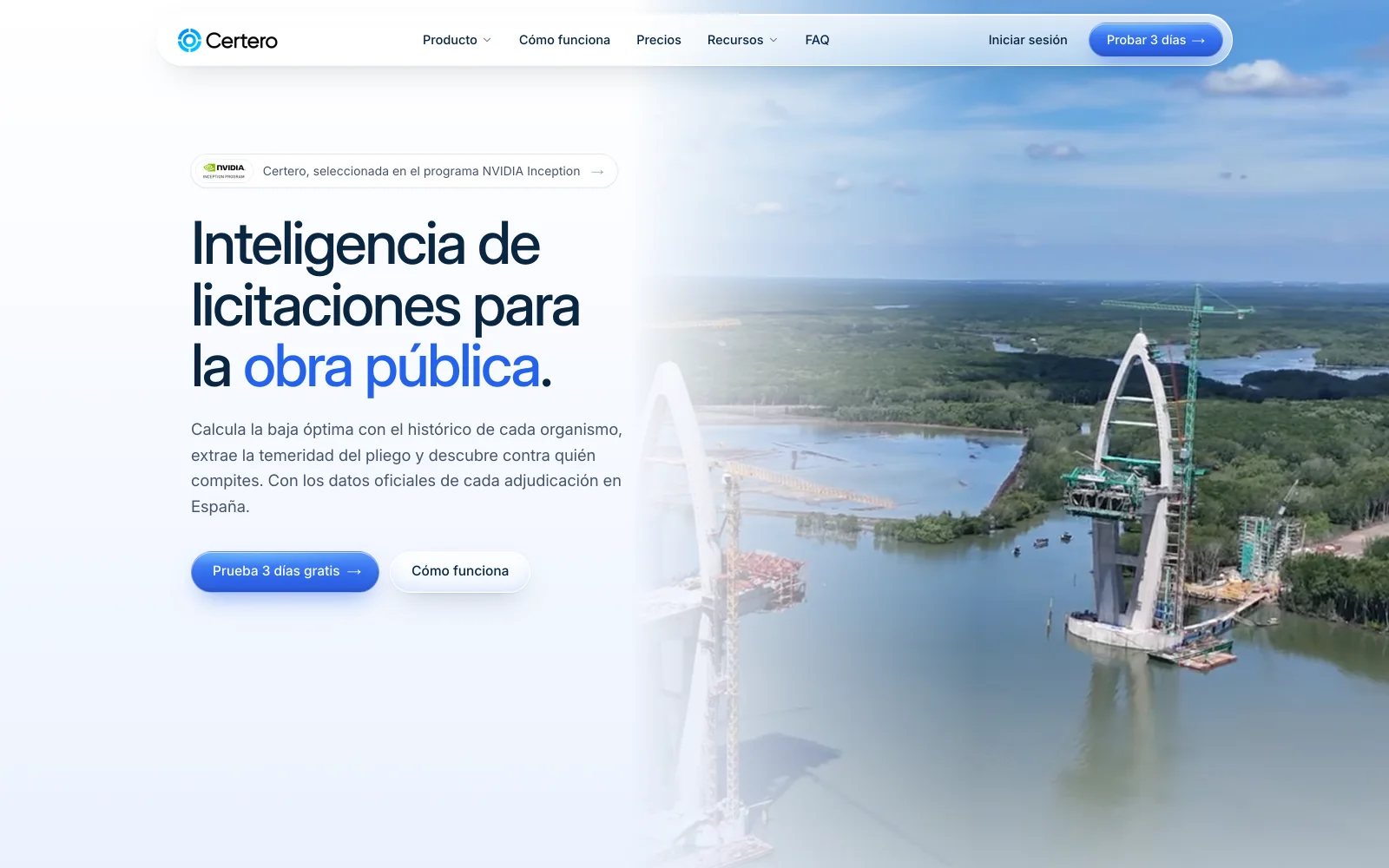
Certero
Tender intelligence for public works
It crosses each authority’s award history with each tender’s documents, using Python and its own database. That volume and logic would be hard to sustain on a no-code platform. A partial match: it is the opposite example. Live at certero.es.
Live at certero.es. Accepted into NVIDIA Inception.
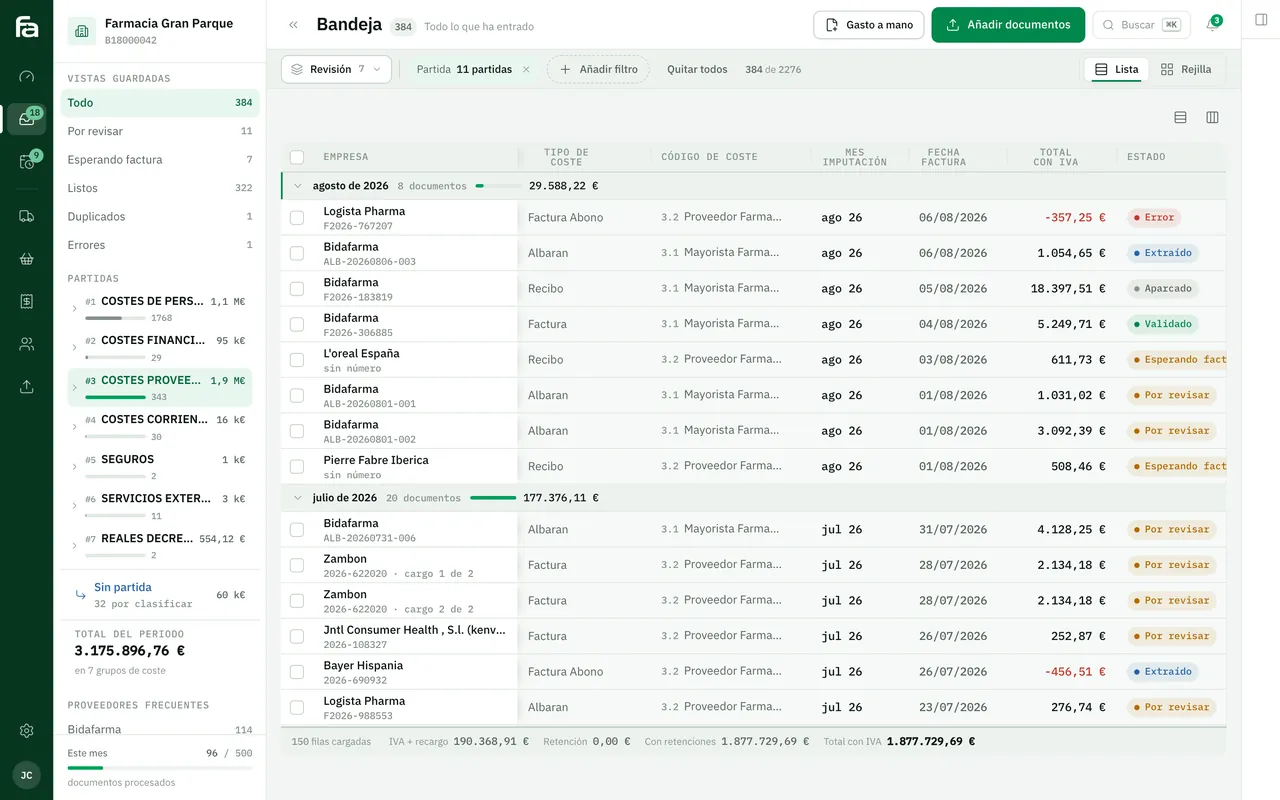
Farmacta
A pharmacy’s back office, built on its paperwork
It reads delivery notes and invoices from wholesalers and laboratories as PDFs, each in its own format, and leaves the data ready for a person to review. Reading such varied documents is one of no-code’s typical limits. In use at its first pharmacy.
In use at its first pharmacy
6Frequently asked questions
Can I start with no-code and move to custom software later?
Yes. The data can usually be exported and the logic has to be rebuilt, but what you set up will serve as a very precise description of what you need.
Is no-code the same as SaaS?
No. SaaS is a way of using and paying for a program by subscription over the internet. Many no-code platforms are SaaS, but most SaaS products do not let you build anything.
Is an Excel spreadsheet no-code?
In a way, yes: the spreadsheet is the most widespread citizen-developer tool, with the same strengths and the same risks.
Do you work with no-code platforms?
Our published projects are built with our own code, and we do not yet have a published case on a no-code platform. If one of them solves your problem, we will tell you.
Is your no-code tool starting to fall short?
Show us how it is set up and we will tell you which part is worth keeping and which is worth moving to code.
Tell us your problem