Purchase orders to suppliers: from a note on your phone to a confirmed order
In many small companies, supplier orders are placed with a note on a phone, a call or a last-minute WhatsApp. It works until something runs out, gets ordered twice or nobody remembers what was ordered. We build the app that puts that loop in order without slowing it down.
1Where it breaks today
In a bakery, a central kitchen or a workshop, ordering from suppliers is a daily task shared between people. Each orders their own items through their own channel, and the problems always appear in the same places:
- Something is found to be missing when it was already needed.
- Two people order the same thing from the same supplier on the same day.
- There is no record of what was ordered, at what price or for when.
- When the goods arrive nobody compares the delivery note with the order.
2The loop we build
Each item you buy has its usual supplier, its purchase unit and, if stock is tracked, a minimum. When something drops below that minimum, or when someone notes it on their phone on seeing an empty shelf, it goes into a suggested order grouped by supplier.
A person reviews and approves the suggestion; the system never buys on its own. If you wish, orders above a certain amount need a second approval. Once approved, the order goes to the supplier the way they work: an email with a PDF order, their web portal or a link to confirm it.
When the supplier confirms, the order is marked as awaiting delivery with its expected date. When the goods arrive, whoever receives them records on their phone what actually came against what was ordered. That receipt is the basis for later checking the delivery note and the invoice.
3What this process is not
It is not full stock control, which covers goods in and out, reservations and locations and has its own page; here we only use the minimum to suggest the order. Nor is it the supplier portal, where suppliers upload their paperwork. And it is not your management software: if you already record purchases there, the approved order is sent to it rather than duplicated.
4Where to start
With a list of your usual suppliers and what is ordered most often from each. Twenty or thirty items are often enough for the loop to make a difference from the first week, and the rest are added once the team is used to it.
5The closest thing we have built
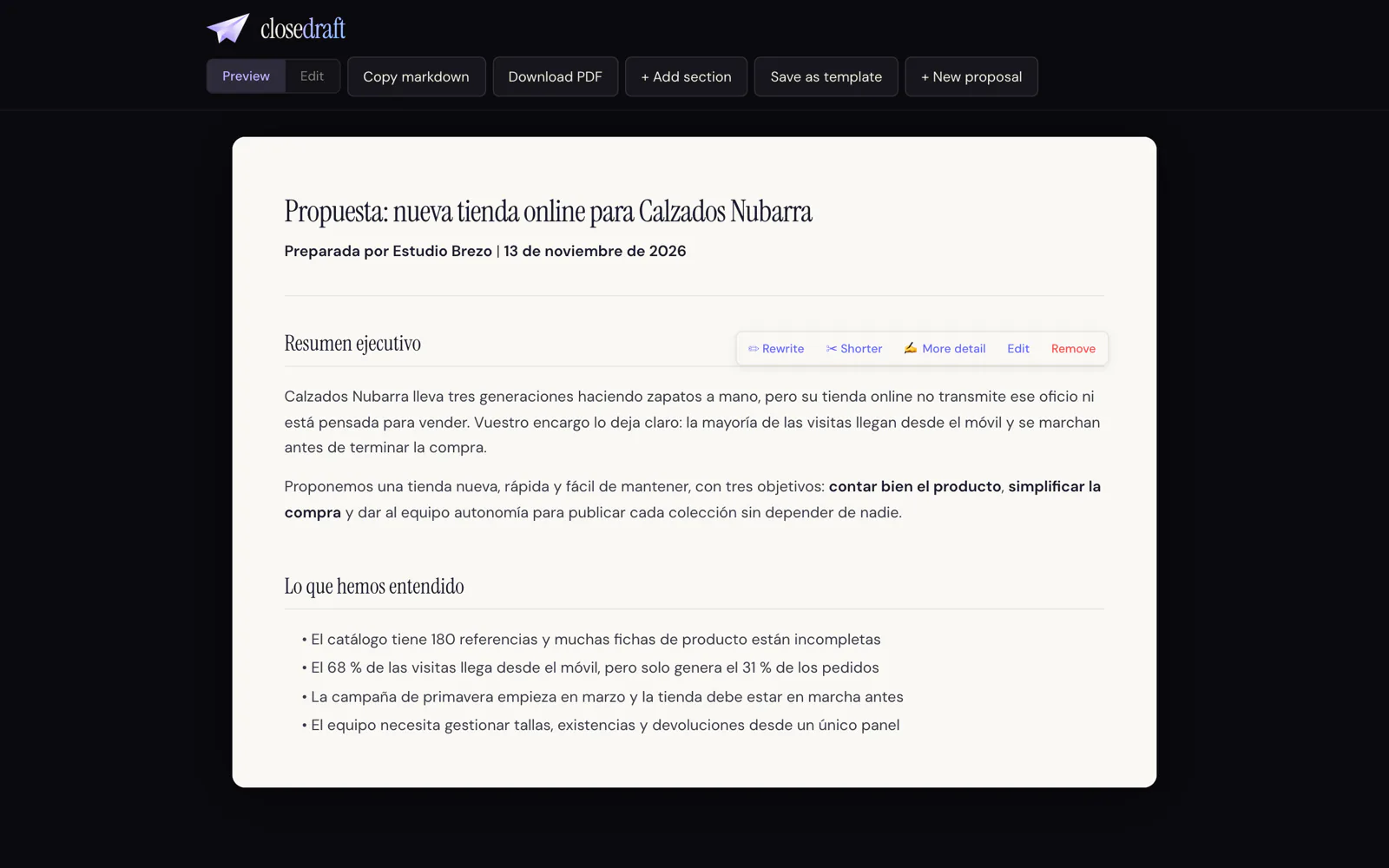
Closedraft
From a client’s brief to a professional proposal in PDF
We do not yet have a published case of supplier ordering. Closedraft turns a client’s brief into a professional PDF proposal, the same step from informal note to orderly document that happens here with an order. It is a prototype.
Prototype
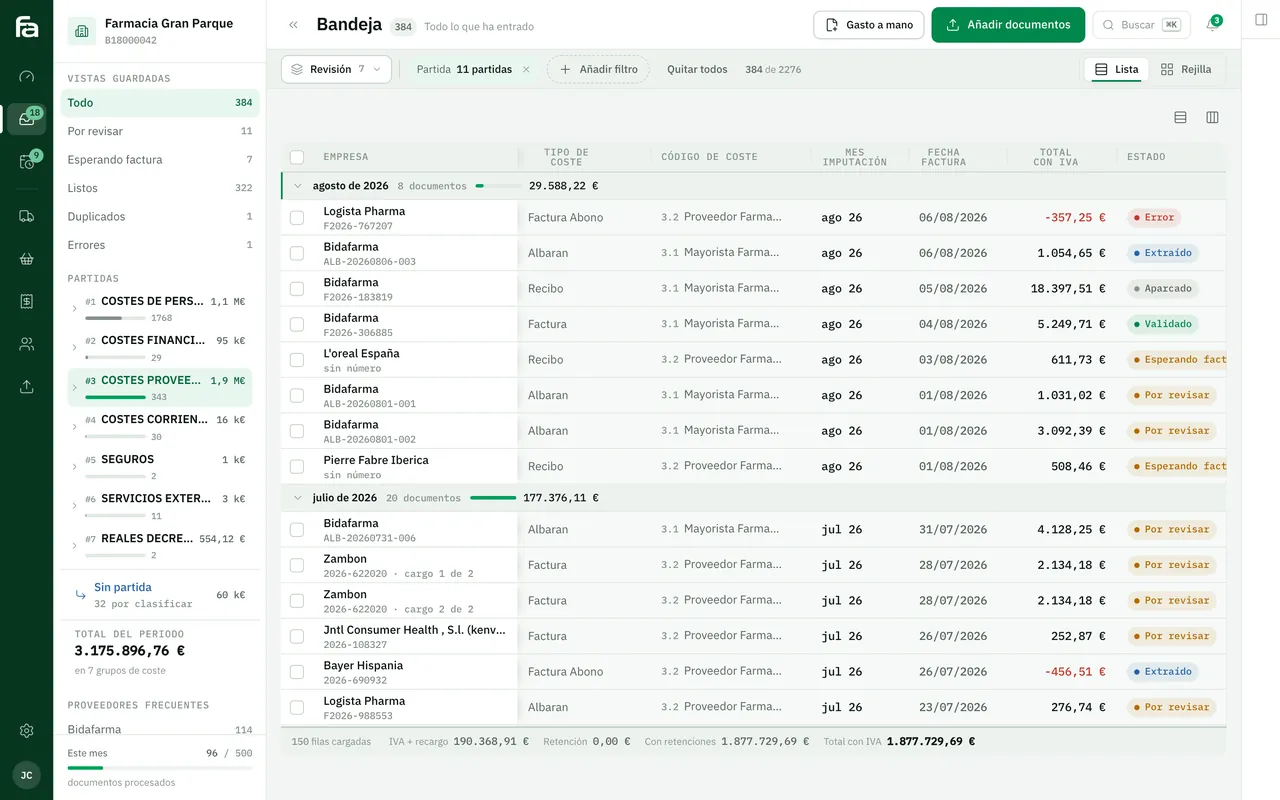
Farmacta
A pharmacy’s back office, built on its paperwork
Farmacta reads the delivery notes and invoices a pharmacy receives and gets them ready for review, which is the end of this loop: checking what arrived. It is in use at its first pharmacy.
In use at its first pharmacy
6Frequently asked questions
Do my suppliers have to use the app?
No. They receive the order as they do today, usually by email. If one prefers to confirm through a link, that is offered, but it is not required.
Can I order from my phone when I see something running out?
Yes. That is the most common use: search for the item, enter the quantity and it goes into the suggestion for the right supplier.
What about suppliers who only take orders by phone?
The order is still recorded in the system and marked as placed by phone. That way there is a record of what was ordered even if the channel stays the same.
Does it suit hospitality, bakeries and workshops?
Yes. Those are the cases where it shows most, because they order small quantities from many suppliers, often.
Tell us how you order today
With the list of your usual suppliers and how you order from them, we will tell you which parts of the loop are worth sorting out first.
Tell us your problem