Batch traceability that stands up to a mock recall
Food, chemicals, cosmetics or components: any company that transforms raw materials needs to be able to say what went into each batch and where it went. We build that tracking as a process, with data captured properly from the first moment.
1First, decide what a batch is
Most traceability problems are not about software but about definitions. Before writing a line of code, we agree with you how a batch is modelled in your plant:
- Incoming batch: the supplier’s, stored together with the supplier (two suppliers may use the same code) and with its goods-in record, quantity and expiry date.
- Internal batch: what you produce, with the date, line or shift, and when it is closed.
- Transformations: blends, splits, repacking and rework, because a batch can come from several and end up in several.
- Unit of measure: kilos, litres, containers or serialised units, and the conversion between them.
2Four moments that must leave a record
At goods-in, the supplier’s batch is recorded by reading its label or delivery note, together with the certificate of analysis if there is one. In production, each consumption is recorded by scanning the label of the container being opened, rather than writing it down at the end of the shift. When finished, the output batch is created with its printed label and code. At dispatch, each line of the delivery note carries the batch that actually left.
If any of the four fails, the chain breaks at that point. So each step asks for the data at the moment it happens and with as little typing as possible: a scan is worth more than a text field.
3The data errors that break the chain
When we review existing records, the same ones always turn up:
- Batch codes typed by hand with a letter O instead of a zero, or with spaces, which then cannot be found.
- Catch-all batches such as «MIXED» or «STOCK» that hide exactly what needs to be known.
- Theoretical consumption from the recipe instead of the actual figures, which does not match what left the store.
- Impossible quantities: 120 kilos consumed from a batch of which 100 came in, and nobody notices.
- Reprinted labels or relabelled batches with no record of the link to the original.
4The mock recall as a test of the system
The honest way to know whether traceability works is to test it. Pick a raw-material batch and ask, with the clock running, for the list of your own batches that contain it, the customers who received them with quantities and contact details, and what is left in stock. Then the reverse path from a batch that has been sold.
The system produces that report at the press of a button and stores each mock recall with its date and how long it took. Repeating it from time to time shows where the data is degrading before a real recall is needed. Whatever your sector or certification requires is for you to define with your quality manager.
5Pieces we have already built
Farmacta
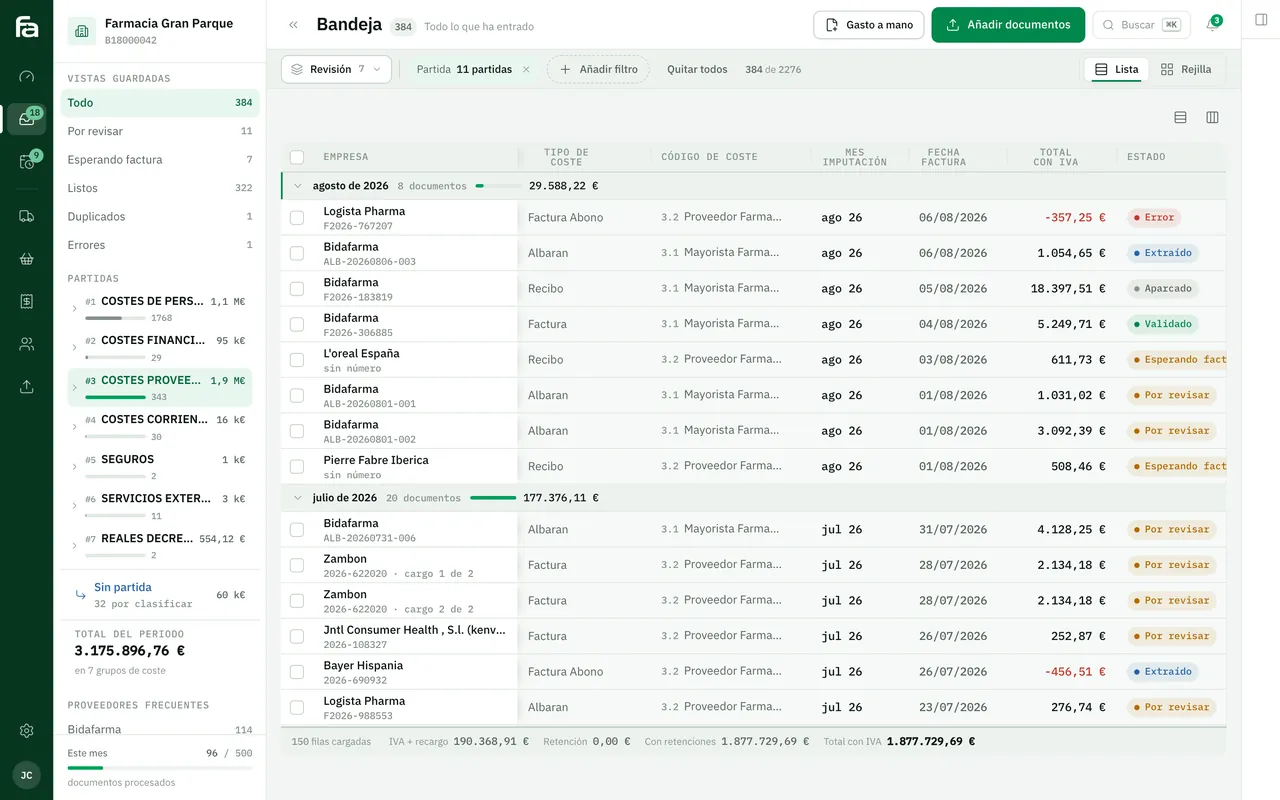
A pharmacy’s back office, built on its paperwork
Farmacta reads a pharmacy’s supplier delivery notes and invoices and matches what was invoiced against what was ordered and received. Recording incoming batches from the delivery note and balancing quantities rely on the same work. Farmacta does not manage batches, and we do not have a published traceability case.
In use at its first pharmacy
VendorCheck
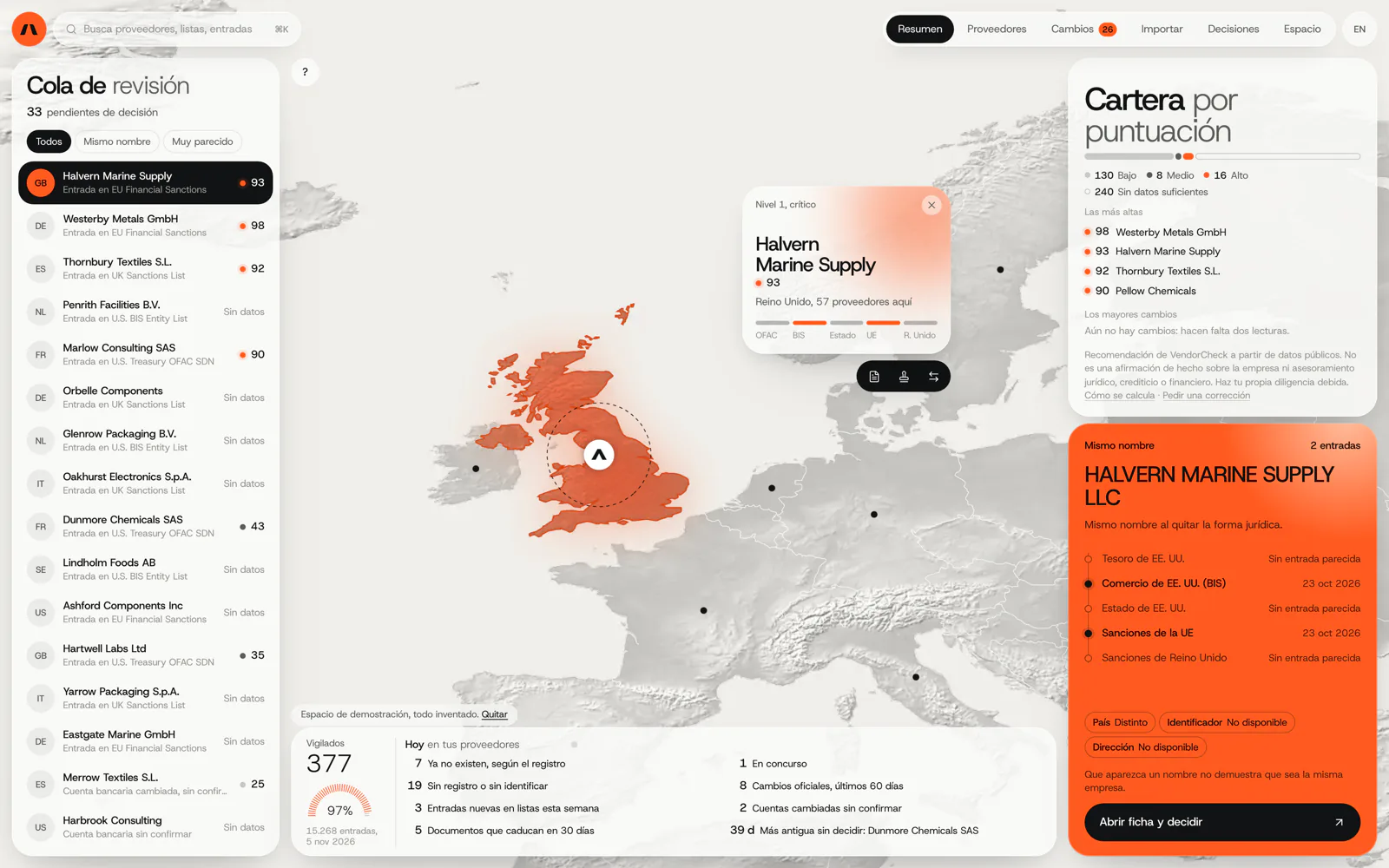
Supplier screening against official sanctions lists
VendorCheck stores each check with its source and date so it can be justified later. A mock recall needs the same record-keeping discipline.
In development. Matching against the official lists works; accounts, billing and alerts are coded and not yet connected. The screens are shown with an invented demo workspace.
6Frequently asked questions
Do we need to buy barcode scanners?
Not always. A phone or tablet with a camera reads most barcodes and QR codes. For high volumes or work in gloves, a dedicated scanner usually pays off.
What if the supplier does not state the batch?
An internal goods-in batch is created with the date and the delivery note, and flagged so the supplier can be asked to include it.
How are rework and waste recorded?
As movements of their own type: material returning to the line keeps its link to the original batch, and waste reduces the quantity with a reason.
Does it work for serial numbers instead of batches?
Yes. The model is the same; the difference is that each batch is a single unit, which usually also needs tracking after the sale.
Can it be built on top of our ERP?
If the ERP already stores batches, the usual approach is to add shop-floor capture and the mock recall. If it does not, tracking lives in the new system and connects to the ERP for purchasing and sales.
Let us run a mock recall on today’s data
Pick a raw-material batch. How hard it is to follow it to your customers tells us what to fix first.
Tell us your problem