Production planning: what gets made, on which machine and when
Planning production means sharing manufacturing orders among machines and people that cannot do everything, with materials that arrive when they arrive and priorities that change mid-week. We build the plan that can be redone in minutes and compared with what really happened on the shop floor.
1The week’s plan, on a whiteboard
In many factories the plan lives in the production manager’s head, backed by a whiteboard or a spreadsheet colour-coded by machine. Orders come out of the management software, but the sequence is decided by hand every Monday and corrected by phone each time a rush job comes in or a machine breaks down.
It works while that person is there. When they are away, or when volume grows, nobody knows for sure which delivery is at risk until it is too late.
If what you need is to follow each job from order to invoice, that is covered on our manufacturing and workshops page. Here we are talking about planning: deciding the order before work starts.
2The data a credible plan needs
A plan is only as good as its data. Before drawing any screen we check with you whether it exists and whether it is reliable:
- Manufacturing orders with item, quantity, due date and routing.
- Real capacity: machines, shifts, people with their skills and planned maintenance stops.
- Set-up and changeover times as well as cycle time per part. This is the figure most often missing and the one that throws the plan out most.
- Materials: stock and open purchase orders with their expected arrival date.
3Sequencing and resequencing
The planner sees each machine as a timeline and moves orders along it. The system instantly checks what the whiteboard cannot: whether the material will be there, whether someone qualified is on that shift, whether the machine has a planned stop and which deliveries slip as a result.
It also suggests sequences that cut changeovers by grouping similar orders, and shows what is gained and what is lost. When a rush job comes in, it shows which orders it displaces and which customers are affected. Accepting, changing or rejecting the suggestion is always the planner’s call, because they know things that are in no dataset.
4Plan against reality
A plan that is never checked against what happens is just a wish. On the floor, the operator records from a tablet the start and end of each order, good parts and rejects, and the reason for any stoppage. There is no need to connect the machines to begin with.
With that, the plan updates itself, deviations show up the same day and, after a few weeks of data, standard times stop being estimates and start to look like real ones. That is what makes each plan better than the last.
5Where we have solved something similar
Certia Group
A team of AI agents inside an engineering firm
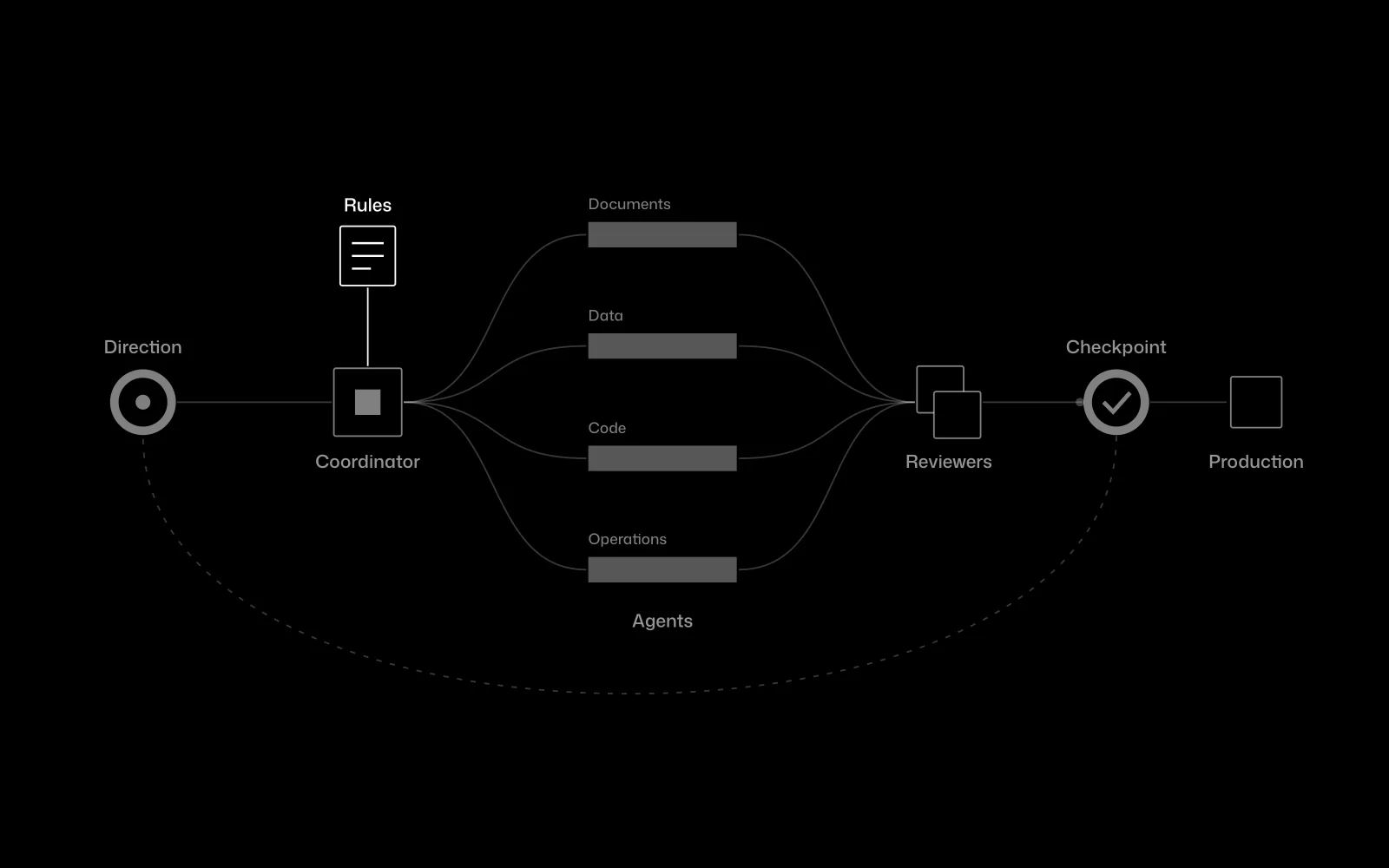
At Certia Group we integrated a team of AI agents that takes on work that used to pass from hand to hand, with a person approving every step that matters. It is the same split we propose for the planner: the system suggests, the planner decides. We do not yet have a published industrial production planning case.
In use
6Frequently asked questions
Does it replace the production module in our management software?
Not necessarily. Orders can still originate in your software; what we add is sequencing, capacity and shop-floor tracking, which those modules tend to handle least well in a small company.
Do the machines have to be connected?
Not to begin with. Progress is recorded from a tablet. If later on a machine’s data can be read and it is worth it, we look into it.
What if our standard times are unreliable?
That is the norm. We start with what you have, and the record of actual progress corrects them. Within a few weeks you know which times were far from reality.
Does it work for make-to-order with many product references?
Yes, and that is where it helps most, because the plan is different every week. What changes is how orders are grouped to reduce changeovers.
Does the system decide the sequence on its own?
It proposes one and explains why. The planner is the one who approves, changes or rejects it.
Show us this week’s plan
With this week’s whiteboard or spreadsheet and what actually happened, we can tell you what data is missing and where to start.
Tell us your problem