Traceability: being able to rebuild where it came from and what happened
Having traceability means being able to answer two questions with data, without relying on anyone’s memory: where did this come from, and what was done with it? It applies to products and also to the data in your system.
1The three directions of product traceability
In a business that manufactures, packs or distributes, there are three stretches, each answering a different question:
- Backward: which supplier and which batch each raw material came from. If a supplier warns of a problem with its flour, you know which deliveries are affected.
- Internal: which raw material batches went into each product batch, on which machine, on which shift and who did it.
- Forward: which customers each finished batch went to, on which delivery note and on what date. That is what lets you recall only what is affected, not everything.
2An end-to-end example
A bakery is told that a batch of almonds arrived with an undeclared allergen. With traceability, within minutes it knows the three bakes it was used in, that two went out on Tuesday to four cafés and that the third is still in the cold room. Without it, the day goes on searching paper delivery notes and more product is withdrawn than necessary.
In food, food safety rules require you to be able at least to identify who you bought from and who you sold to; exactly what they require of your company is for your adviser to confirm. The full process with batches, labels and mock recalls is on our batch traceability page.
3The other traceability: who changed what, and when
The same idea applies to data. An audit log keeps every significant change: who made it, when, what the value was before and what it is after. If a customer’s price dropped by ten per cent, the log says who changed it and on what date, with no argument.
It is exactly what a shared spreadsheet does not give you. And it is not only for finding culprits: it lets you undo a mistake, explain to an auditor or a customer why a decision was taken, and ensure sensitive data is not touched without leaving a trace. The more important the decision, the more it matters to keep the source it was based on as well.
4What to ask of a program
- That the batch is recorded at the time, with a phone or barcode scanner, not from memory at the end of the day.
- That a search by batch shows the backward and forward path on one screen.
- That changes to prices, quantities and records are logged with user, date and previous value.
- That the log cannot be deleted or edited from within the application.
5Decisions that leave a trail
VendorCheck
Supplier screening against official sanctions lists
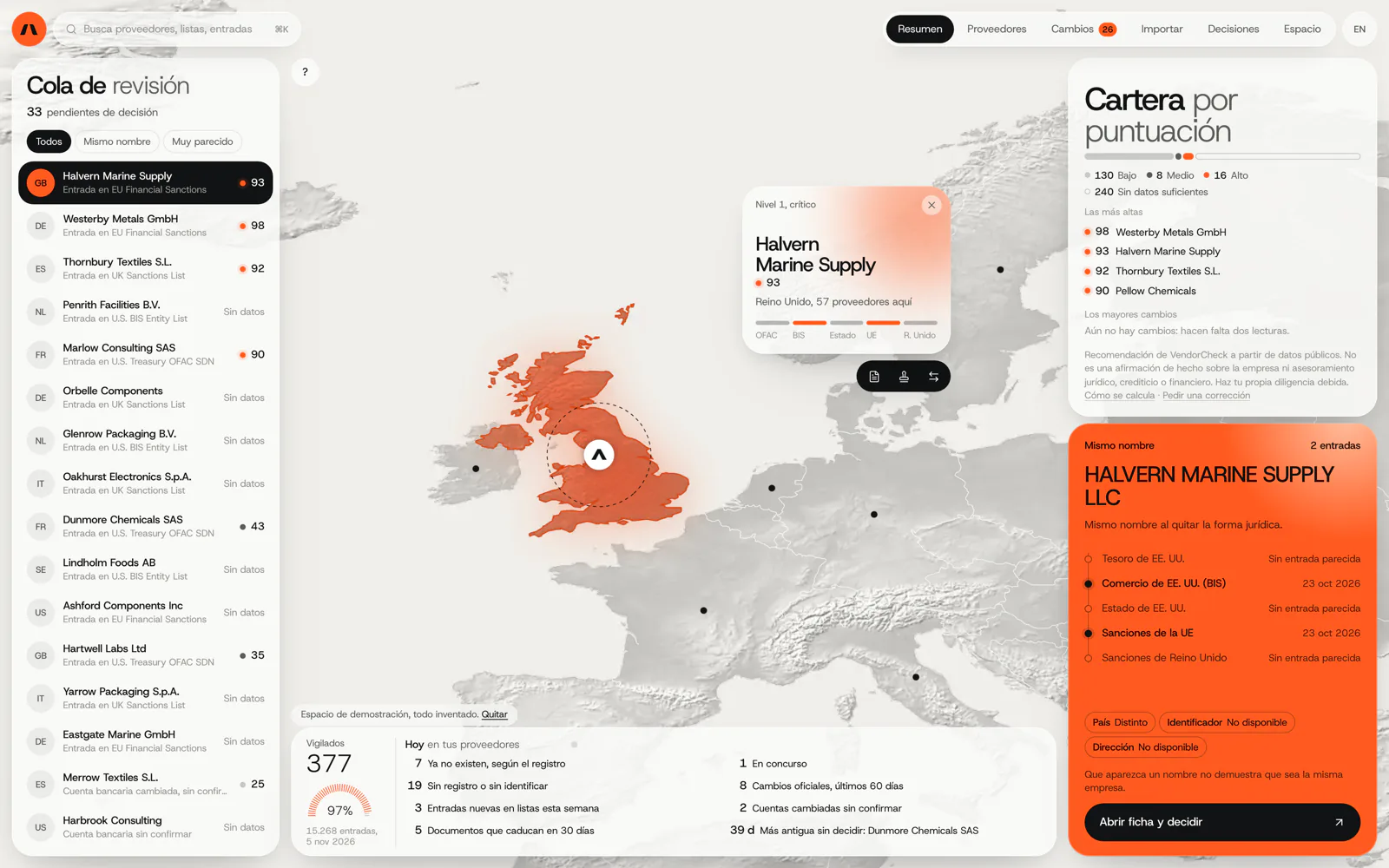
VendorCheck records every decision about a supplier with the list consulted and the date, so it can later be shown that the check was done. It is traceability of decisions, not of products. It is in development: screening against the official lists works and accounts are not yet connected.
In development. Matching against the official lists works; accounts, billing and alerts are coded and not yet connected. The screens are shown with an invented demo workspace.
6Frequently asked questions
Is it enough to write the batch on the delivery note?
For forward traceability, partly. But unless you also record which raw material batches went into each production run, the chain breaks in the bakery or on the factory floor.
Doesn’t a change log take up a lot of space?
At small-business volumes it is not a problem. Changes to important data are logged, not every click.
Who should be able to see the change log?
Usually management and whoever administers the system. We explain how in the entry on role-based permissions.
Do you have a published batch traceability case?
We do not yet have a published case of batch traceability in food or manufacturing. We have built systems that record every decision with its source and date.
How long would it take you to trace a batch today?
Try it with a batch from last week and tell us where you got stuck. That is where we would start.
Tell us your problem