How to handle returns without losing track of the goods
A badly handled return costs twice: the credit issued without checking and the goods that come back to the warehouse without anyone knowing. We build the system that follows each return from the customer’s request until it is closed in the accounts.
1The journey of a return, end to end
From the outside it looks like a formality: the customer sends it back and gets a refund. Inside there are six steps, and each involves someone different: customer service, transport, warehouse, quality and accounts.
- Request: the customer asks to return, by email, by phone, in the online shop or through the sales rep.
- Authorisation: someone checks that the order exists, that it is within the time limit and that the reason is acceptable, and gives it a number.
- Collection: transport is arranged or shipping instructions are given.
- Inspection on arrival: the parcel is opened, counted and the condition of each unit is checked.
- Outcome: back to stock, refurbished, written off as a loss or sent back to the supplier.
- Closure: credit note, replacement or rejection of the return, communicated to the customer.
2Where it goes wrong today
In most small companies these steps live in email and in the memory of two people. The same failures keep coming back:
- A parcel reaches the warehouse and nobody knows which customer sent it or whether it was authorised.
- A credit is issued before inspection and then the goods turn out to be damaged or incomplete.
- The product goes back on the shelf without a stock entry, and the inventory stops matching.
- The reason is typed as free text («didn’t like it», «wrong», «broken») and nothing can be counted.
- A return that should be passed back to the supplier ends up as your own loss.
3The data worth keeping for every return
You do not need a long form. You need every return to carry a few fixed pieces of data, always the same, so they can be searched and counted later: the original order or delivery note, the line and quantity, the reason chosen from a closed list, the batch or serial number if there is one, the condition on arrival with one or two photos, the outcome decided and the credit amount, with who decided each thing and when.
With that, the warehouse can scan the authorisation number on the parcel label and see straight away what to expect inside. And accounts does not issue a credit until the inspection is recorded, unless someone with permission decides otherwise and it is logged.
4Returning to your supplier and learning from the reasons
When the fault is the manufacturer’s, the customer’s return should generate, in one click, the return to your supplier: which units, from which batch, with the inspection photos. The system then tracks whether the supplier has sent the credit or the replacement, which is the part most often forgotten.
With reasons recorded properly, once a month you can see which products are returned most, which customers return as a habit and which carrier delivers the most damage. That analysis is often worth more than the time saved.
If you sell to consumers at a distance, Spanish consumer law sets withdrawal periods and conditions. The system can warn about the periods you configure, but which ones apply to you should be confirmed by your adviser.
5The closest thing we have built
Farmacta
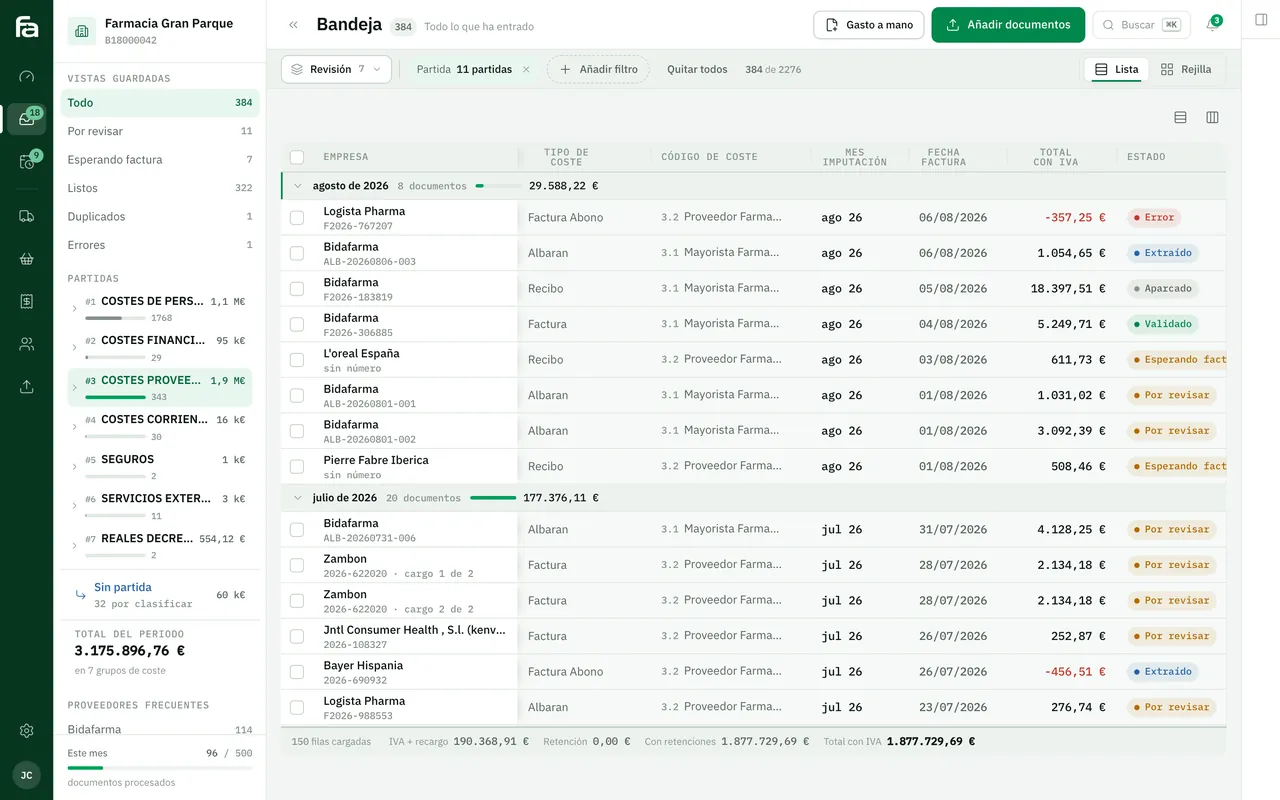
A pharmacy’s back office, built on its paperwork
Farmacta does not handle returns. What it shares with this process is the paperwork: it reads delivery notes and invoices from wholesalers and laboratories as PDFs and leaves the data ready for review, which is where a return to a supplier either reconciles or does not. We do not yet have a published case of returns management.
In use at its first pharmacy
Kiero
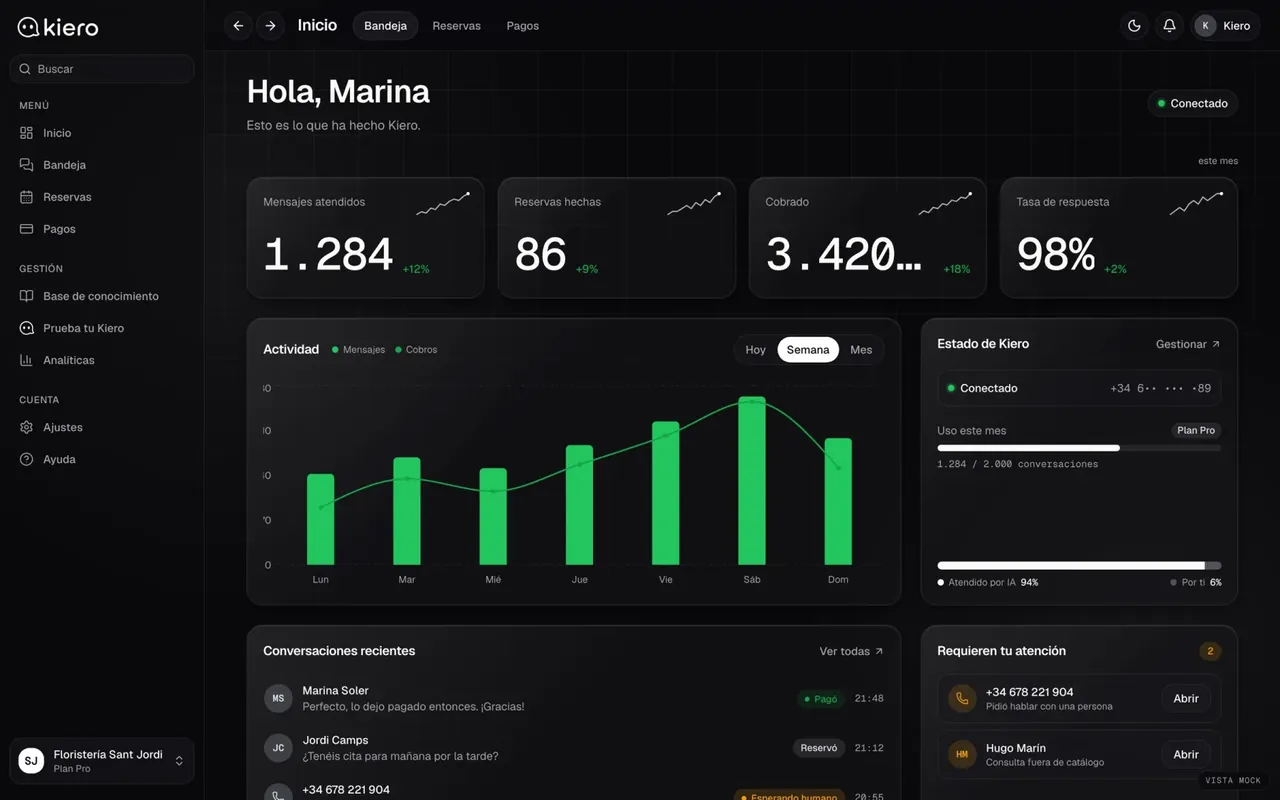
An AI employee on the business’s WhatsApp
Many returns start as a message from the customer. Kiero answers on WhatsApp with each business’s data and passes to a person whatever it cannot resolve; a return request is exactly that kind of message.
Live at kiero.es
6Frequently asked questions
Can it connect to our online shop?
Yes, in most cases. The usual shop platforms offer a way to read orders and receive notifications; the request can come in from the shop itself and the refund can go back to it. We check your specific platform before proposing it.
What about products with a batch or serial number?
The batch or serial number is requested at inspection and compared with what left on the original delivery note. If it does not match, the return is held for a person to review.
Can customers request a return without calling us?
Yes. A form with their order number shows the lines they can return and asks for the reason. Authorisation is still given by a person, or by a rule you define for the simple cases.
Who approves a late credit or one without inspection?
Whoever you decide. The system does not prevent it, but it requires someone with permission to do it and records who it was and why.
What if we handle very few returns?
With only a few returns a month, tidying up the spreadsheet you already have may be enough. If that is the case, we will tell you so in the diagnosis.
Bring us three returns from last month
A simple one, one that went wrong and one that is still open. That shows us where the trail is lost and what to tackle first.
Tell us your problem