Fleet and route management when vehicles are not your business
A distributor with its own deliveries, an installation firm with fifteen vans or a sales team with company cars share the same problem: a fleet that costs a lot and that nobody sees as a whole. We build the system that organises it, prepares the routes and shows where the money goes.
1You do not have to be a haulier to have a fleet
Transport companies have their own issues with shipping documents, which we cover on the transport sector page. Here we mean the company whose business is something else but which depends on its vehicles every morning: deliveries to customers, technicians going out to install or repair, sales reps visiting clients.
In those companies the fleet is usually run by someone in the office in spare moments, with a spreadsheet of registration numbers, the policies in a folder and inspection reminders in their email calendar. It works until a vehicle is driven with an expired roadworthiness inspection (the Spanish ITV) or lapsed insurance, or until someone asks what each van really costs.
2A record for every vehicle and every driver
Before routes, order. For each vehicle and each driver we gather:
- Registration, chassis number, model, registration date and whether it is owned, leased or hired, with its contract and agreed mileage.
- ITV inspection dates, policy expiry, manufacturer services by mileage or time, and tyre changes.
- The linked fuel card, the usual driver and the equipment carried on board.
- For the driver: licence category, its expiry date and any training or authorisation your company requires for that vehicle.
3Tomorrow’s route, prepared the evening before
With the next day’s orders, visits or call-outs, the system groups stops by area, takes into account each customer’s delivery windows and the vehicle’s capacity, and proposes an order. The transport manager or service coordinator adjusts it, because they know things no data holds: which customer always keeps you waiting, which street will not take a large van.
Each driver receives their route sheet on their phone, with the address, contact and what to deliver or do at each stop. From there they mark the stop as done, capture the signature or photo and report incidents in two taps: customer not in, wrong address, breakdown, delay. The office sees them immediately and can reschedule without phoning anyone.
4Fuel, workshop and mileage: where the cost shows
Fuel card statements and workshop invoices arrive every month, but they are rarely matched with mileage. We import the statement, read the workshop invoices and ask for the odometer reading at each fill-up. Each vehicle then has its cost per kilometre and its consumption, and an alert is raised when something is out of line: a fill-up on a day with no route, consumption rising for no reason, a leased vehicle about to exceed its contracted mileage.
5Tracking and people’s data
If the vehicles carry trackers, the data is useful for planning, but the driver is a person. Knowing where an employee is has data protection and employment implications: what is recorded, when, who sees it and how they are informed. You decide that with your adviser before anything is switched on, and the system is configured accordingly, for instance not recording positions outside working hours.
6What we build on
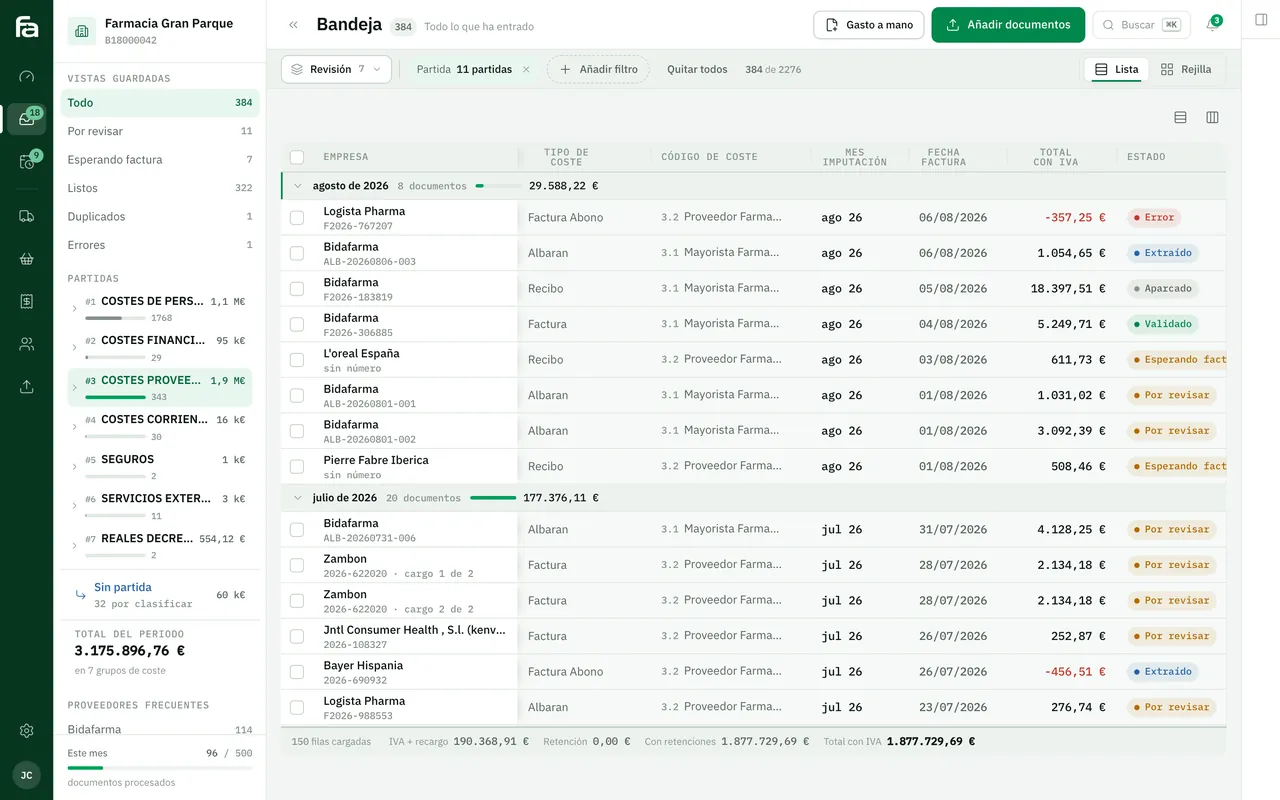
Farmacta
A pharmacy’s back office, built on its paperwork
Farmacta reads supplier invoices as PDFs and extracts their lines for a person to review. Workshop invoices and fuel statements are read with the same piece. We do not yet have a published fleet management case.
In use at its first pharmacy

Hopp
Internships for students, one swipe away
Hopp, a native iPhone app built to complete a task with a single gesture, sets the standard for the driver’s route sheet: big buttons, little text and nothing to type if it can be photographed. It is awaiting App Store review.
Submitted to the App Store in October 2026
7Frequently asked questions
Do we need to fit trackers to the vehicles?
Not to start with. The vehicle records, expiry dates, route sheets and cost per kilometre all work without a tracker. If you already have one, we try to connect its data.
Does it calculate the optimal route?
It proposes a sensible order within the constraints you give it. We do not promise the perfect route: a person adjusts it, and the system learns from changes that keep recurring.
What about leased vehicles?
They are recorded with their contract, agreed mileage and what the leasing company covers. The useful alert there is not the service but excess mileage and the end of the contract.
What if the driver has no signal?
The route sheet is downloaded at the start of the day, and stops marked offline are sent when the signal returns.
Does it warn about inspections and insurance?
Yes, with the notice you choose, to the person responsible and, if you wish, to the usual driver. The alert stays open until someone records the new date.
Tell us what one van costs you a year
If the answer takes more than five minutes, that is the first phase. With your vehicle list and a month of invoices we can start.
Tell us your problem