Collections and overdue reminders without chasing invoices by hand
Many small businesses do not have a sales problem but a collection problem: overdue invoices nobody chases in time because chasing is awkward and there is always something more urgent. We build the system that alerts, reminds in the right tone and keeps a record of every step.
1The due-date list nobody looks at in time
The data already exists: every invoice issued has a due date and a payment method. The trouble is that it sits in the invoicing software and nobody looks at it until cash gets tight. By then the invoice is weeks overdue and the customer has already paid whoever chased them first.
The first step is a daily view of what falls due and what is already overdue, split by payment method:
- Bank transfers: expected and, if they do not arrive, the reminder sequence starts.
- Direct debits: grouped into batches for the bank, with each customer’s SEPA mandate on file, and returned debits go back into follow-up.
- Promissory notes and cards: each with its own date and check.
2Staged reminders, each with its own tone
You do not write to a good customer who has slipped up the same way you write to one with three unpaid invoices. So reminders follow stages you define: a friendly note a few days before the due date, another the day after with the payment link, a firmer one some time later and, finally, a call from a person.
They go by email or WhatsApp, depending on the customer. On WhatsApp, messages the business starts use templates approved by the platform, so they are prepared in advance. Customers you mark (the large ones, the sensitive ones) receive nothing automatic: the system prepares the draft and someone reviews it before it is sent.
3Payment promises, calls and orders on hold
When a customer replies «I’ll pay on Friday», that promise is recorded with its date and amount. If the money has not arrived on Friday, the case goes back onto the list of whoever has to call, with the full history in front of them: what was sent, what they said and who spoke to them.
Each customer who owes money has an assigned owner, so they do not get two calls, or none. And if a customer goes over the limit you set, the system alerts the sales rep when a new order arrives or holds it until someone with permission releases it. The decision is always a person’s; the system only stops goods going out without anyone having looked.
4Connected to the accounts and the bank
A reminder sent to someone who has already paid is the worst outcome. So each invoice’s status is updated from bank movements or the accounting software, and anything paid drops out of follow-up before the next reminder goes.
Spain’s Late Payment Act regulates payment terms between businesses and the consequences of late payment. We do not give legal advice or handle court claims: how the law applies and when to move to a formal claim is for you to decide with your adviser. For that moment, the system hands you the complete file for each debt.
5What we have already built along these lines
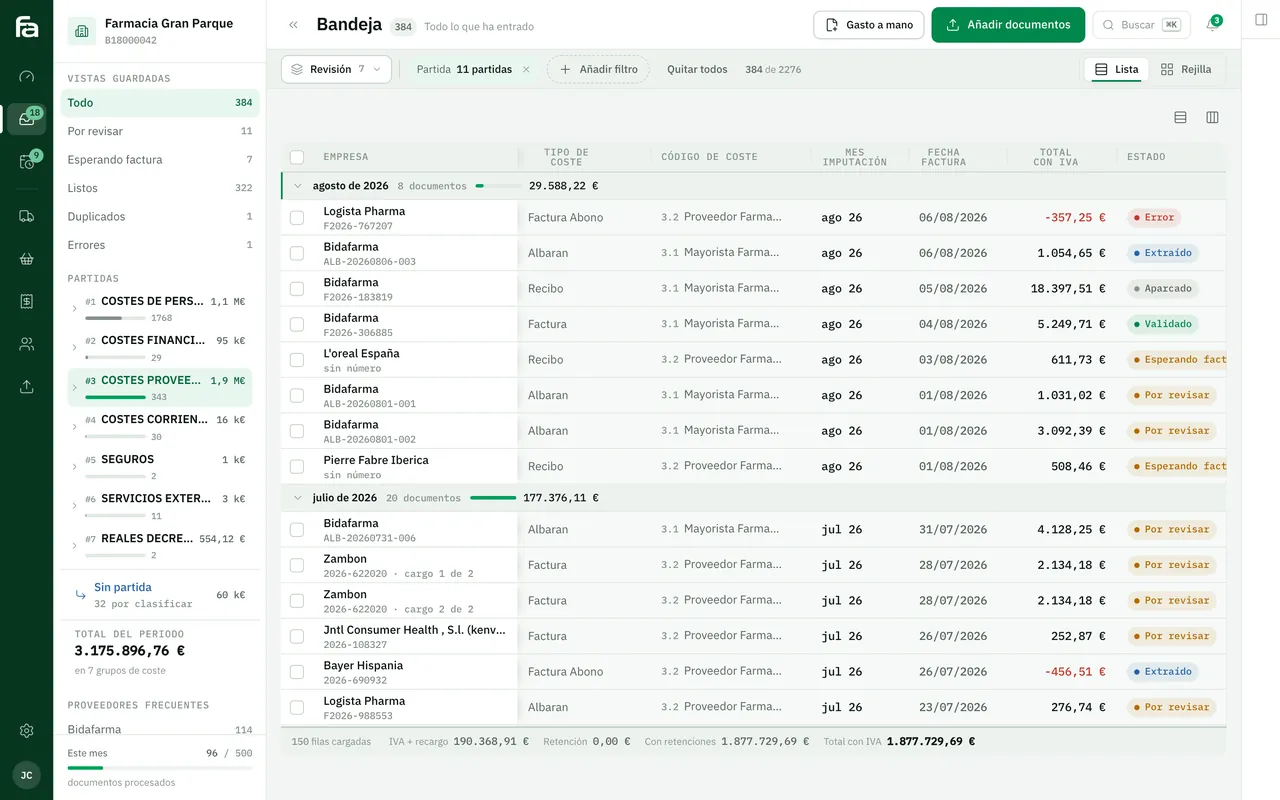
Farmacta
A pharmacy’s back office, built on its paperwork
Farmacta extracts the data from a pharmacy’s invoices and uses it to organise due dates and cash flow. That is the payables side; customer collections are organised on the same foundation. It is in use at its first pharmacy.
In use at its first pharmacy
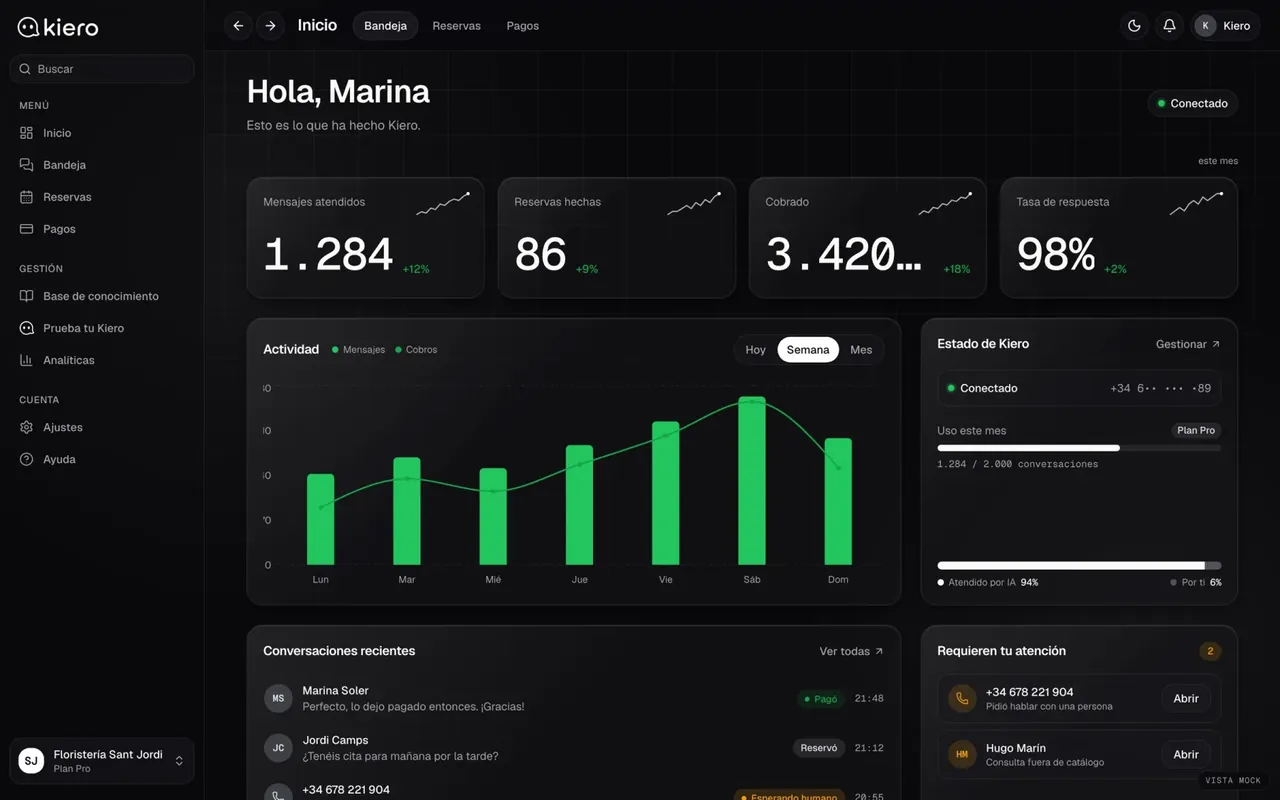
Kiero
An AI employee on the business’s WhatsApp
Kiero takes payment inside the WhatsApp conversation, with payments connected through Stripe Connect. A reminder with a payment link in the chat builds on that piece. We do not yet have a published case of overdue payment management.
Live at kiero.es
6Frequently asked questions
Are reminders sent automatically?
The ones you choose. Usually the first reminders go out on their own, while the firmer ones, or those for certain customers, wait for someone to review them.
Can the customer pay straight from the reminder?
Yes, if a payment gateway is connected. The link carries the exact invoice amount and the payment is marked automatically once confirmed.
Do you handle court claims?
No. We prepare the file with invoices, reminders and replies, and your lawyer or adviser decides what to do with it.
Is it useful if we collect almost everything by direct debit?
Yes. Then the work lies in preparing the batches, keeping mandates under control and following up returned debits, which is where payments tend to get lost.
How much does it cost?
We do not publish prices. It depends on your invoicing software, the channels and what needs connecting; we give you a fixed figure after the diagnosis.
Go through the overdue list with us
With today’s unpaid invoices we can tell you which parts of the follow-up can be automated and which should stay with a person.
Tell us your problem