Reconciliation: checking that two records tell the same story
Reconciling means putting two sources that should say the same thing side by side and explaining every difference. Bank reconciliation gets the attention, but a small business reconciles much more than that.
1The underlying idea
Almost every important figure in a business is recorded in two places at once, by two different people or systems. The bank records a payment received and the accounts record the invoice it pays. The warehouse counts the boxes and the program calculates how many there should be. Reconciling means crossing both records, pairing what matches and bringing what does not into view.
The value of a reconciliation is not in the items that match but in those that do not: a payment with no invoice, an invoice at a different price from the one agreed, boxes that are missing. Each difference is a mistake, an oversight or something worse, and the sooner it is seen, the cheaper it is.
2Four common reconciliations
- Bank and books: each movement on the statement matched to its invoice, receipt or entry. The step-by-step process is on our bank reconciliation page.
- Order, delivery note and invoice: what was ordered, what arrived and what is invoiced. If the supplier charges for ten boxes and the delivery note says eight, someone has to query it. In pharmacies this is daily work, and we cover it on that sector’s page.
- Book stock and physical stock: what the program says is there against what is counted on the shelf. The gap is shrinkage, breakages, entry errors or unrecorded outgoings.
- Your accounts and the supplier’s statement: the balance you think you owe against the one the supplier claims, invoice by invoice.
3What can be automated and what cannot
Pairing is a job for a machine: look for the same amount, the same reference, a nearby date, and match the obvious cases automatically. So is reading the source documents if they arrive as PDFs, and flagging differences as soon as they appear rather than at month end.
Explaining the difference is a job for a person. The system can suggest (“this payment could be the sum of these two invoices”), but deciding whether to query the supplier, adjust the stock or call the customer belongs to someone who knows the business. A good system records who decided and why.
4Before asking for it to be automated
It helps to have answered:
- Which two sources are being crossed, and in what format does each arrive?
- Which field is used for pairing: order number, reference, amount?
- What tolerance is acceptable: rounding pennies, days of difference?
- Who reviews what does not match, and how often?
5Reconciliation built into a product
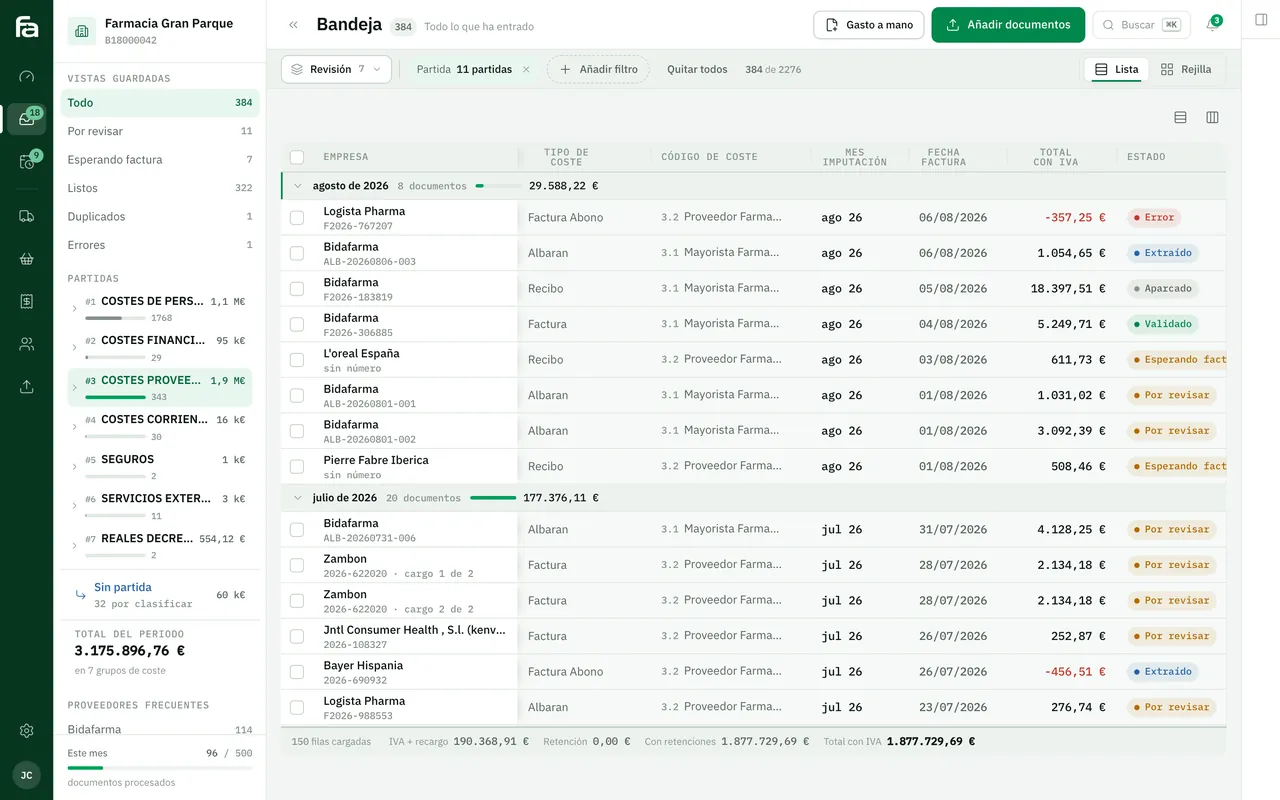
Farmacta
A pharmacy’s back office, built on its paperwork
Farmacta reconciles what wholesalers and laboratories invoice against what was ordered and what was received, and shows only what does not match for a person to review. In use at its first pharmacy.
In use at its first pharmacy
6Frequently asked questions
Doesn’t my accounting software already reconcile?
Many programs reconcile the bank against the ledger. The other reconciliations, such as order, delivery note and invoice, or book and physical stock, are usually left out or only half done.
How often should we reconcile?
The more often, the easier, because there are fewer and more recent differences. If pairing is automatic, it can be done daily.
What do I do with small differences?
You set a tolerance, rounding for instance, and anything within it is accepted with a note. The rest is reviewed by a person.
Does it work if my suppliers send paper invoices?
Yes, but they have to be read first. We explain how in the OCR entry.
What does your team match up by hand every month?
Tell us which two records you cross and how they reach you. We will tell you which part can be paired automatically.
Tell us your problem