Custom CRM for SMEs: no quote sent left without an answer
Most sales are not lost in negotiation but in the silence after the proposal goes out. We build the CRM that knows what was sent, to whom, when it is time to call again and why a deal was won or lost.
1Proposals sent that nobody looks at again
The quote goes out as a PDF by email. It is marked “sent” in a spreadsheet and from then on depends on the memory of whoever sent it. If the customer does not reply, sometimes they get a call a week later and sometimes never. When the proposal expires, nobody notices.
And when a salesperson leaves, the relationship and the context leave too: who decides at each customer, what was discussed, which objection was still open. What remains is an inbox nobody else understands.
2The minimum it has to hold
A useful CRM does not ask for forty fields. It asks for the few that help decide what to do tomorrow:
- Customer and contacts, with their role: who uses, who decides and who signs.
- Opportunity: what they need, rough value, expected decision date and who you are up against.
- Proposals sent, with version, date, validity and amount, linked to the document.
- Next step with a date and an owner. An open opportunity with no next step is a forgotten opportunity, and the system flags it.
3From sending to yes or no
Each proposal moves through a few stages your team defines, for example: sent, in negotiation, accepted and lost. The system reminds the owner when it has gone days without a reply, when the validity date is near or when the customer said they would decide this week.
When a deal is lost, the reason is picked from a fixed list: price, lead time, competitor, stayed as they were, no budget. Reviewed every few months, that data says more about how you sell than any report. When a deal is won, the accepted proposal goes to your management software as an order, without retyping.
4A forecast you can believe
The sales forecast is usually the sales director’s intuition added up in a spreadsheet. With an orderly history of proposals it can be worked out from your own data: what share of proposals that reach negotiation end up accepted at your company, and how long they take, applied to what is open now.
With little data that forecast is rough, and we say so. It improves with every month of history. Decisions about whom to call, what discount to give or which proposal to drop remain your team’s.
5What we have built close to this
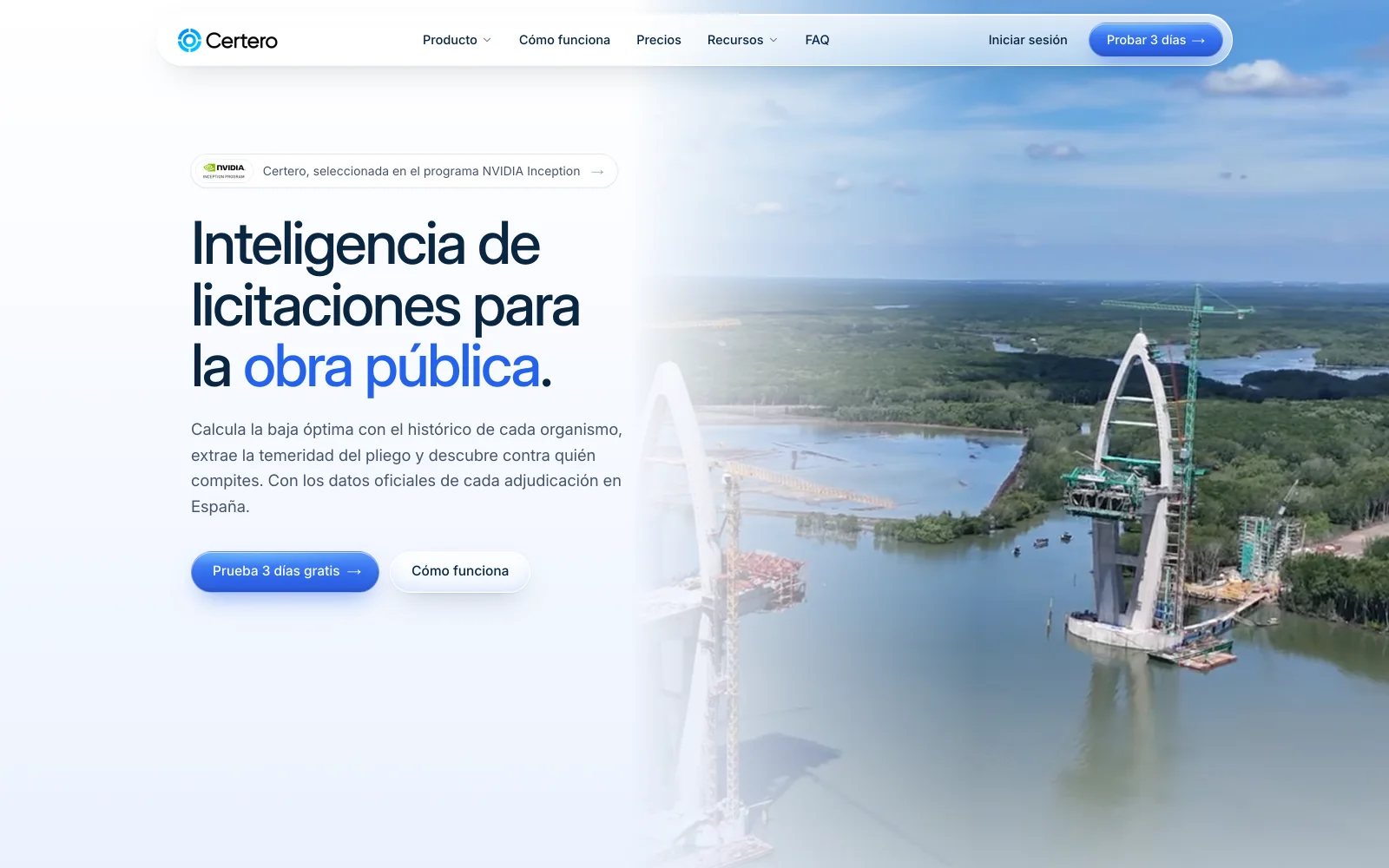
Certero
Tender intelligence for public works
Certero helps a contractor with its pipeline of public tenders: it reads tender documents, crosses each authority’s history and recommends the discount for each bid. It is not a CRM, but it answers the same question: which opportunities to go for and with what offer. It is live.
Live at certero.es. Accepted into NVIDIA Inception.
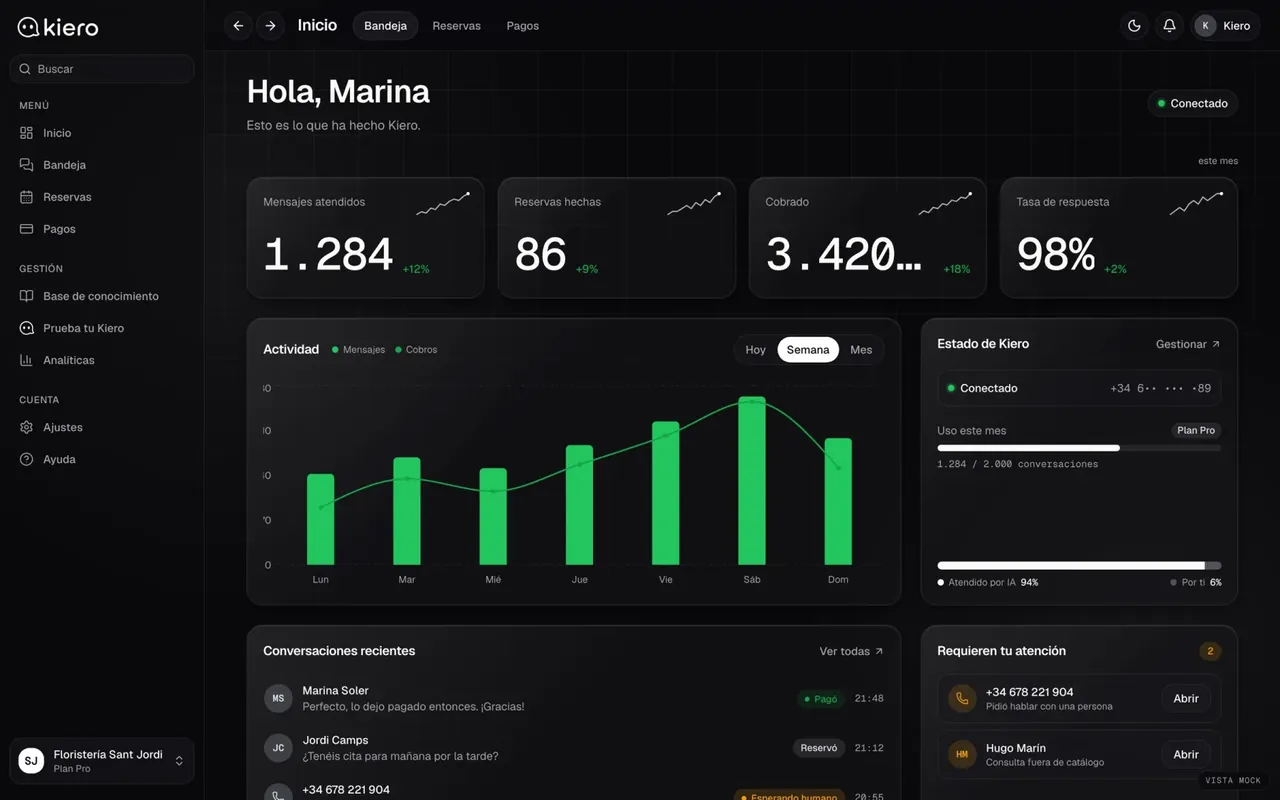
Kiero
An AI employee on the business’s WhatsApp
Kiero answers whoever writes to a business on WhatsApp and passes to a person whatever needs a person. It is one way for new contacts to arrive in order instead of getting lost on someone’s phone. We do not yet have a published custom sales CRM case.
Live at kiero.es
6Frequently asked questions
Why a custom CRM rather than an off-the-shelf one?
Often an off-the-shelf one is the best option, and we will tell you so. Custom makes sense when the way you bid is unusual (public tenders, projects with many versions, technical proposals) or when it has to talk to software the packaged one does not connect to well.
Does it connect to email?
Yes, with the usual email services. Emails with a customer can be attached to their record, and proposals sent from the system are logged automatically.
Can salespeople use it on their phones?
Yes. What they use most away from the office is checking the record before a visit and noting the next step on the way out, and that is designed to take a few seconds.
Can it track public tenders?
Yes, with their own stages: published, under review, submitted, awarded to someone else. If that is your case, see also our page on construction and tenders.
Can we bring in the data from our current spreadsheet?
Yes. Customers, contacts and open proposals are imported, and we review duplicates with you before signing off the import.
Tell us how many proposals you have open
With the list of proposals sent last quarter and what happened to each, we can tell you what follow-up is missing and what is worth building.
Tell us your problem