GDPR in custom software: what each term means for the business commissioning it
When you commission software that stores data about customers, staff or patients, GDPR vocabulary appears in the contract and in meetings. Here is what each term means in practice and which decision is yours.
1Who is who
The rules are Regulation (EU) 2016/679 (GDPR) and, in Spain, Organic Law 3/2018 on data protection. The supervisory authority is the Spanish Data Protection Agency (AEPD).
Controller: whoever decides why and how the data is used. If the software belongs to your company and stores your customers, you are the controller, even if someone else builds and hosts it.
Processor: whoever processes data on the controller’s behalf. The provider maintaining the software with access to the data, or the cloud host, usually are.
Processing agreement: the written contract between controller and processor setting out what the processor may do with the data, which security measures apply, whether it may subcontract and what happens at the end. Example: when the contract ends, the provider returns or deletes the data and certifies it.
2Decisions made at design time
- Lawful basis: the reason that allows each item of data to be processed (a contract, a legal obligation, consent, a legitimate interest). You set it with your adviser, not the developer.
- Minimisation: ask only for what is needed. If a phone number is enough to book an appointment, the form does not ask for a date of birth.
- Privacy by design and by default: think about protection while building, not afterwards. For instance, a sales rep sees only their own customers, not the whole database.
- Retention periods: how long each type of data is kept and what happens when the period ends: deleted, anonymised or blocked.
3What the software must allow
Data subject rights: access, rectification, erasure, objection, restriction and portability. In screens: being able to find everything held on a person, correct it, export it and delete it without breaking the rest.
Personal data breach: any incident that exposes, loses or alters personal data, including a stolen laptop or an email sent to the wrong person. Where there is a risk to people, the GDPR requires notifying the AEPD within 72 hours of becoming aware of it. That is why the software should log access and someone should be designated to decide.
4Questions for your provider
The practical list of checks is in our GDPR checklist for an internal application. At the very least, ask:
- Where is the data hosted and who else can access it?
- Are we signing a processing agreement, and which sub-processors are involved?
- How is an erasure request handled and who carries it out?
- What access log is kept and for how long?
5Our products that hold personal data
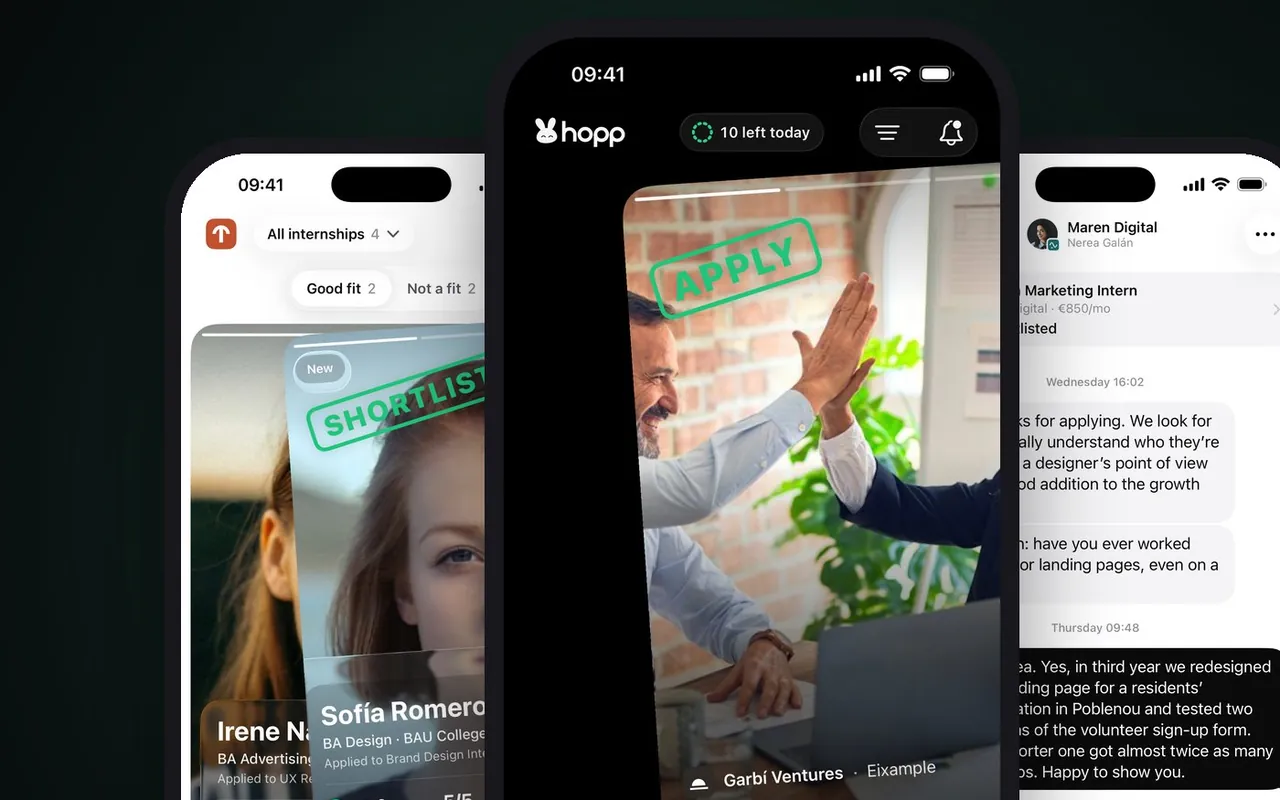
Hopp
Internships for students, one swipe away
The company receives the student’s profile and CV: personal data that only those who need it should see. Submitted to the App Store in October 2026.
Submitted to the App Store in October 2026
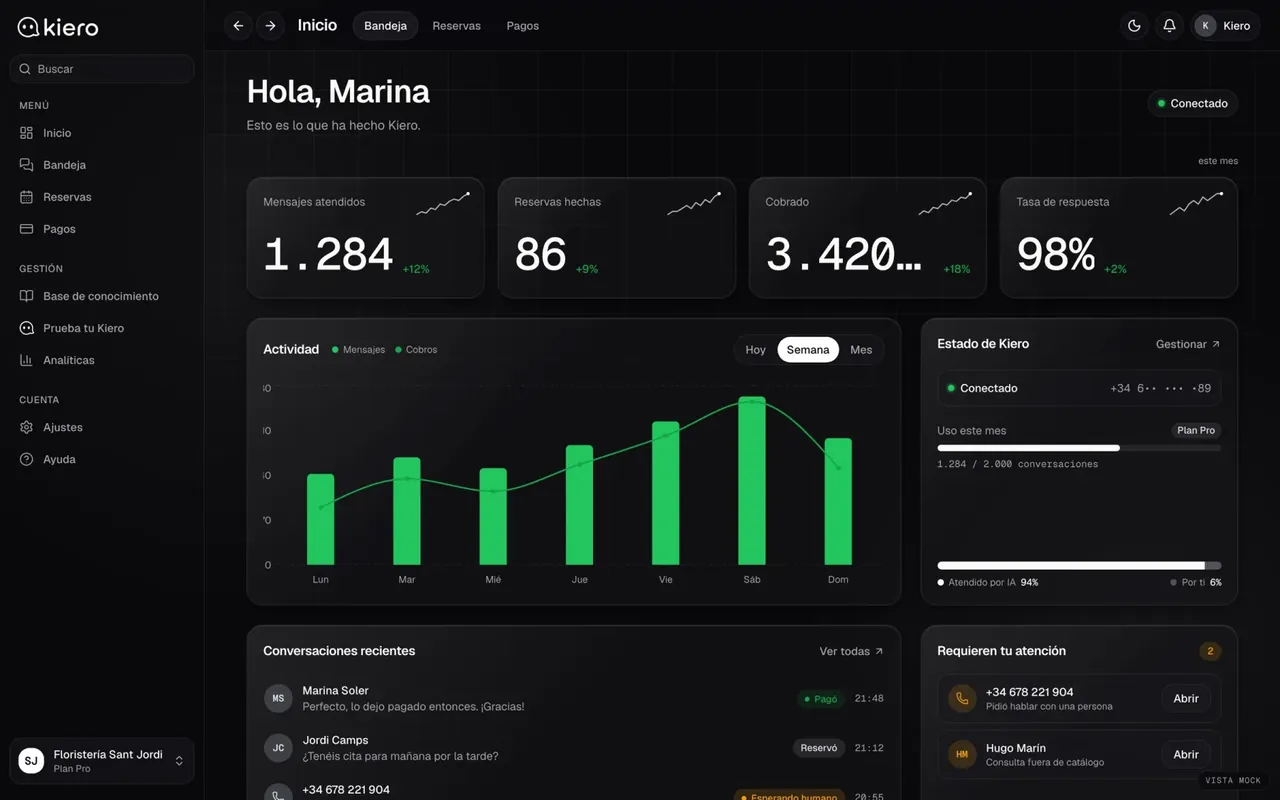
Kiero
An AI employee on the business’s WhatsApp
It answers a business’s customers on WhatsApp and hands them to a person when needed, so it works with other people’s conversations and contact details. Live at kiero.es.
Live at kiero.es
6Frequently asked questions
If a provider builds the software, is the responsibility theirs?
Not entirely. You remain the controller of your company’s data. The provider, as processor, answers for what the processing agreement sets out and for its own obligations.
Do I need consent for everything?
No. Consent is only one lawful basis; much data is processed because it is needed to perform a contract or meet a legal obligation. Which applies is for you and your adviser to decide.
Can I keep data forever, just in case?
That is not what the GDPR asks. Each type of data should have a retention period, and the software should be able to apply it.
Is custom software GDPR-compliant by itself?
No software is compliant on its own. It can make compliance easier, but it also depends on your processes and decisions. We do not promise compliance: we build what you and your adviser decide.
Will your new application store personal data?
Tell us which data and who will use it. We will tell you which decisions are worth taking before anything is built.
Tell us your problem