Data hosted in the EU: what it actually means and what to ask
“Your data stays in Europe” appears in a lot of proposals. It only tells part of the story: where the database lives. Backups, support and supporting services may be somewhere else.
1What it is, in short
Hosting an application in the EU means the servers that store and process your data are physically in a member state. Almost no small business runs its own server today: capacity is rented from a cloud provider (Amazon Web Services, Google Cloud, Microsoft Azure, OVHcloud or Hetzner), which splits its data centres into regions named after cities or countries.
The region is chosen when the application is set up. If your customer database is created in a Frankfurt region, the records sit in Germany. Changing it later is possible, but laborious.
2What the “in the EU” label leaves out
An application is more than its database. Around it there are usually other pieces, each with its own provider and its own location:
- Backups, sometimes kept in another region so they do not fail at the same time as the original.
- The service that sends reminder emails or notifications.
- The error-logging tool, which may store fragments of data.
- An AI service that reads documents, if the product uses one.
- Technical support: who can access the data, and from which country.
3Sub-processors and international transfers
Each of those companies handling data on your provider’s behalf is a sub-processor. Under the usual reading of the GDPR, the controller (your company) should authorise sub-processors and know who they are, so it is reasonable to ask for the list in writing and to be told about changes.
When personal data leaves the European Economic Area, that is an international transfer. It is not forbidden: the GDPR allows it with safeguards such as European Commission adequacy decisions or standard contractual clauses. Data leaving the EU is not unlawful in itself, and data staying inside is not compliant in itself. There is also debate about whether a provider headquartered outside the EU could be subject to its home country’s laws even when its servers are in Europe. How this applies to you is for your adviser or data protection officer to assess; here we only explain the terms.
4When it matters to you
It matters more if you handle health data, data about minors or your customers’ financial data, if a tender or a large customer asks where your data is kept, or if you plan to change provider and need to know what you take with you and from where.
5What to ask your provider
Ask for the answers in writing:
- Which region holds the database and uploaded files?
- And the backups?
- Which sub-processors are involved, and in which country is each one?
- Where is support provided from, and who can see the data?
- Does any service (email, AI, analytics) send data outside the EU?
- If I ask for everything to stay in the EU, what stops working?
6Where the data stays in what we have built
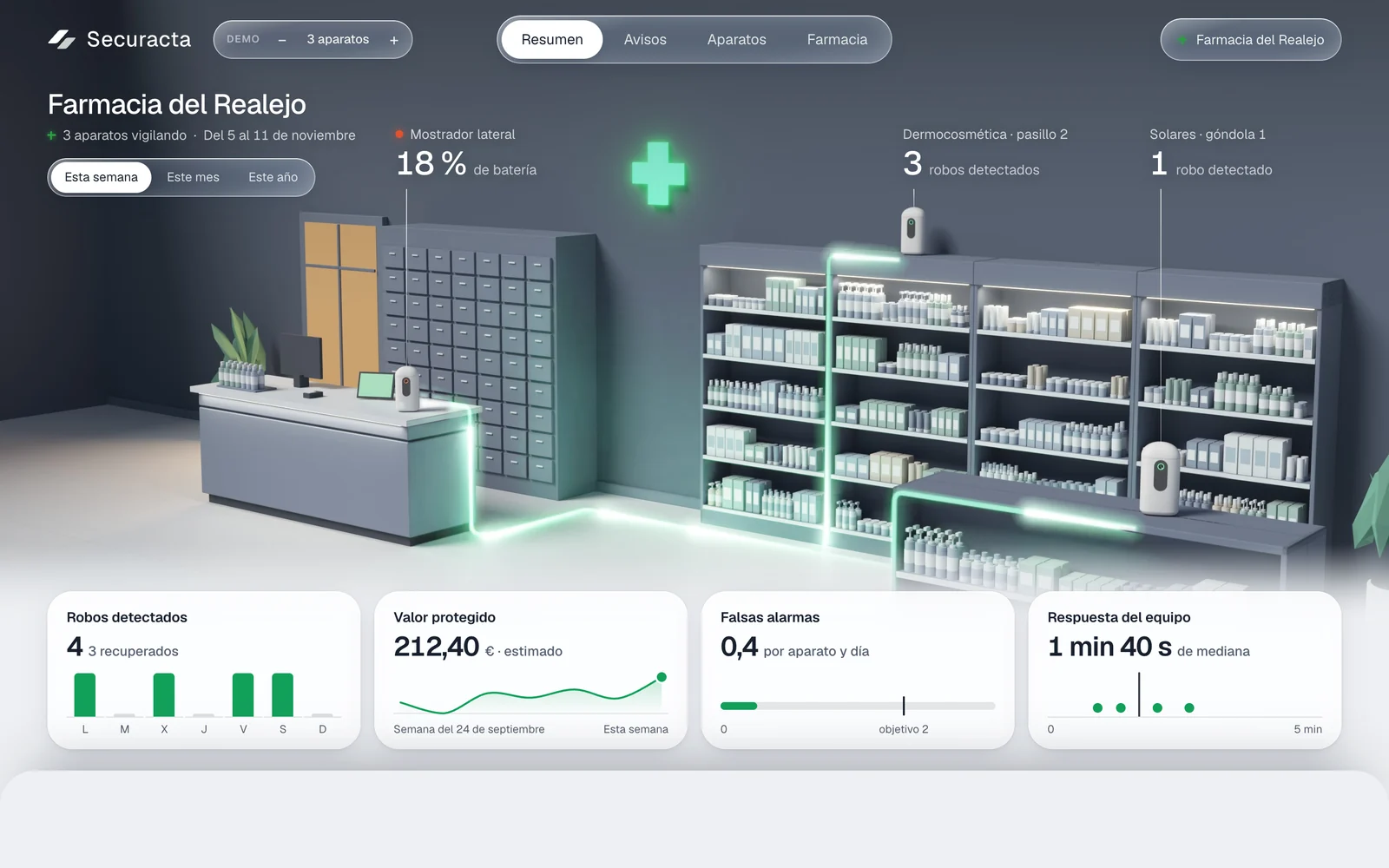
Securacta
A device that detects shoplifting in pharmacies
Continuous camera video never leaves the device: only the alerts reach the panel. It is not cloud hosting, but it answers the same question of where each piece of data lives. In development.
In development. The camera already recognises poses and the web panel runs on sample data; gesture detection is the next phase.
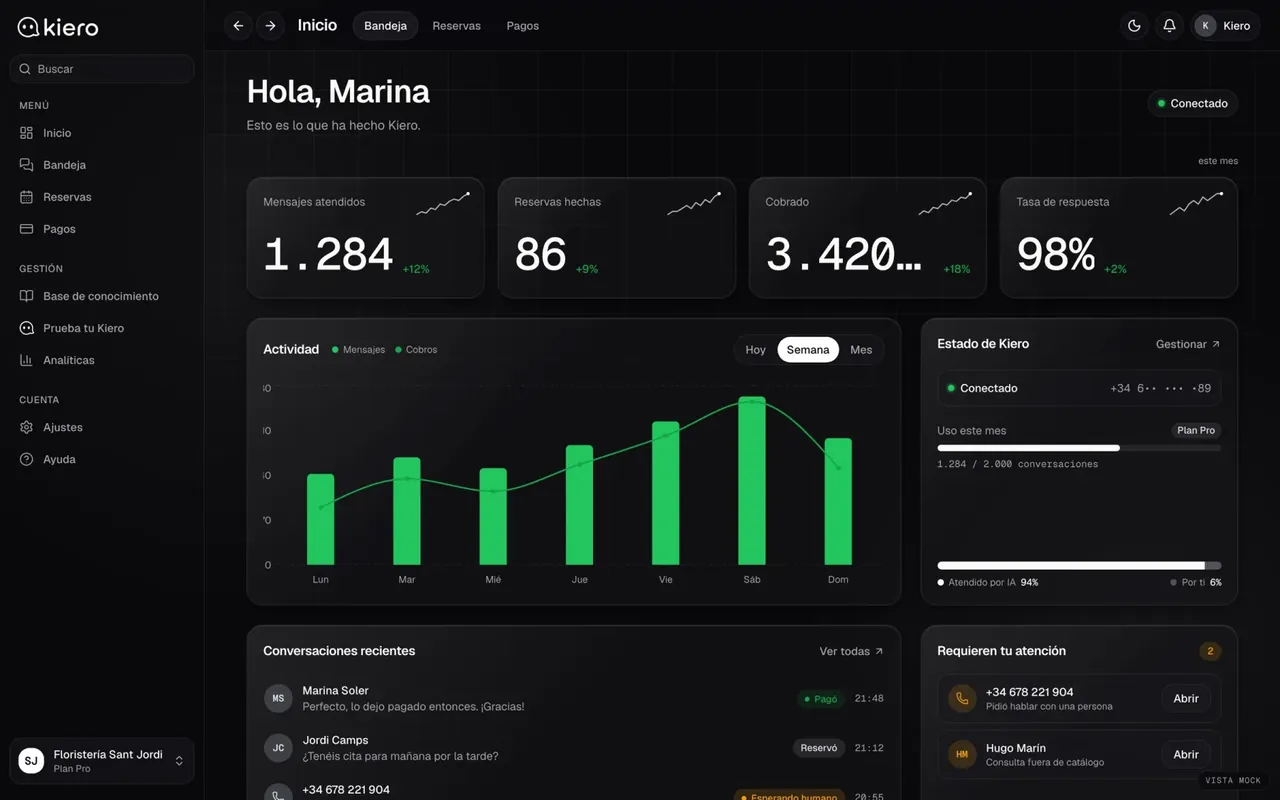
Kiero
An AI employee on the business’s WhatsApp
Kiero runs on WhatsApp and takes payment through Stripe Connect: two third-party services that handle the business’s customer data. They are exactly the kind of piece that belongs on a sub-processor list. Live at kiero.es.
Live at kiero.es
7Frequently asked questions
If my provider is a US company, does my data leave the EU?
Not necessarily: the large providers have European regions. Even so, ask about backups, support and supporting services. Whether there is a transfer, and with what safeguards, is for your adviser to assess.
Does the law require data to be hosted in the EU?
As a general rule the GDPR does not require data to stay in the EU; it requires safeguards if it leaves. Some contracts, tenders or sectors may require it. Check your own case with your adviser.
What exactly is a sub-processor?
A company that handles data on behalf of your provider, such as the cloud or backup service.
How do you handle it?
We propose choosing the region with you at the start and putting in writing the list of services involved and where each one is, so you can show it to your adviser or to whoever asks.
Has someone asked where your data is?
Tell us which application you use or want to build and we will help you list where each piece lives.
Tell us your problem