Verifactu invoicing records: the terms worth knowing
When your adviser or software provider talks about Verifactu, the same words keep coming up. Here they are one by one, with an example and the question worth asking. For the what, the why and the timetable, our Verifactu guide is the main reference.
1The software and what it writes down
Invoicing software system (SIF in Spanish): any program that issues invoices, whether off-the-shelf, a cloud application or one built just for your company. If the program your team uses generates the invoice, it is in scope. If you invoice with a spreadsheet and a word processor, ask your adviser how that fits, because it is the most common question.
Issuance record: the entry the program creates at the moment it issues an invoice, with its essential data (issuer, number, date, amounts). It is not the invoice itself, but the administrative trace that the invoice existed.
Cancellation record: the entry showing that an invoice was cancelled. The invoice does not vanish; its issuance record stays and the cancellation sits beside it. Example: invoice 2027-0154 went to the wrong customer. What remains is not a gap in the numbering but two records that tell what happened.
2How tampering becomes visible
Hash: a short code calculated from the content of each record. Change a single cent and the hash comes out different.
Chaining: each record includes the hash of the previous one. Deleting or editing an old invoice breaks the chain from that point on, and it shows.
Event log: an internal diary of the program that notes things such as start-ups, shutdowns, exports or failures when creating records. It explains later what happened to the system, not just to the invoices. It is required when records are not sent to the Spanish Tax Agency.
3What your customer sees and what your provider signs
- QR code: printed on the paper or PDF invoice so the recipient can check it against the Spanish Tax Agency.
- VERI*FACTU mode: the program sends each record to the Tax Agency as it is created. The invoice carries a statement identifying it as verifiable.
- Non-VERI*FACTU mode: records stay in your system, signed and chained, with their event log, available to the Tax Agency on request.
- Responsible declaration: the document in which the software producer states that it complies with the regulation. In custom software, who takes on that role must be agreed in writing.
4What to ask whoever maintains your software
You do not need to master the technical specification. These questions will tell you where your software stands:
- Which mode are we going to use, and why?
- How is an invoice corrected today, and is every change traceable?
- Who signs the responsible declaration for this software?
- What happens to open invoice series and to invoices created in other systems (online shop, point of sale)?
5Where we have worked with records and invoices
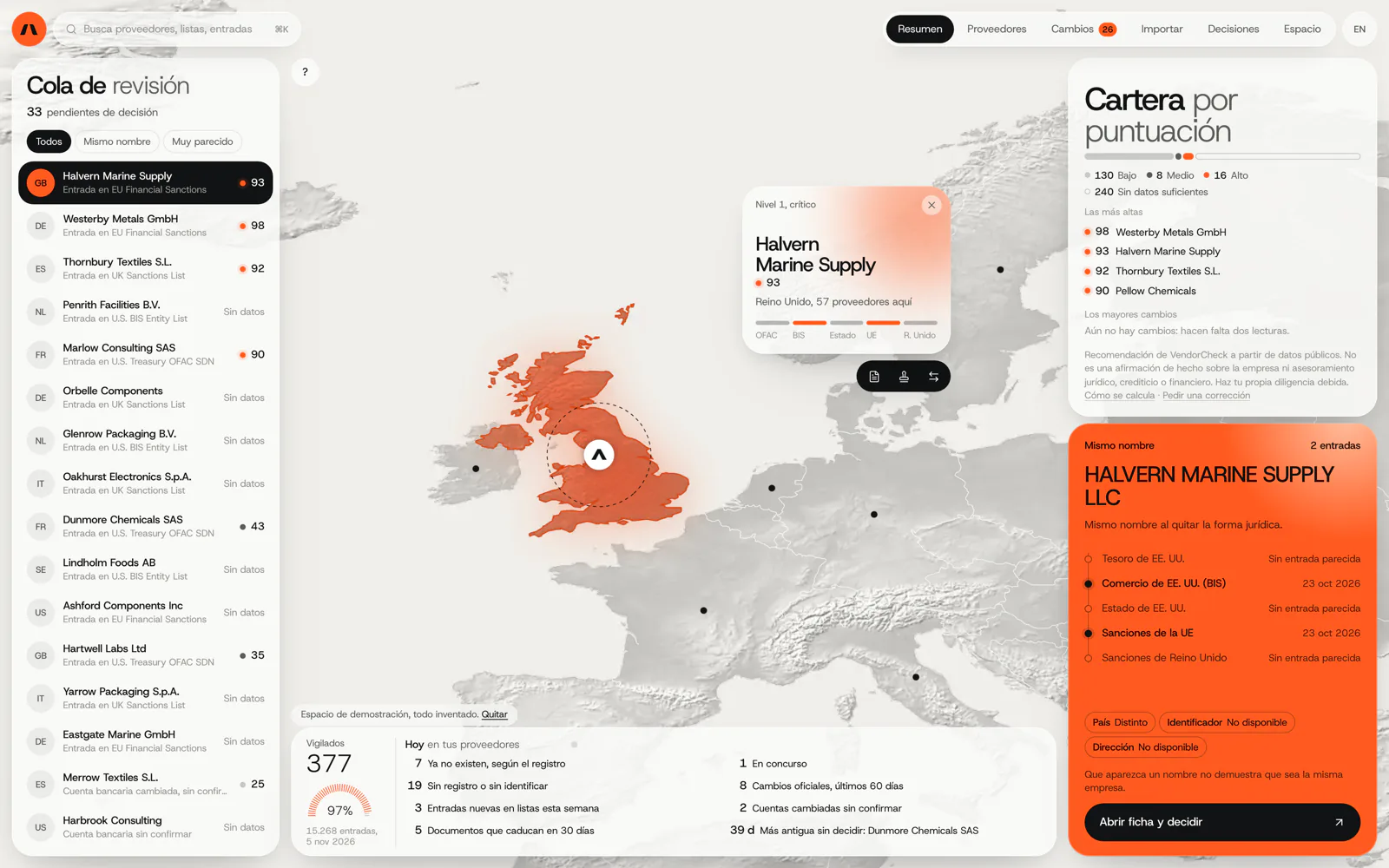
VendorCheck
Supplier screening against official sanctions lists
Every decision about a supplier is logged with its source and date so it can be explained later. It is not an invoicing system, but the logic of never losing the trail is the same. In development.
In development. Matching against the official lists works; accounts, billing and alerts are coded and not yet connected. The screens are shown with an invented demo workspace.
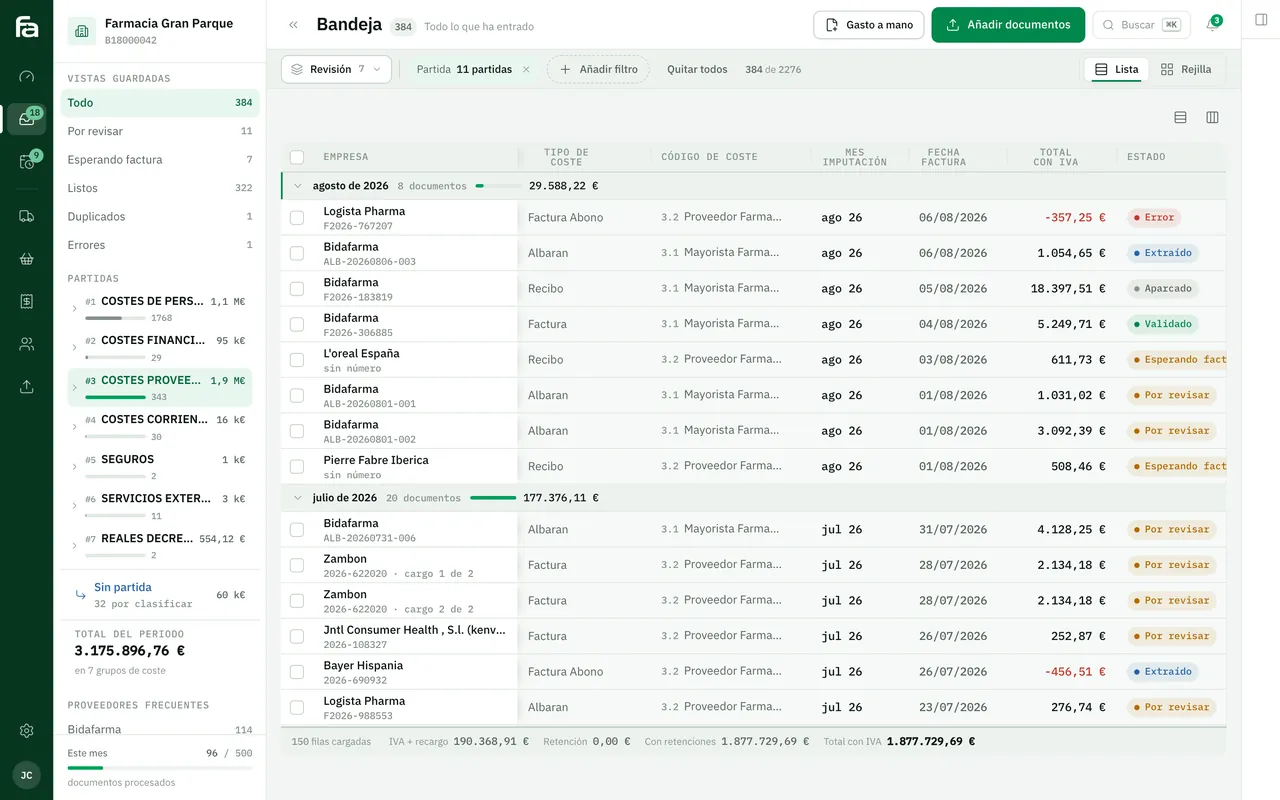
Farmacta
A pharmacy’s back office, built on its paperwork
It reads the invoices and delivery notes a pharmacy receives from wholesalers and laboratories. Those are invoices received, not issued, so Verifactu does not apply in the same way; the care with every figure is shared. In use at its first pharmacy.
In use at its first pharmacy
6Frequently asked questions
Is an invoicing record the same as an e-invoice?
No. The record is an entry the software makes when it issues each invoice; business-to-business e-invoicing is a separate obligation about the format in which the invoice is sent to the customer. Both can live in the same program.
If I cancel an invoice, does it disappear?
No. The issuance record stays, with the cancellation record beside it. The point of the regulation is that nothing can be deleted without leaving a trace.
Which dates apply?
The timetable has been postponed several times and the Spanish Ministry of Finance has announced it intends to move it again. Our Verifactu guide covers it, but the date that counts is the one on the Tax Agency’s website or the one your adviser gives you.
Is a hash an electronic signature?
Not quite. A hash detects changes; a signature also identifies who signed. In non-VERI*FACTU mode the software uses both.
Familiar with the words but unsure where your software stands?
Tell us what you invoice with today and how you correct an invoice. We will tell you what we would review first.
Tell us your problem